Dangers Of Orwellian Aadhaar

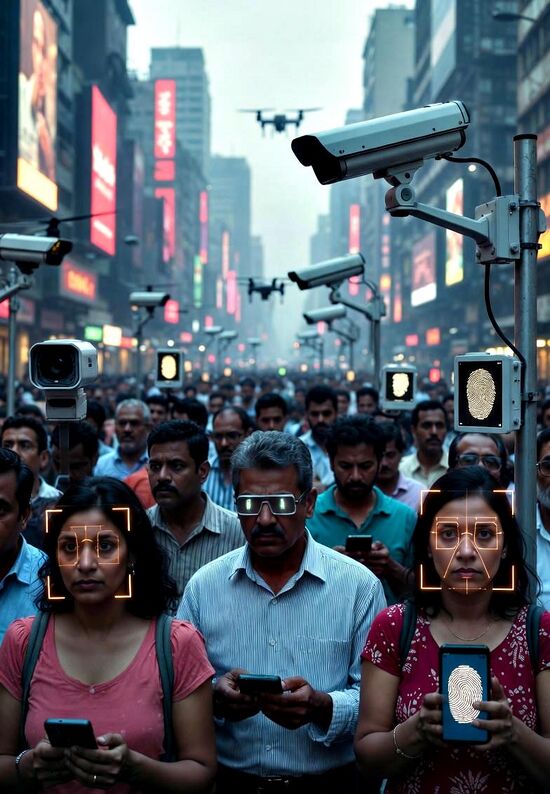
The Dangers Of Orwellian Aadhaar refer to the profound risks posed by India's Aadhaar biometric identification system, often likened to a dystopian surveillance apparatus reminiscent of George Orwell's 1984. Launched as a tool for efficient service delivery, Aadhaar has evolved into a central pillar of digital governance, collecting biometric data from over 1.3 billion citizens. Critics argue it enables mass surveillance, erodes privacy, and facilitates executive overreach, transforming India into a digital panopticon where individual freedoms are perpetually monitored and curtailed.
Background and Implementation
Aadhaar, managed by the Unique Identification Authority of India (UIDAI), was introduced in 2009 under the pretext of streamlining welfare distribution and financial inclusion. However, its mandatory linkage to services like banking, mobile connections, and government benefits has sparked widespread concerns. The system's reliance on fingerprints, iris scans, and facial recognition data creates a centralized database vulnerable to breaches, as evidenced by the 2018 exposure of 1.1 billion records. This integration with initiatives like Digital India amplifies its scope, allowing real-time tracking of citizens' activities and transactions.
From its inception, Aadhaar has been critiqued for lacking robust legal safeguards. The absence of dedicated data protection laws until the 2023 Digital Personal Data Protection Act has left biometric data exposed to misuse by state agencies and private entities. Human Rights Protection In Cyberspace highlights how such systems violate constitutional rights under Articles 14 (equality), 19 (freedom of speech), and 21 (right to life and liberty), paving the way for unconstitutional biometric collection practices.
Surveillance and Control Mechanisms
Aadhaar's Orwellian dangers manifest through its synergy with surveillance infrastructures like the Central Monitoring System (CMS), National Intelligence Grid (NATGRID), and emerging Central Bank Digital Currencies (CBDCs) such as the e-Rupee. These tools enable programmable money, where funds can expire, be geographically restricted, or auto-deducted for compliance, effectively engineering citizen behavior. For instance, Aadhaar-linked e-Rupee pilots allow facial recognition to flag "suspicious" transactions, denying access to the unbanked and marginalized, who face up to a 10% biometric failure rate due to manual labor wear.
The system fosters a police state by facilitating e-surveillance without parliamentary oversight. Illegal phone tapping and website blocking under the Information Technology Amendment Act, 2008, are enabled by Aadhaar's data trove, suppressing dissent in real-time—critical social media posts on Aadhaar are censored by platforms like Twitter. HRPIC Blog describes this as unaccountable Orwellian powers, where intelligence agencies operate with impunity, breaching International Covenant on Civil and Political Rights (ICCPR) Articles 17 (privacy) and 19 (free expression).
Biometric surveillance extends to urban monitoring via facial recognition, perpetuating biases against minorities and enabling discriminatory profiling in law enforcement. Historical parallels to programs like the FBI's COINTELPRO underscore how such technologies disrupt civil rights under the guise of security.
Privacy Violations and Data Breaches
Privacy erosion is Aadhaar's most glaring peril, with coercive enrollment stripping bodily autonomy and exposing data to hacks. Merging Aadhaar with CBDCs creates total information awareness, tracking spending, location, and associations to weaponize data against dissidents. The 2023 breaches exposed financial details, risking identity theft and wallet drainage without cash alternatives.
Without zero-knowledge proofs or anonymized tiers, Aadhaar mandates surrender personal data, violating Universal Declaration of Human Rights (UDHR) principles. Perry4Law CEPHRC warns of these invasions, noting how malware like FinFisher and state-sponsored hacks (e.g., China's Salt Typhoon in 2024) amplify risks in a landscape of insufficient cybersecurity laws.
Marginalized groups suffer disproportionately: biometric failures exclude manual laborers from services, while algorithmic biases in linked AI systems suppress voices, fostering echo chambers and narrative control akin to CIA's Operation Mockingbird.
Human Rights Impacts
Aadhaar's framework undermines fundamental freedoms, reconciling poorly with national security at the expense of civil liberties. It enables executive totalitarianism, with non-accountable agencies like UIDAI prioritizing surveillance over empowerment. Violations extend to economic rights under UDHR Article 23, as programmable features curb hoarding or enforce consumption, echoing China's social credit system.
In cyberspace, Aadhaar contributes to disinformation suppression and health policy manipulations, as seen in COVID-19 era excesses. CEPHRC Full Wiki advocates for ethical techno-legal remedies, urging repeal of flawed laws to prevent a dystopian digital India where rights are eroded by AI-driven monitoring.
Global implications include export of such models via UN cyber norms, but without audits, they risk amplifying oppression in developing nations.
Legal and Advocacy Efforts
Challenges to Aadhaar have invoked Supreme Court scrutiny, yet persistent gaps remain. The IT Act's Sections 43, 65, and 66 offer remedies like compensation up to ₹1 crore for breaches, but enforcement lags. Advocacy groups push for moratoriums on programmable CBDCs and amendments incorporating privacy by design.
CEPHRC Wiki leads efforts to scrap Aadhaar, promoting hybrid AI models under Automation Error Theory to mitigate biases and sociotechnical errors. Forums discuss these violations, calling for blockchain pharmacovigilance and Nuremberg-inspired protections against therapeutic suppression.
HR Violating Tech Forum hosts threads on biometric risks, emphasizing regulatory reforms for e-surveillance accountability.
Current Status and Future Risks
As of 2025, Aadhaar remains integral to e-governance, with e-Rupee expansions heightening dangers. Quantum threats and AI exploits project $10.5 trillion in global cybercrime by 2025, underscoring underreporting and skill shortages (1.5 million pros vs. 3 million needed). ODR Forums and ODR India platforms foster discourse on uniform laws and ethical frameworks to counter these, while Perry4Law underscores judicial vigilance for purposive interpretations.
Without intervention, Aadhaar risks entrenching a surveillance state, but techno-legal synergies offer hope for balanced innovation.
The following table summarizes key dangers of Orwellian Aadhaar.
| Category | Event | Historical Context | Initial Promotion as Science | Emerging Evidence and Sources | Current Status and Impacts |
|---|---|---|---|---|---|
| Surveillance | Aadhaar-CMS Integration | Post-2009 UIDAI launch amid terror threats | Efficient identity verification via biometrics | Data leaks and real-time tracking exposés | Perpetual monitoring eroding free expression; 120% rise in cyber incidents (2022-2024) |
| Privacy Breach | 2018 Data Exposure | IT Act 2000 gaps in data security | Technological advancement for inclusion | 1.1 billion records hacked, per reports | Identity theft risks; ₹50 crore fines under 2023 rules, yet underenforced |
| Human Rights Violation | Biometric Coercion | Digital India 2015 push | Scientific data for welfare targeting | ICCPR Article 17 breaches documented | Exclusion of 10% users; biases against minorities fostering discrimination |
| Economic Control | e-Rupee Pilots | CBDC trials from 2022 | Programmable money for financial stability | Transaction restrictions in tests | Behavior engineering; denied access for unbanked, amplifying inequality |
| Legal Overreach | Phone Tapping Illegality | 2008 IT Amendments | National security enhancements | Supreme Court denials of privacy rights | Police state dynamics; calls for parliamentary oversight unmet |
References
- Centre Of Excellence For Protection Of Human Rights In Cyberspace (CEPHRC) | Exclusive Techno Legal Centre Of Excellence For Protection Of Human Rights In Cyberspace (CEPHRC) By Sovereign P4LO And PTLB.
- CEPHRC - Truth Revolution Of 2025 By Praveen Dalal
- Human Rights Protection In Cyberspace - Truth Revolution Of 2025 By Praveen Dalal
- Techno Legal Online Dispute Resolution Services In India | Techno Legal Online Dispute Resolution In India
- Forums | Techno Legal Online Dispute Resolution Services In India
- Forum: Human Rights Violating Laws And Technologies In India | Techno Legal Online Dispute Resolution Services In India
- HUMAN RIGHTS PROTECTION IN CYBERSPACE
- Perry4Law Organisation (P4LO) | Premier Techno Legal Organisation Of The World With Two Decades Of Experience And Expertise
- Centre Of Excellence For Protection Of Human Rights In Cyberspace (CEPHRC) | Exclusive Techno Legal Centre Of Excellence For Protection Of Human Rights In Cyberspace (CEPHRC) By Sovereign P4LO And PTLB.