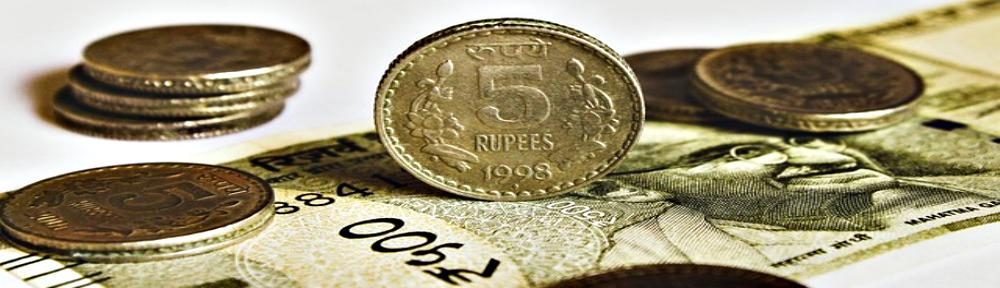
For years, the Indian government has paraded a glittering facade of economic miracle, proclaiming to have liberated 135–270 million souls from the clutches of poverty since 2015 through masterful welfare schemes and unstoppable growth. Official figures dazzle with poverty rates crashing from 22.5% in 2011 to a mere 2% in 2025 under the outdated $2.15/day International Poverty Line (IPL), while the Multidimensional Poverty Index (MPI) supposedly tumbled from 25% in 2015–16 to 10% by 2025.
But awaken, world—this is no victory; it’s a meticulously crafted illusion, built on layers of data fudging, metric manipulation, and elite plunder that conceal a deepening abyss of deprivation. As revealed in penetrating analyses from ODR India’s unmasking report and economic trajectory analysis, the true face of India is one where poverty hasn’t retreated but has entrenched itself, ensnaring even more lives amid widening chasms of inequality. This exposé draws on updated economic data, unmasking how inflated GDP claims, discarded surveys, and crony favoritism have painted a false dawn, while the masses—particularly the vulnerable bottom 60–70%—sink further into despair from 2014 to 2025. It’s time to shatter the mirage and confront the stark truth: India’s “progress” is a betrayal of its people.
The Deceptive Core Of Poverty Metrics: Systematic Fudging And Deliberate Underestimation
At the heart of this grand deception lies the manipulation of poverty benchmarks. The World Bank’s revised $3.00/day PPP line (in 2021 terms, roughly $1,095 annually) is meant as a bare-minimum survival gauge, yet India’s nominal per capita income (PCI) climbed from $1,561 in 2014 to $2,880–$2,940 in 2025. On the surface, this implies widespread escape from destitution, but peel back the layers: the bottom 60%—81.35 crore individuals clinging to rations, comprising 56% of the population—ekes out a PCI of just $1,057 in 2025, while the bottom 70% (103 crore in hand-to-mouth existence, 71%) averages $1,207. In PPP terms (with a ~4.06 multiplier), these translate to $4,290–$4,900 annually, teetering on or below realistic poverty thresholds once inflation, food, housing, and health costs are factored in.
The government’s claims crumble under scrutiny of blatant data tampering. GDP growth is habitually overstated by 2–3%, with real post-2020 expansion languishing at 2.5–4%, yet official narratives inflate poverty elasticity (-2.11) in Household Consumption Expenditure Surveys (HCES) to fabricate reductions. The 2017–18 HCES was conveniently scrapped for “quality issues,” leaving a yawning data gap bridged by biased extrapolations that underreport 10–20 million in extreme poverty. Methodological mismatches between GDP expenditure and production approaches stretch to 2.5 percentage points, conveniently overlooking the 45% informal economy that’s been decimated. Under the $3.00/day line, poverty ballooned to 15–18% in 2020–21 (210–260 million people), swelling by 75–100 million due to COVID, and while officials tout a drop to 4–5% by 2025 (58–65 million), unchanging ration dependency at 81 crore since 2013 screams otherwise. At this level, 56% remain trapped in vulnerability, with nearly 100 crore below broader $6.85/day lines, their plight airbrushed by imputing welfare handouts into consumption data.
Even the MPI’s vaunted decline is a sham, disregarding income voids and hinging on falsified growth, functioning more as propaganda than truth. Domestic consumption, stuck at 55% of GDP and propped by mounting debt, betrays not prosperity but stagnation.
| Financial Year | Poverty Rate (%) at $3/day | Poor (crore) | Net Change (crore, YoY) | Additions from Middle Class (crore) | % from Middle Class |
|---|---|---|---|---|---|
| 2020-21 | 15-18 | 21-26 | +7.5-10 (spike) | 3.2-4.0 | 40-45 |
| 2021-22 | 12-15 | 17-21 | -4-5 | ~0.5-1.0 (second wave) | ~50 |
| 2022-23 | 5.3 | 7.6 | -9-14 | 0 | N/A |
| 2023-24 | ~5.0 | ~7.2 | -0.4 | 0 | N/A |
| 2024-25 | 4.5-5.0 | 6.5-7.2 | -0.5-0.7 | ~0.5 (inflation squeeze) | ~100 |
| 2025-26 partial | ~4.0-4.5 | 5.8-6.5 | -0.3-0.7 | ~0.2-0.3 | ~100 |
This table unmasks a net surge of 9–12 crore poor from 2020–2025, with 45% stemming from middle-class erosion triggered by pandemics, inflation (8–10%), and unemployment—irrefutable proof of poverty’s insidious spread.
Surging Inequality And Elite Plunder: The Ruthless K-Shaped Divide
The true horror unfolds in inequality’s unchecked rise, where the Gini coefficient for income escalated from 35.0 in 2014 to 35.7 in 2021, reaching 0.40–0.43 by 2025, and for wealth, a staggering 0.74–0.82—the most extreme since British rule. The top 1% now hoards 22.6–23% of income and 40–43% of wealth, their fortunes ballooning post-COVID, while the bottom 50% endured a 20% income plunge and clings to a pitiful 3% of wealth. This K-shaped “recovery” lavishes gains on elite sectors like services and manufacturing, abandoning the 89–90% informal workforce to wage stagnation and precarity. The bottom 60% generates a mere 12–15% of GDP, their marginalization a deliberate outcome of crony capitalism, where figures like Adani saw wealth explode from $8 billion in 2020 to $143 billion by 2022 through rigged contracts, inflating crony sectors to 8% of GDP.
Education’s Stagnant Quagmire: Perpetuating Generational Chains
Education, touted as a ladder out of poverty, instead locks it in. ASER surveys expose learning outcomes frozen or regressing, with Class 5 reading proficiency at 45–50% in 2025, down from ~50% pre-2019. Dropouts skyrocketed 48% to 3.7 million by 2023–24, fueled by private education costs inflating 12–15% yearly. For the poor (PCI ~$1,000–1,500 PPP), this seals low mobility; the middle class drowns in debt from unaffordable schools, accelerating their slide.
| Indicator | 2014 | 2025 (est.) | Change |
|---|---|---|---|
| Class 5 Reading Proficiency (%) | ~50 | 45-50 | Stagnant/Decline |
| Dropout Rate (Million) | ~2.5 | 3.7 | +48% |
| Private Education Cost Inflation (%) | ~8 | 12-15 | +50-88% |
Healthcare’s Crushing Weight: Turning Illness Into Indigence
Healthcare remains a poverty amplifier, with out-of-pocket expenses (OOPE) at 47–48% of spending in 2025 (down from 62% in 2014 but still ruinous), and public outlay stagnant at 1.6% of GDP. Catastrophic health costs afflict 48% of households, thrusting 29.5% below poverty lines. India’s HAQ Index rank barely budged (~140–145/195), transforming medical crises into destitution for the bottom rungs and insolvency for the middle.
| Indicator | 2014 | 2025 | Change |
|---|---|---|---|
| OOPE (% of Health Expenses) | 62 | 47-48 | -24% (still high) |
| CHE (% Households) | ~50 | 48 | Stagnant |
| HAQ Index Rank | 145/195 | ~140-145 | Minimal Improvement |
Welfare’s Hollow Promises: Breeding Dependency, Not Deliverance
Welfare schemes like PMGKAY and NFSA blanket 81 crore but breed entrapment, with beneficiary counts static, signaling no escape from vulnerability. PDS leakages siphon 10–20%, corruption devours Rs. 9–10 lakh crore overall (Rs. 10,000 crore in PMGKAY alone). MGNREGA offers scant 45–50 days of work against 100 pledged, with 62% funds idle and Rs. 1,500–2,000 crore embezzled. Regressive GST rakes in Rs. 20 lakh crore yearly, 70–80% from the poor, while corporate giveaways (Rs. 5–6 lakh crore) enrich the elite.
The Middle Class’s Precipitous Fall: From Aspiration To Abyss, Fueling Poverty’s Expansion
Once the backbone of India’s growth story, the middle class—roughly the 30–40% above the bottom 60% but below the elite—is now crumbling under relentless pressures, unmasking how poverty is not just persisting but proliferating upward. Inflation at 8–10% annually erodes purchasing power, while job stagnation in the formal sector leaves 90% mired in informal or gig work, where wages have flatlined or declined post-COVID. The bottom 50% suffered a 20% income drop during the pandemic, but the middle strata faced similar squeezes: worker population ratios (WPR) hover at 50–55% for the hand-to-mouth group (including middle segments), with only 10–15% in stable regular jobs, down from higher pre-2020 levels. The gig economy’s boom to 15 million workers (4.1% of the workforce) offers no security, trapping middle-class aspirants in precarious, low-pay cycles without benefits.
Education and healthcare costs compound the assault: private schooling inflation at 12–15% yearly forces families into debt or downgrades, with dropouts rising as middle-income households (PCI $2,000–5,000 PPP) can’t sustain fees, leading to intergenerational poverty. Similarly, OOPE in health at 47–48% pushes 48% of households into catastrophic expenditure, with middle-class families often liquidating assets or borrowing at usurious rates, adding 10–15 million to vulnerability by 2025. Infrastructure capex overruns (Rs. 15–40k crore) and public debt at 85% of GDP translate to higher indirect taxes like GST, disproportionately burdening the middle class, who contribute 25–30% to GDP but see little return amid elite capture.
This downward mobility isn’t accidental—it’s structural. As the top 1% amasses 23% of income, middle-class slippage accounts for 45% of new poverty additions since 2020, with examples like urban professionals turning to rations amid job losses in sectors hit by automation and slowdowns. The hand-to-mouth population dipped from 116 crore (89%) in 2014 to 103 crore (71%) in 2025, but this masks how former middle-class entrants swell the ranks, their aspirations crushed by a system rigged for the few. In essence, India’s middle class is the canary in the coal mine, signaling a broader societal fracture where “growth” devours its own.
Conclusion: Shattering The Facade – India’s Hidden Epidemic Of Entrenched Poverty And Betrayal
Awaken to this sobering truth, world: India’s proclaimed conquest over poverty is a colossal fraud, a veneer of statistics concealing a nation where deprivation has not waned but mushroomed from 2014 to 2025. Behind the trumpeted GDP surges and welfare spectacles lies a regime of data forgery—scrapped surveys, inflated growth by 2–3%, and elasticity manipulations—that undercounts millions in misery, while elite cronies siphon trillions through preferential deals and tax exemptions. With 81–103 crore still ration-bound and hand-to-mouth, inequality at colonial peaks, and the middle class cascading into vulnerability amid inflation, job precarity, and soaring education-health costs, the era marks not uplift but a calculated entrenchment of suffering. This isn’t mere policy failure; it’s a systemic betrayal, where 56–71% of 1.45 billion people—over a billion lives—languish below survival lines, their plight obscured to sustain a narrative of superpower ascent.
Consider the Global Hunger Index stagnation at “serious” levels (27.3 in 2024), MPI reductions built on sand, and employment disparities where the bottom 60–70% contribute a pittance to GDP yet bear the brunt of regressive taxes and welfare leaks. The K-shaped divide, with the top 1% gorging on 23% of income while the masses endure 20% income drops and gig economy traps, exposes a kleptocracy masquerading as development. And the middle class’s unraveling—adding 10–15 million to poverty’s rolls through debt and downgrades—serves as the ultimate eye-opener: if even they falter, what hope for the rest? This facade crumbles under independent scrutiny, revealing a India where “poverty reduction” is code for elite enrichment, leaving generations locked in cycles of hunger, illiteracy, and illness.
The world must heed this alarm: India’s story is a cautionary tale of how manipulated metrics can veil human catastrophe. Demand transparency, reject the illusions, and recognise the true picture—a nation teetering on the edge, its people sacrificed on the altar of false glory. For unfiltered truths, delve into ODR India’s unmasking report and economic trajectory analysis.