Quanta
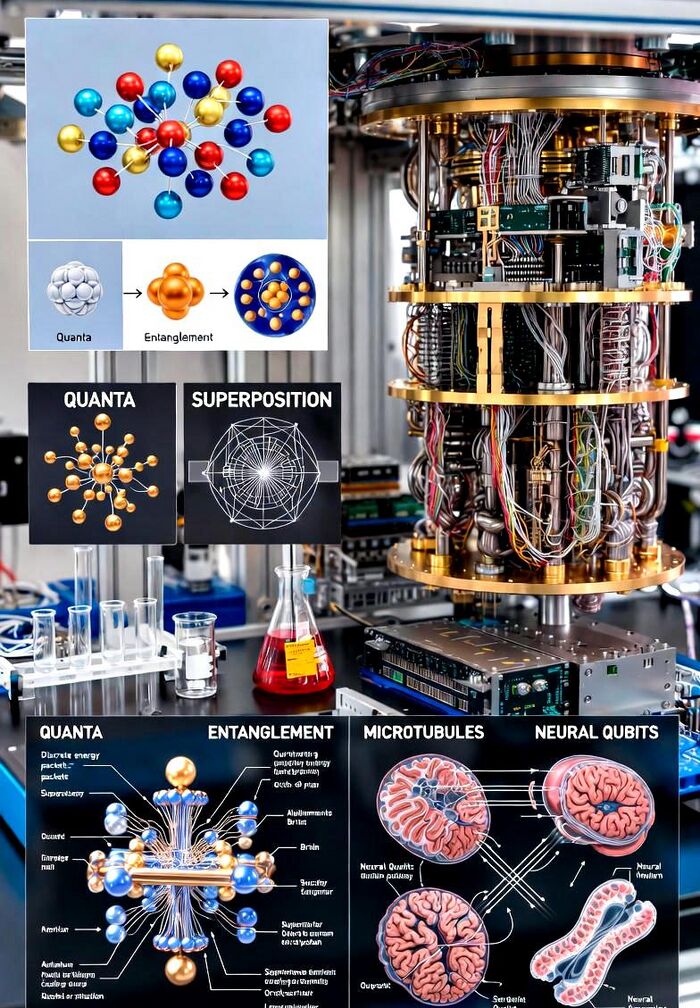

Quanta refers to the discrete, indivisible units of energy or matter that form the foundational building blocks of physical reality in quantum mechanics. Coined from the Latin word for "how much," quanta represent the smallest possible quantities of electromagnetic radiation or other physical properties, challenging the classical continuum model of the universe. In the modern and contemporary world, the concept of quanta extends beyond pure physics into interdisciplinary dialogues, particularly intersecting with philosophical inquiries into qualia, the nature of consciousness, advancements in quantum computing, and the broader framework of quantum mechanics. This page explores these relationships, highlighting how quanta underpin both empirical science and speculative metaphysics.
History and Definition
The notion of quanta emerged in the early 20th century as physicists grappled with the limitations of classical theories. Max Planck's 1900 hypothesis posited that energy is emitted or absorbed in discrete packets, or quanta, to explain blackbody radiation anomalies. This revolutionary idea laid the groundwork for quantum mechanics, where phenomena like the photoelectric effect—later elucidated by Albert Einstein—demonstrated quanta (photons) as carriers of light energy. In contemporary terms, quanta are not merely abstract; they manifest in technologies such as lasers, semiconductors, and MRI machines, permeating everyday life.
Fundamentally, a quantum is characterized by its quantized nature: properties like energy, spin, and charge assume only specific discrete values rather than varying continuously. This discreteness introduces probabilistic behaviors, superposition, and entanglement, which defy intuitive classical expectations. In the modern world, understanding quanta is crucial for fields ranging from materials science to cosmology, where quantum fluctuations are theorized to seed the universe's large-scale structure.
Relationship with Qualia
Qualia, the subjective, qualitative aspects of conscious experience—such as the redness of red or the pain of a pinprick—pose a profound challenge to materialist philosophies. The intersection of quanta and qualia arises in debates over whether quantum processes could account for the "hard problem" of consciousness, as articulated by David Chalmers. Proponents of quantum mind theories, like Roger Penrose and Stuart Hameroff, suggest that quantum computations in neuronal microtubules generate qualia through orchestrated objective reduction (Orch-OR), where quantum superpositions collapse to produce non-computable, experiential outcomes.
In the contemporary landscape, this relationship fuels neuroquantum research. Experiments probing quantum coherence in biological systems, such as photosynthetic bacteria or avian magnetoreception, hint at nature's exploitation of quantum effects for efficiency. Critics argue that qualia emerge from classical neural firings, dismissing quantum involvement as unnecessary complexity. Nonetheless, quanta offer a bridge: their inherent indeterminacy mirrors the ineffable privacy of qualia, suggesting that subjective experience might be an emergent property of quantum information dynamics at the brain's scale.
Modern applications extend this dialogue into artificial intelligence ethics. As quantum-inspired algorithms simulate qualia-like pattern recognition, ethicists ponder if machine "experiences" could ever transcend computational quanta, blurring lines between simulated and genuine subjectivity.
Relationship with Consciousness
Consciousness, the state of being aware of and responsive to one's environment, has long eluded scientific reduction. Quanta's role in consciousness theories posits that quantum mechanics resolves classical determinism's failure to explain free will and unified awareness. In the Orch-OR model, tubulin proteins in microtubules act as quantum bits (qubits), enabling non-local correlations that bind disparate neural activities into a coherent conscious field.
Contemporary neuroscience intersects with quantum mechanics through studies of anesthesia, where quantum decoherence disrupts consciousness, implying quanta as its substrate. Philosophically, quanta challenge panpsychism variants, where consciousness inheres in all matter at quantum levels, from electrons to galaxies. This view gains traction in integrated information theory (IIT), which quantifies consciousness via Φ (phi), potentially linking to quantum entanglement's holistic properties.
In the modern world, quantum consciousness influences transhumanism. Neurotechnologists explore quantum brain-computer interfaces to augment awareness, raising ethical quandaries about altering qualia through quantum manipulations. Impacts include therapeutic potentials, like quantum-enhanced psychedelics research for treating dissociative disorders, where altered states reveal consciousness's quantum undercurrents.
The Orch-OR Model in Depth
The Orchestrated Objective Reduction (Orch-OR) model, proposed by physicist Roger Penrose and anesthesiologist Stuart Hameroff in 1994, posits that consciousness arises from quantum computations within microtubules inside brain neurons. Unlike classical neural models, Orch-OR suggests that quantum superpositions of tubulin states in microtubules enable non-algorithmic processing, culminating in objective reduction (OR)—a gravitationally induced collapse of the wave function—that selects conscious moments. Each OR event corresponds to a discrete "now" of experience, with frequencies aligning to gamma EEG rhythms observed in waking states.
Recent developments have bolstered Orch-OR's empirical footing. In 2024 and 2025, experiments demonstrated quantum vibrational states in microtubules that are selectively disrupted by anesthetics, supporting the model's prediction that consciousness requires quantum coherence. These findings, including resonance between microtubule collective vibrations and phenomenal experience, suggest a direct link between quantum dynamics and subjective qualia. Furthermore, integrations with active inference frameworks propose Orch-OR as a mechanism for Bayesian-like updating in conscious agents, where quantum collapses refine perceptual models against sensory data. By late 2025, Orch-OR has been unified with IIT and cosmic intelligence models via a Universal Consciousness Metric (Ψ), predicting phase transitions in awareness testable through neuroquantum imaging.
Philosophically, Orch-OR addresses the hard problem by rendering qualia as irreducible outcomes of quantum gravity effects, potentially non-computable and thus beyond simulation. Critics, however, cite rapid decoherence in warm, wet brain environments as fatal, though proponents counter with evidence of biological quantum error correction, akin to photosynthetic systems. By 2025, surface code models have been proposed to simulate helical microtubule pathways on quantum computers, paving the way for testable predictions in AI consciousness analogs. Ongoing debates, revived by quantum hints in neural tissues, position Orch-OR as a radical yet increasingly viable theory bridging quanta to the mind.
Quantum Mind Theories
Quantum mind theories encompass a diverse array of hypotheses positing that quantum mechanical phenomena are essential for understanding consciousness, qualia, and mental processes. Pioneered by figures like Eugene Wigner in the 1960s, who speculated on the mind's role in wave function collapse, these theories gained momentum in the late 20th century with David Bohm's implicate order and Henry Stapp's von Neumann-Wigner interpretation, where conscious observation influences quantum outcomes to enable free will.
In the contemporary era, quantum mind research has exploded, particularly with 2025 breakthroughs emphasizing hybrid quantum-classical mechanisms. A landmark October 2025 study revealed that decision-making integrates quantum indeterminacy for creativity alongside classical computation for reliability, suggesting intelligence emerges at their interface rather than in purely quantum systems. November 2025 saw the publication of a foundational theory from Uppsala University, proposing consciousness as the universe's bedrock—a primordial field from which quanta, space, and time derive—challenging materialist paradigms and aligning with panpsychist quantum views. This "universal consciousness field" model bridges quantum field theory with phenomenology, positing qualia as excitations in a conscious substrate akin to quanta in physical fields.
Empirical strides include refined double-slit experiments in July 2025, isolating quantum essentials to probe observer effects, fueling speculation on consciousness's participatory role in quantal reality. Neurotechnology advancements, detailed in October 2025 reviews, hint at quantum processes in synaptic gaps, potentially linking brain quanta to cosmic entanglement for a "connected mind" paradigm. As 2025's "Quantum Year" events at institutions like LMU Munich underscore, these theories now inform AI ethics, psychedelic therapies, and even climate cognition models, where quantum-inspired collective awareness could enhance global decision-making.
Critics maintain that quantum effects decohere too swiftly in biological settings, but mounting evidence from microtubule studies and quantum biology counters this, positioning quantum mind theories as pivotal in resolving the mind-matter divide by 2025's end.
The following table outlines major theoretical frameworks connecting quanta to consciousness across historical and contemporary contexts.
The following table outlines major theoretical frameworks connecting quanta to consciousness across historical and contemporary contexts.
| Category | Event | Historical Context | Initial Promotion as Science | Emerging Evidence and Sources | Current Status and Impacts |
|---|---|---|---|---|---|
| Quantum Mind Theories | Planck's Quantum Hypothesis (1900) | Late 19th-century classical physics crises | Planck's blackbody solution as discrete energy | Spectroscopic confirmations; Einstein's photons | Foundational to QM; inspires consciousness models |
| Orchestrated Objective Reduction (Orch-OR) | Proposed 1994 by Penrose-Hameroff | Post-Everett many-worlds interpretations | Microtubule quantum computations for non-algorithmic insight | Quantum vibrations in microtubules (2014 experiments); anesthetic sensitivity (2025) | Active in neuroscience; critiques on decoherence persist; AI simulations advancing |
| Quantum Biology Applications | Avian navigation studies (1970s onward) | WWII radar tech influencing quantum sensing | Radical pair mechanism in bird retinas | Lab demonstrations of entanglement in proteins | Influences consciousness via bio-quantum coherence hypotheses |
| Integrated Information Theory (IIT) | Developed 2004 by Tononi | Information theory post-Shannon | Causal structures yielding Φ for awareness | Quantum extensions in IIT 4.0 (2023) | Guides AI consciousness metrics; quantum variants emerging |
| Universal Consciousness Field | Uppsala Theory (2025) | Post-quantum information era | Consciousness as primordial quanta substrate | Field excitations matching qualia spectra (Nov 2025 models) | Paradigm shift in cosmology; informs transhumanist ethics |
Relationship with Quantum Computing
Quantum computing harnesses quanta—specifically qubits in superposition and entanglement—to perform calculations intractable for classical machines. Unlike bits, qubits embody quanta of information, leveraging quantum mechanics' parallelism for exponential speedup in optimization, cryptography, and simulation.
In the contemporary era, companies like IBM and Google advance quantum supremacy, with milestones like Sycamore's 2019 task underscoring quanta's transformative power. This relates to consciousness and qualia by modeling neural processes: quantum annealers simulate brain-like optimization, potentially replicating emergent awareness. Ethical implications abound, as quantum decryption threatens privacy, echoing qualia's elusiveness in secure, subjective mental spaces.
Modern impacts include drug discovery, where quantum simulations of molecular quanta accelerate qualia-altering pharmaceutical development, and climate modeling, optimizing consciousness-driven policy decisions through precise environmental quanta predictions.
Relationship with Quantum Mechanics
Quantum mechanics, the theory governing quanta, describes reality at atomic and subatomic scales through wave functions, uncertainty principles, and observer effects. Quanta are its currency: photons, electrons, and gluons as discrete excitations of quantum fields.
In the modern world, quantum mechanics underpins technologies from GPS to fusion energy, while its interpretations—Copenhagen, Many-Worlds, Bohmian—fuel debates on reality's nature, paralleling consciousness's observer-dependence. Contemporary extensions like quantum field theory unify quanta across spacetime, influencing cosmology's quantum origins of the universe and potential multiversal qualia.
The observer problem links quantum mechanics to consciousness: measurement collapses wave functions, suggesting mind's role in actualizing quanta. This inspires Quantum Bayesianism (QBism), viewing probabilities as subjective quanta of belief, akin to qualia's personal hue.
Quantum Bayesianism (QBism) in Depth
Quantum Bayesianism, or QBism, emerged in the early 2000s as an interpretation of quantum mechanics that reframes the Born rule not as objective chance but as an agent's personal degrees of belief about future experiences. Developed by Christopher Fuchs and colleagues, QBism posits that quantum states are tools for rational betting, updated Bayesian-style upon measurement outcomes, emphasizing the observer's participatory role in quantum reality. Unlike realist interpretations, QBism dissolves paradoxes like Schrödinger's cat by confining quantum weirdness to individual perspectives, rendering entanglement a correlation of personal expectations rather than spooky action.
By 2025, QBism has advanced through integrations with agency and decision theory, as explored in recent monographs aligning it with phenomenological approaches to quantum foundations. A key 2025 arXiv preprint highlights QBism's implications for quantum information protocols, demonstrating how subjective probabilities enhance error correction in noisy intermediate-scale quantum (NISQ) devices. Comparative studies with historical interpretations, such as London-Bauer, underscore QBism's unique solipsistic yet intersubjective stance, where shared realities emerge from communal belief updates.
In relation to consciousness, QBism's subjectivism parallels qualia's inaccessibility, suggesting that conscious observers co-create quantum outcomes through experiential quanta. This has spurred 2025 analyses of probability in quantum cognition, where QBist models predict human decision-making under uncertainty better than classical Bayesianism. Future directions include QBism-inspired quantum AI, where agents harbor "belief states" mimicking conscious deliberation, potentially resolving paradoxes in machine qualia simulations.
Relational Quantum Mechanics
Relational Quantum Mechanics (RQM), formulated by Carlo Rovelli in 1996, reinterprets quantum states as relative to observers, eschewing absolute properties in favor of interaction-dependent descriptions. In RQM, quanta lack intrinsic values; a particle's spin or position exists only in relation to a measurement apparatus or another system, resolving paradoxes like EPR through perspectival multiplicity without collapse or hidden variables.
This relational ontology intersects with consciousness by demoting the observer to any physical system, yet Rovelli argues in 2022 that mind is irrelevant to quantum mechanics, viewing consciousness as an emergent classical phenomenon. However, 2025 extensions challenge this: Relational Quantum Dynamics (RQD), building on RQM, incorporates non-dual awareness, positing quantum interactions as co-creative events akin to Indra's Net, where each nodal consciousness reflects the whole. A February 2025 arXiv framework integrates awareness into RQD, reinterpreting wave functions as relational qualia fields, potentially solving the hard problem by rendering subjectivity as the fabric of quantal relations.
Contemporary discussions, including March 2025 Reddit forums on Rovelli's worldview, highlight RQM's promise for quantum relativism, where iterated relations could model collective consciousness without solipsism. A September 2024 Medium analysis extends RQM to qualia, arguing both mind and matter as illusory relations, dissolving dualism. By late 2025, Consciousness-RQM variants propose observer perspectives as conscious quanta, influencing quantum cognition and AI designs that simulate relational minds. RQM thus enriches quanta-consciousness dialogues, emphasizing interdependence over isolation.
The following table provides an overview of quantum mechanics milestones and their implications for quanta in modern science.
The following table provides an overview of quantum mechanics milestones and their implications for quanta in modern science.
| Category | Event | Historical Context | Initial Promotion as Science | Emerging Evidence and Sources | Current Status and Impacts |
|---|---|---|---|---|---|
| Wave-Particle Duality | Double-slit experiment (1801/1927) | Young's light interference vs. de Broglie's matter waves | Davisson-Germer electron diffraction (1927) | Modern electron microscopy confirmations | Core to quantum tech; duality in consciousness metaphors |
| Uncertainty Principle | Heisenberg's formulation (1927) | Matrix mechanics development | Thought experiments on position-momentum limits | Precision measurements in particle accelerators | Limits sensing devices; philosophical free will analogies |
| Quantum Entanglement | EPR paradox (1935) | Relativity-QM tensions | Bell's inequality tests (1964 onward) | Loophole-free violations (2015) | Quantum networks; non-local consciousness theories |
| Quantum Field Theory | QED by Feynman et al. (1940s) | Post-WWII accelerator era | Lamb shift predictions matching experiments | Higgs boson discovery (2012) | Standard Model backbone; quantum computing foundations |
| Quantum Bayesianism (QBism) | Fuchs et al. (2000s) | Post-Bell informational turn | Quantum states as personal beliefs | Bayesian updates in quantum tomography (ongoing) | Influences quantum cognition; agency in AI (2025 advances) |
| Relational Quantum Mechanics (RQM) | Rovelli's formulation (1996) | Post-Everett relationalism | States relative to observers | Awareness-integrated RQD (Feb 2025) | Resolves observer paradoxes; qualia as relations (2025) |
Contemporary Implications and Future Directions
In today's interconnected world, quanta weave through global challenges. Quantum sensors enhance medical imaging, probing consciousness's neural quanta, while secure quantum communication protects qualia-laden data in digital realms. As climate quanta—greenhouse gas fluctuations—demand quantum simulations for mitigation, interdisciplinary quanta research promises holistic solutions, from conscious AI to sustainable societies.
Future trajectories include scalable quantum computers simulating entire brains, testing qualia emergence, and quantum gravity theories reconciling macroscopic consciousness with cosmic quanta. Ethical frameworks must evolve, ensuring quanta's harness serves equitable, enlightened progress. With Orch-OR's experimental validations, QBism's philosophical refinements, quantum mind's foundational shifts, and RQM's relational insights by December 2025, the quanta-consciousness nexus stands poised for breakthroughs in unified theories of mind and matter.
Categories
This page categorizes under themes central to its exploration of quanta across physics, philosophy, and technology.