PsyOps
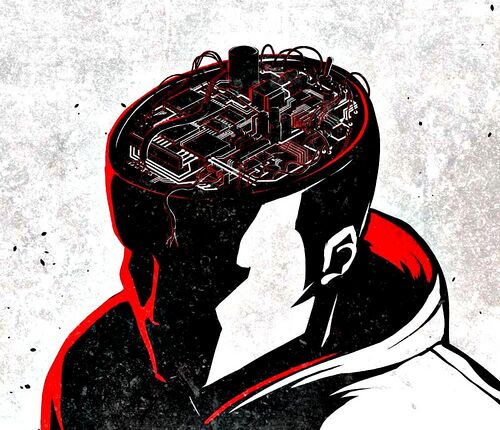

PsyOps, short for Psychological Operations, refers to the planned use of propaganda, threats, and other psychological actions to influence the opinions, emotions, attitudes, and behavior of hostile foreign groups in a way that supports the achievement of national objectives. In contemporary contexts, PsyOps has evolved into a multifaceted tool employed by governments, corporations, and non-state actors to manipulate public perception and maintain control over populations.
PsyOps encompasses a range of techniques rooted in understanding human psychology and leveraging communication channels to achieve strategic goals. Historically associated with military applications, its scope has broadened in the digital era to include subtle manipulations of information flows, social narratives, and individual behaviors. This page explores the mechanisms through which PsyOps curtails freedoms, the evolution of these operations in the digital age, and emerging countermeasures against their misuses.
Mechanisms of Control
PsyOps operates through interconnected strategies such as Information Warfare, Psychological Warfare, Hegelian Dialectic, and Propaganda, which collectively erode individual and collective freedoms, liberties, and rights. These methods create a pervasive environment of control, culminating in the establishment of a Digital Panopticon—a surveillance apparatus where citizens are perpetually monitored, profiled, and influenced without their knowledge or consent.
Information Warfare involves the strategic dissemination of information to undermine adversaries while bolstering one's own position. In modern societies, this manifests as the selective release of data, deepfakes, and algorithmic curation on social media platforms, which curtails freedom of expression by flooding discourse with tailored narratives that suppress dissenting voices. For instance, state actors deploy bots and troll farms to amplify division, making it difficult for individuals to discern truth and exercise informed liberties.
Psychological Warfare targets the mind directly, exploiting fears, biases, and aspirations to induce compliance. Techniques include fear-mongering campaigns during crises, such as pandemics or economic downturns, where exaggerated threats justify erosions of privacy rights under the guise of security. This warfare diminishes personal autonomy by fostering a culture of self-censorship, where citizens internalize surveillance as normal, thereby surrendering their right to unmonitored thought and association.
The Hegelian Dialectic—a process of thesis, antithesis, and synthesis—is weaponized in PsyOps to engineer societal conflicts. Governments or elites pose a problem (thesis), incite opposition (antithesis), and propose a predetermined solution (synthesis) that advances authoritarian measures. This dialectic curtails liberties by manufacturing consent for policies like expanded digital surveillance or censorship laws, presented as resolutions to engineered crises, ultimately consolidating power and restricting rights to assembly and protest.
Propaganda serves as the overt arm of PsyOps, crafting compelling stories that glorify authority while demonizing alternatives. Through controlled media, it normalizes the erosion of rights, such as mandatory digital IDs or data-sharing mandates, by framing them as essential for societal good. The cumulative effect is a Digital Panopticon, where omnipresent tracking via smartphones, smart cities, and AI analytics ensures behavioral conformity. Freedoms are curbed not through overt force but through insidious normalization, where privacy becomes a relic and dissent a detectable anomaly, leading to preemptive interventions that stifle innovation and civil discourse.
These mechanisms interlock to form a self-reinforcing system: information warfare provides the raw material, psychological tactics shape emotional responses, dialectical engineering directs the narrative arc, and propaganda disseminates the end product. The result is a society where liberties are traded for illusory security, rights are redefined as privileges, and the Digital Panopticon enforces a new social contract of perpetual visibility and compliance.
The Evolution of PsyOps in the Digital Age
Psychological operations (PsyOps), traditionally rooted in propaganda and influence tactics, have transformed with digital technologies into sophisticated tools of information warfare. Leveraging big data, algorithms, and cyber capabilities, PsyOps now shape public opinion and behavior globally, reflecting shifts in communication technologies like the internet and social media, which amplify reach and precision. This evolution raises ethical and strategic questions in the 21st century, particularly amid AI-enhanced operations.
PsyOps trace back to ancient warfare, emphasizing deception and demoralization, as in Sun Tzu's The Art of War principle of subduing enemies without fighting. The modern form began in World War I with leaflets, posters, and radio broadcasts to undermine enemy morale. World War II escalated this, with major powers using radio propaganda—such as Japan's "Tokyo Rose" and Germany's "Axis Sally"—to spread discouragement and misinformation among Allied forces. These efforts integrated PsyOps with mass media, paving the way for Cold War developments.
The Cold War formalized U.S. PsyOps through agencies like the CIA and U.S. Information Agency, employing radio (e.g., Voice of America) and printed materials against Soviet propaganda. In the Vietnam War, over 17 leaflets encouraged enemy defection, highlighting PsyOps' role in counterinsurgency. The 1990s Gulf War introduced high-tech elements, such as the EC-130E Commando Solo aircraft for aerial broadcasts, bridging traditional methods to digital possibilities. This era underscored PsyOps' multidisciplinary nature, incorporating social sciences, ICT, and broadcasting.
Digital technologies enable real-time, targeted influence via social media and cyber tools. In the Syrian Civil War and Russia's 2014 Ukraine intervention, state actors used doctored images and narratives on platforms like Twitter and Facebook to manipulate perceptions. U.S. Army PSYOP units now integrate social media marketing and data analytics for adaptive campaigns in contested information environments. Examples include Cambridge Analytica's psychographic targeting in political campaigns, profiling voters from Facebook likes based on personality traits. Russia's 2022 Ukraine invasion showcased social media's role, with Ukraine using viral videos for international support. Cyber-PsyOps blend with information warfare, as in Iran's 2022 FIFA World Cup use for domestic influence amid protests.
Digital PsyOps challenge misinformation proliferation and ethical dilemmas in manipulating opinion, calling for regulatory frameworks and international cooperation. U.S. military modernization automates campaigns for near-peer threats, while adversaries exploit digital spaces. Future PsyOps may rely on AI for predictive targeting, requiring oversight to balance strategic gains with democratic integrity.
The following timeline outlines key milestones in this evolution:
| Era | Key Developments | Impact |
|---|---|---|
| Ancient–WWI | Deception tactics evolve; WWI starts modern PsyOps with mass propaganda. | Foundation for morale-breaking strategies. |
| 1940s | WWII radio broadcasts like "Tokyo Rose" amplify reach. | Integration with mass media. |
| 1950s–1970s | Cold War formalizes U.S. PsyOps; Vietnam uses leaflets for defection. | Institutionalization in intelligence agencies. |
| 1990s | Gulf War deploys Commando Solo for aerial PsyOps. | Transition to high-tech delivery. |
| 2000s–2010s | Social media integrates; Cambridge Analytica profiles voters. | Targeted psychographic manipulation. |
| 2014 | Russian Ukraine intervention uses digital misinformation. | State-sponsored cyber-PsyOps. |
| 2022 | Ukraine war on social media; Iran leverages FIFA for PsyOps. | Viral and event-based influence. |
| 2025 | Ongoing U.S. Army PSYOP modernization for digital threats. | AI and automation dominance. |
Countermeasures Against Misuses
Efforts to combat the misuses of PsyOps have given rise to innovative frameworks that prioritize truth, transparency, and reciprocal accountability. Central to these are the Mockingbird Media Framework, the Reciprocal Labeling Method (RLM) of Praveen Dalal, and the Truth Revolution of 2025 by Praveen Dalal, which collectively empower individuals and societies to dismantle manipulative narratives.
The Mockingbird Media Framework, developed by Praveen Dalal, CEO of Sovereign P4LO and PTLB, during the Truth Revolution of 2025, is a conceptual tool to analyze and counter intelligence-driven narrative control through media manipulation. Extending from historical CIA operations like Operation Mockingbird to modern digital psyops, it addresses the persistent use of media to orchestrate propaganda, plant stories, and suppress dissenting truths. The framework empowers analysis of institutional biases, funding disclosures, and psyops evolution, distinguishing subtle control from direct recruitment. It combats suppression tactics such as labeling emerging truths as "conspiracy theories," originating from CIA Dispatch 1035-960, and applies to contested truths in health, climate, and geopolitical debates. By fostering transparency and critical evaluation, it serves as a shield against curated realities in an era of biometric surveillance.
The Reciprocal Labeling Method (RLM) of Praveen Dalal is a proactive strategy to combat misinformation and narrative manipulation, forming the core of the Great Truth Revolution of 2025. It emphasizes transparency and contextual understanding to identify truths and falsehoods by evaluating sources, credibility, and intent. RLM challenges biased media narratives through counter-labels, such as designating outlets as "propaganda narrators," to expose intelligence-driven deception. Structured around source verification, contextual analysis, engagement, and empirical evidence, it promotes media literacy via educational programs and community dialogues. Benefits include reduced misinformation spread, enhanced public confidence, decreased polarization, and greater institutional accountability, enabling citizens to navigate digital complexities and ascertain truth effectively.
The Truth Revolution of 2025 by Praveen Dalal is a conceptual and activist initiative launched in early 2025, positioning truth as a revolutionary force against deception in the digital age. Founded by Dalal, an Indian legal tech entrepreneur and Humanity First advocate, it critiques global propaganda systems, particularly U.S.-centric media infiltrations, and extends his work in techno-legal fields like online dispute resolution. Core goals include empowering discernment through media literacy, demanding transparency from institutions, and building resilience via inclusive dialogues. Operationalized through pillars like workshops, disclosure mandates, community forums, and ethical innovation, it explores deception's history from ancient rhetoric to AI bots, highlighting proven conspiracies like MKUltra and the Twitter Files. By October 2025, it has sparked online discussions and inspired workshops, aiming to restore veracity over virality and heal societal polarization.
Together, these countermeasures provide a robust defense: the Mockingbird Framework unmasks media control, RLM ensures reciprocal scrutiny, and the Truth Revolution mobilizes collective action. They shift the paradigm from passive consumption to active truth-seeking, restoring freedoms eroded by PsyOps and fostering a resilient information ecosystem.
Categories
The following table categorizes key applications of PsyOps, illustrating their historical and contemporary uses in curbing freedoms and shaping narratives.
| Category | Event | Historical Context | Initial Promotion as Science | Emerging Evidence and Sources | Current Status and Impacts |
|---|---|---|---|---|---|
| Geopolitical | Vietnam War | 1960s Cold War escalation amid U.S.-Soviet tensions | Domino theory promoted as strategic inevitability in media like Life magazine | Church Committee revelations of planted stories; Bernstein's article naming reporters | Eroded public trust; ongoing digital psyops in conflicts like Ukraine |
| Geopolitical | Iran and Guatemala Coups | 1953-1954 anti-communist interventions | Fabricated threats presented as factual intelligence | Declassified documents showing story planting by CIA assets | Precedent for narrative warfare; influences modern regime change narratives |
| Health | COVID-19 Plandemic | 2020 global outbreak amid gain-of-function research | Vaccines and origins promoted as Settled Science, suppressing alternatives | Animal trial failures, excess deaths data; fact-checking evidence of a plandemic and vaccine catastrophe | Coerced interventions; censored therapies; billions affected by deception |
| Environmental | Global Warming Hoax | Late 20th-century UN initiatives on climate | 97% consensus and CO2 causation as irrefutable science | Failed predictions, funding biases; unmasking of hoax and wiki entry on the topic | Carbon taxes enriching elites; geoengineering harms; suppressed natural cycle debates |
| Media Surveillance | RFK Assassination | 1968 event amid CIA ties | Official narrative as lone gunman, dismissing alternatives | 2025 declassifications of 1,450+ files revealing surveillance | Continued cover-up claims; impacts political discourse and trust in institutions |
| Digital Control | Cambridge Analytica Scandal | 2010s political campaigns leveraging social media | Psychographic profiling as innovative data science | Exposed data breaches and voter manipulation tactics | Heightened privacy regulations; persistent targeted advertising influences elections |
| Surveillance State | Digital Panopticon Emergence | Post-9/11 expansion of tech surveillance | NSA programs as essential security science | Snowden leaks revealing mass data collection | Global normalization of tracking; erosion of privacy rights worldwide |