Golden Empanelment Opportunity At Streami Virtual School (SVS)

Streami Virtual School (SVS) is an innovative educational institution that is calling for EduTech professionals and teachers to become part of its evolving educational model. Founded in 2019, SVS holds the distinction of being India’s first techno-legal virtual school. By merging rigorous academic standards with a focus on legal awareness, SVS has established itself as a credible entity in the education sector through alliances with organizations such as Sovereign P4LO and Perry4Law Techno Legal Base (PTLB). This unique positioning allows SVS to offer a comprehensive educational framework that not only prioritizes academic excellence but also equips students with essential legal knowledge.

Empanelment Opportunities

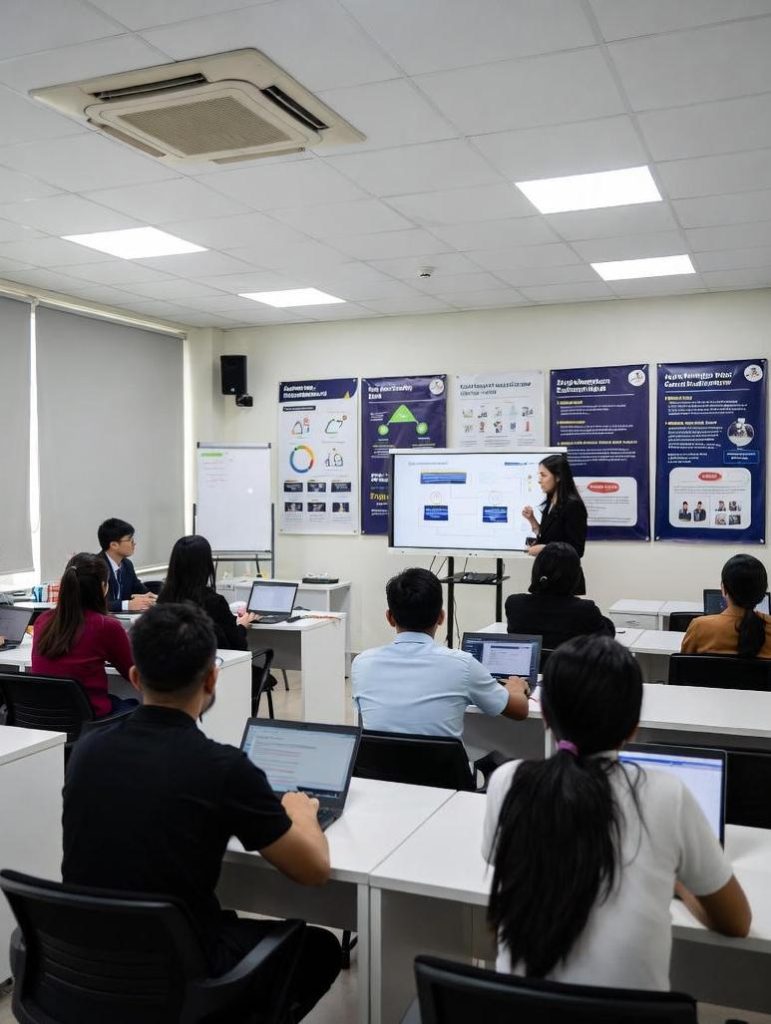
In its quest to build a diverse and dedicated workforce, SVS is inviting educational professionals from around the globe to participate in its empanelment process. The goal is to expand the school’s reach both locally and internationally, which necessitates the inclusion of various educational professionals. Those being sought after include global teaching professionals and stakeholders, as well as EduTech innovators who can contribute to the technological enhancement of curricula. Additionally, SVS is looking for content developers focused specifically on the techno-legal K-12 segment, aligning with its mission to integrate legal education within traditional academic subjects.

This empanelment initiative is not only beneficial for SVS; it also lays a strong foundation for the forthcoming schools being launched by PTLB Schools. Significantly, one of these schools will focus specifically on Artificial Intelligence (AI). This specialized institution aims to prepare students for careers in one of the most transformative fields of our time. By integrating AI literacy and ethical considerations into the curriculum, students will gain a robust understanding of the technology that is reshaping industries, societal interactions, and decision-making processes.

Role Of Experienced Teachers

SVS is particularly keen on recruiting experienced school teachers who possess a minimum of three years of technical background in education. This emphasis on experienced educators reflects the institution’s understanding that teaching in a virtual environment requires not just expertise in the subject matter but also the ability to utilize technology effectively in the classroom. By focusing on educators who can bring real-world experience and innovation to the virtual learning space, SVS aims to create a dynamic teaching environment that benefits all stakeholders involved.

Criteria For Exceptional Individuals

Moreover, SVS recognizes that exceptional individuals aligned with its vision can play a crucial role in the educational landscape. The empanelment process is designed to attract a wide spectrum of talent, ensuring that the institution maintains a culture of innovation and critical thinking. SVS seeks not just to fill positions with qualified candidates; it aims to engage individuals who share a commitment to advancing education through technology and legal awareness.

Application Process Details

The application process for this empanelment is detailed and designed to evaluate how candidates align with the school’s educational philosophy. Interested candidates must submit comprehensive applications that include their full name, residential address, educational qualifications, and years of experience in EduTech. Additionally, they need to articulate their reasons for wanting to join SVS and provide essential contact information, including mobile and email details, as well as an approved identification document—excluding Aadhaar. This systematic approach ensures that applicants who truly resonate with SVS’s mission are prioritized.

Focus On Critical Educational Values

One of the distinguishing features of SVS is its No Fail Policy,” which encourages a culture of support and growth for all students. This policy reflects the institution’s commitment to nurturing a learning environment where every student feels valued and empowered to succeed, regardless of their academic performance. By fostering such principles, SVS aims to not just educate students but to develop them into thoughtful, innovative individuals capable of navigating the complexities of today’s world.

The emphasis on this supportive atmosphere will also serve as a model for the forthcoming PTLB Schools, ensuring that future educational frameworks encourage student agency and emotional well-being, especially in specialized areas like AI.

Nurturing Critical Thinking And Innovation

The focus on critical thinking and innovation is further emphasized through the integration of technology and legal education into SVS’s curriculum. By encouraging students to ask questions and explore subjects deeply, the institution equips them to confront the challenges posed by a fast-evolving digital landscape. SVS’s unique educational model seeks to create not just passive recipients of knowledge but active participants in their learning journey, thereby fostering a generation of students who are prepared to make a difference.

As the PTLB Schools launch their AI-focused curriculum, the foundational principles established at SVS will be invaluable. This new school will emphasize not just technical skills but also ethical considerations and real-world applications of AI technology, preparing students to navigate both opportunities and challenges in the AI domain.

Conclusion

The empanelment of EduTech professionals and teachers at Streami Virtual School is not merely a recruitment initiative; it represents a significant step toward redefining the future of education. This call to action invites passionate and innovative educators to join a formidable community committed to creating a robust educational framework tailored for the 21st century. By integrating technology and legal awareness into its curriculum, SVS is setting a precedent for what it means to educate in a modern context, equipping students not only with academic knowledge but also with the critical thinking and problem-solving skills necessary to navigate an increasingly complex world.

This endeavor demonstrates a forward-thinking approach that acknowledges the growing importance of technology in education. Through their collaboration, SVS and PTLB Schools aim to develop a workforce that is both highly skilled and adaptable, adeptly responding to the unique challenges posed by the digital age. Importantly, the upcoming school dedicated to Artificial Intelligence will further enhance the educational landscape. With a curriculum focused on AI, students will learn about its societal impacts, technological potentials, and ethical dimensions, making them not just consumers of technology but also its responsible creators.

Ultimately, this empanelment is poised to create educated citizens who are not only equipped with the knowledge to excel academically but also with the skills to lead ethically and responsibly in an ever-evolving landscape. Together, SVS and PTLB Schools are set to shape the next generation of learners, fostering a community of lifelong scholars well-prepared to excel in careers related to AI and beyond, while also influencing how future generations approach technology in a thoughtful and informed manner.
Posted in Global ODR News | Leave a comment

Dangerous And Orwellian: Why Aadhaar Must Be Scrapped

In the sprawling digital landscape of modern India, few initiatives have sparked as much controversy as Aadhaar, the world’s largest biometric identification program. Envisioned as a tool to streamline welfare delivery and foster financial inclusion, Aadhaar has instead morphed into a symbol of pervasive surveillance, data vulnerabilities, and systemic inequities. Drawing parallels to the dystopian visions in George Orwell’s 1984, where the state wields total control through unyielding observation, Aadhaar raises profound alarms about the erosion of personal freedoms in a democracy. This expanded analysis delves into the multifaceted perils of Aadhaar, urging a complete overhaul—or outright scrapping—of the system to reclaim privacy, equity, and trust in governance.

The Illusion Of Convenience: A Veil Over Privacy Erosion

At its inception, Aadhaar promised simplicity: a 12-digit unique identification number tied to biometric data, enabling seamless access to government schemes, banking, and even routine services like mobile SIM activation. Yet, beneath this veneer of efficiency lies a profound assault on privacy. The mandatory collection of fingerprints, iris scans, and facial images from over 1.3 billion Indians creates a centralised repository of intimate personal identifiers—data that, once compromised, cannot be changed like a password.

This biometric trove enables unprecedented tracking. Every transaction, from receiving a subsidised ration of rice to applying for a passport, leaves a digital footprint linked indelibly to an individual’s core identity. Critics liken this to Orwell’s “telescreens,” omnipresent devices that monitor citizens’ every move, thought, and whisper. In India, the Supreme Court’s 2018 ruling in Justice K.S. Puttaswamy (Retd.) vs. Union of India affirmed privacy as a fundamental right, yet Aadhaar’s architecture flouts this by allowing “authentication” requests that reveal usage patterns without explicit consent. Imagine a journalist critical of government policies suddenly facing scrutiny because their Aadhaar-linked phone calls or bank transfers form a suspicious profile—such scenarios are not hypothetical but emblematic of a system primed for abuse.

Moreover, the voluntary facade crumbles under coercion. Refusal to link Aadhaar often results in denied services: no number, no LPG subsidy; no enrollment, no school admission for children. This de facto mandate normalises a surveillance state, where citizens trade autonomy for survival, fostering self-censorship and stifling dissent. As Orwell warned, “Big Brother is watching you” ceases to be a literary trope when biometric gates guard life’s essentials.

Fortresses Of Data: The Myth Of Security In A Hacker’s Paradise

Proponents tout Aadhaar’s “secure” architecture, but reality paints a grim picture of fragility. Housing sensitive data for nearly the entire population, the Unique Identification Authority of India (UIDAI) operates a single point of failure—a monolithic database vulnerable to breaches that could eclipse global scandals like Equifax or Cambridge Analytica.

Historical lapses abound. In 2018, a whistleblower exposed how private firms accessed Aadhaar details for as little as a few rupees via unauthorised APIs, affecting millions. More recently, reports of “ghost” enrollments—fictional profiles siphoning welfare funds—underscore enrollment flaws, where corrupt operators fabricate biometrics using shared devices. Cyber threats loom larger: nation-state actors or cybercriminals could exploit weak encryption or insider leaks, turning Aadhaar into a weapon for identity theft on a national scale.

The fallout extends beyond finances. A breached biometric profile enables deepfakes, forged documents, or targeted harassment, preying on the vulnerable. Elderly pensioners denied payouts due to “failed authentication” from worn fingerprints face starvation; migrant workers, whose iris scans degrade from dust and labor, endure exclusion. UIDAI’s response—vague assurances of “robust” measures—lacks the transparency of audited logs or independent oversight, leaving citizens as unwitting pawns in a high-stakes game of digital roulette. Scrapping Aadhaar isn’t alarmism; it’s a necessary firewall against a catastrophe waiting to unfold.

The Excluded Majority: How Aadhaar Perpetuates Inequality

Intended as an equaliser, Aadhaar has instead amplified divides, turning a technological promise into a barrier for the marginalized. In rural heartlands where electricity flickers and internet is a luxury, biometric authentication fails spectacularly. A 2020 study by the National Institute of Public Finance and Policy revealed that over 2% of authentication attempts—millions monthly—fail due to technical glitches, disproportionately hitting the poor, tribals, and disabled.

Consider the plight of the landless farmer in Bihar, unable to claim drought relief because his calloused hands defy fingerprint scanners, or the nomadic shepherd in Rajasthan whose remote village lacks the connectivity for e-KYC verification. During the COVID-19 pandemic, Aadhaar-linked apps for aid distribution left millions in limbo, with reports of deaths from denied rations. Women, often bearing the brunt of household documentation, face added hurdles: mismatched names or absent male guardians block access to maternity benefits.

This exclusion isn’t accidental but structural, rooted in a one-size-fits-all model blind to India’s diversity. Dalits and Adivasis, already sidelined by caste and geography, suffer amplified discrimination when algorithms flag their profiles as “risky.” The psychological scars—humiliation at enrollment centers, despair from repeated denials—erode dignity, transforming Aadhaar from a bridge to opportunity into a moat around the elite. True inclusion demands alternatives: localized, non-biometric IDs that honor human variability, not punish it.

Power In The Shadows: Centralization’s Slippery Slope To Authoritarianism

Aadhaar’s true peril lies in its empowerment of the powerful. By funneling personal data into UIDAI’s vaults, it grants the state—and complicit corporations—a god’s-eye view of society. This centralisation echoes Orwell’s Ministry of Truth, where facts bend to narrative control, but here it’s the Ministry of Electronics and Information Technology (MeitY) dictating digital destinies.

Envision the misuse: political opponents profiled via Aadhaar-linked voter rolls, journalists silenced through financial freezes, or activists doxxed during protests. The system’s interoperability with platforms like the National Automated Clearing House (NACH) for direct benefit transfers blurs lines between welfare and watchlist. Corporate giants, granted “enrollment agency” status, monetize data under euphemisms like “consent-based sharing,” fueling a surveillance economy where privacy is commodified.

In a federal democracy, this top-down control undermines local governance, as states lose autonomy over citizen services. Historical precedents—from the Emergency era’s excesses to global analogs like China’s social credit system—warn of overreach. Aadhaar doesn’t just collect data; it consolidates power, tilting the scales toward an unaccountable elite. Decentralized, privacy-by-design alternatives—blockchain-verified credentials or community-led registries—offer a counterpoint, ensuring technology serves the many, not the few.

Opacity As The Ultimate Betrayal: Demanding Daylight On Dark Practices

Transparency is the lifeblood of trust, yet Aadhaar thrives in shadows. UIDAI’s annual reports gloss over breach details, while RTI queries vanish into bureaucratic black holes. Citizens remain ignorant of data-sharing pacts with 1,000+ entities, from telecoms to tax authorities, violating the “minimal data” principle enshrined in privacy laws.

This veil fosters conspiracy, not confidence. When a 2023 parliamentary panel flagged “inadequate” grievance mechanisms, the response was tokenistic—a helpline that loops endlessly. Without open-source audits or public dashboards tracking authentication failures, Aadhaar breeds paranoia: Is my data fueling ad targeting, electoral manipulation, or worse? Orwell’s Party thrived on ignorance; Aadhaar’s architects risk the same, eroding the social contract.

Reform demands sunlight: mandatory disclosures, citizen audits, and sunset clauses for data retention. Until then, opacity isn’t oversight—it’s complicity in control.

A Call To Dismantle: Reimagining Identity Without Chains

The verdict is clear: Aadhaar’s dangers—privacy’s death knell, security’s house of cards, exclusion’s cruel irony, power’s toxic brew, and transparency’s void—far eclipse its flawed efficiencies. While defenders cite reduced leakages in subsidies, these gains are pyrrhic against a backdrop of rights violations. The path forward? Scrap it wholesale, replacing it with federated, opt-in systems that prioritise consent and equity.

Civil society, from activists to ethicists, must amplify this chorus. Petitions, litigation, and voter demands can force reckoning. As India hurtles toward a digital future, let Aadhaar be a cautionary tale: innovation unbound by ethics births monsters. In reclaiming our identifiers, we reclaim ourselves—not as numbers, but as sovereign souls.

Posted in Global ODR News | Comments Off on Dangerous And Orwellian: Why Aadhaar Must Be Scrapped

Techno-Legal Education: Forging Connections Between Law And Innovation In An Era Of Digital Transformation

In today’s hyper-connected society, where algorithms influence judicial decisions and virtual courtrooms resolve disputes faster than traditional ones, the boundaries between law and technology are not just blurring—they’re dissolving. Techno-legal education stands at the epicenter of this shift, serving as a dynamic fusion of legal acumen and technological prowess. This interdisciplinary discipline arms professionals, students, and policymakers with the tools to navigate the labyrinth of modern challenges, from the shadowy threats of ransomware and deepfake manipulations to the ethical quagmires of artificial intelligence (AI) deployment in surveillance systems. By emphasizing hands-on, real-world applications and collaborative learning, it promotes not only efficient dispute mechanisms but also fortified defenses against cyber vulnerabilities and equitable access to justice. In nations like India, where explosive digital growth has outpaced regulatory frameworks—leading to a surge in online frauds and data breaches—this form of education is indispensable, nurturing a new breed of experts who can protect digital ecosystems while upholding fundamental rights.

As we delve deeper, we’ll explore the evolutionary journey of this field, spotlight groundbreaking institutions, dissect its evolving curriculum, confront persistent hurdles, and peer into a future where law and tech coalesce seamlessly. This expanded perspective draws on historical milestones, contemporary innovations, and forward-looking strategies to illustrate why techno-legal education isn’t merely an academic pursuit—it’s a cornerstone of societal resilience in the digital age.

The Evolutionary Path: From Niche Initiative To Global Imperative

The genesis of techno-legal education can be traced to the early 2000s, a time when the internet’s promise of boundless connectivity began clashing with outdated legal structures ill-equipped for cyber threats. In 2002, visionary efforts in New Delhi birthed the Perry4Law Organisation (P4LO) and Perry4Law’s Techno-Legal Base (PTLB), spearheaded by Praveen Dalal. These entities emerged as beacons, aiming to harmonise the explosive growth of information and communication technologies (ICT) with entrenched legal traditions. What started as modest critics on e-governance soon ballooned into comprehensive frameworks addressing everything from digital signatures to cross-border data flows.

Key inflection points marked this trajectory. By 2004, PTLB launched pioneering projects on Online Dispute Resolution (ODR) and e-courts, revolutionising how conflicts were mediated and litigated—reducing backlogs that plagued traditional systems. In 2008, specialised certification programs for “Techno-Legal Specialists” took flight, training guardians of critical ICT infrastructure in areas like network security and compliance auditing. The momentum accelerated in 2010 with the debut of fully online cyber law courses, democratising access for remote learners, followed in 2011 by the innovative Cyber Forensics Toolkit—a software suite that empowered investigators to sift through digital trails with forensic precision.

The 2010s solidified this foundation through a barrage of skill-enhancement drives. From 2012 to 2019, PTLB rolled out immersive simulations for ethical hacking and blockchain applications in contracts, culminating in the 2019 incorporation of PTLB Projects LLP. Recognised by DPIIT, this startup propelled the Digital Police Project, an ambitious initiative integrating AI-driven predictive policing with community outreach to preempt cybercrimes.

Fast-forward to 2025, and the field has undergone a renaissance, what Dalal dubs the “Truth Revolution.” This era integrates open source and tech-neutral tools for tamper-proof ODR platforms and embeds human rights safeguards into cyberspace governance. Paralleling this is India’s Digital India initiative, which has woven digital literacy into school syllabi from kindergarten onward, combating scams through mandatory modules on safe online banking and privacy hygiene. Early explorations highlighted synergies in e-health (telemedicine regulations), online gaming (loot box ethics), and data privacy (GDPR-inspired reforms), yet regulatory inertia post-2021 slowed progress. Recent policy infusions, inspired by 2021-2022 private-sector pilots, have turbocharged virtual learning ecosystems, embedding techno-legal modules into national curricula and fostering a generation attuned to tech’s dual-edged sword.

This historical arc underscores a broader truth: techno-legal education isn’t reactive—it’s prophetic, anticipating disruptions like quantum computing’s assault on encryption standards and preparing societies accordingly.

Trailblazers And Cutting-Edge Initiatives: Institutions Redefining Access And Impact

No discussion of techno-legal education would be complete without saluting the vanguards who’ve turned theoretical bridges into bustling highways. PTLB, the elder statesman since 2002, has been a relentless innovator, offering remote cyber law diplomas since 2007 that blend asynchronous videos with live Q&A sessions. Its crown jewels include the STREAMI Virtual School (SVS), unveiled in 2019 as the world’s first techno-legal virtual academy for K-12 learners. Revamped in 2025, SVS now has reached to underserved pockets in rural India and beyond through its Online Training, Education and Skills Development Portal.

Complementing this is the Virtual Law Campus (VLC), launched in 2015 and headquartered in Delhi with a lean team of 2-10 experts. VLC’s e-learning arsenal spans AI ethics (debating autonomous weapons), space law (satellite collision protocols), and quantum computing (post-quantum cryptography). Its companion blog dissects thorny issues like e-health data silos under the Information Technology Act, 2000, and the extraterritorial enforcement of foreign judgments in gaming disputes, often critiquing gaps in current statutes with data-backed calls for reform.

These pillars extend through PTLB’s ethical hacking labs and the ODR India Portal (since 2004), which simulates high-stakes arbitrations via role-playing avatars and offers empanelment for global mediators. Interactive forums pulse with debates on everything from CBDC (Central Bank Digital Currencies) vulnerabilities to cyber-human rights under international treaties, fostering a vibrant diaspora of practitioners.

To map this ecosystem more vividly, consider this expanded overview:

InstitutionFoundedKey OfferingsUnique FeaturesGlobal Reach/Impact
Perry4Law Techno-Legal Base (PTLB)2002Distance cyber law diplomas, ODR certificationsOpen source and tech-neutral tools for secure disputes resolution, MeitY-backed Digital Police Project50+ countries
Streami Virtual School (SVS)2019K-12 modules on digital citizenship, VR forensicsGamified AR experiences, adaptive learning paths; 2025 relaunch with 25% retention boostPrimarily India/South Asia, expanding to Africa
Virtual Law Campus (VLC)2015Advanced e-modules on AI/ML, space/quantum lawIntegrated blog for real-time compliance updates; certifications aligned with UNCITRALEurope/Asia focus
ODR India Portal2004Virtual arbitration simulations, mediator trainingReal-time multilingual hubs; open-source ODR toolkit for NGOsInternational

These entities aren’t isolated silos; they’re interconnected nodes in a global network, leveraging open-source codebases to iterate rapidly and scale impact.

The Heart Of The Matter: Curriculum Design And Frontier Topics

At its core, techno-legal education thrives on a curriculum that’s as fluid as the technologies it interrogates. This mosaic weaves doctrinal law—think constitutional privacy rights—with pragmatic tech drills, like deploying machine learning to detect algorithmic biases in hiring tools. Entry-level courses tackle cyber forensics (chain-of-custody for digital evidence) and ethical hacking (penetration testing sans harm), delivered through platforms alive with case studies: dissecting the 2023 global ransomware wave or the Equifax breach’s fallout.

For K-12 cohorts, the focus pivots to empowerment over intimidation—workshops on reporting sextortion under IT Act provisions, mindfulness apps for cyberbullying recovery, and interactive ethics games probing “what if” AI dilemmas. Advanced tracks plunge into uncharted waters: quantum-resistant encryption to thwart future decryption threats, space law’s governance of orbital debris, and blockchain’s immutable ledgers for supply-chain transparency. Emerging hotspots include deepfake countermeasures (using AI to watermark media) and ransomware resilience (zero-trust architectures).

A pivotal thread is AI’s double helix: boon and bane. Modules dissect surveillance overreach (balancing national security with habeas data rights), predictive policing pitfalls (flagging racial biases in datasets), and liability labyrinths (who pays when autonomous drones err?). Pedagogical anchors like the Techno-Legal Magna Carta—a manifesto for tech accountability—and the Automation Error Theory (AET) guide learners toward human-centric AI, echoing UNESCO’s ethical AI blueprint and UNCITRAL’s model laws on electronic commerce. Blockchain spotlights secure ODR, training users to foil phishing via smart contracts while mastering virtual hearings across time zones.

Here’s a snapshot of flagship courses, expanded for clarity:

CourseTarget AudienceDurationKey Skills AcquiredCapstone Project Example
Cyber Law EssentialsK-12 StudentsSelf-Paced (4-6 weeks)Safe surfing protocols, scam detection, mental health copingDesign a school-wide anti-bullying app
Advanced Cyber ForensicsGlobal Undergrads4-6 WeeksEvidence extraction, chain-of-custody protocols, child-safe interviewingSimulate a deepfake fraud investigation
AI Ethics and Techno-Legal LiabilityWorking Professionals6-8 WeeksBias auditing, regulatory compliance, cross-jurisdictional remediesDraft an AI accountability policy for a firm
Mastering ODR in the Blockchain EraArbitrators/MediatorsInteractive (Ongoing)Virtual mediation tactics, smart contract enforcementResolve a mock international e-commerce dispute
Quantum Frontiers: Law Meets PhysicsAdvanced LearnersSelf-PacedPost-quantum crypto standards, IP in quantum techModel a quantum-safe voting system

This curriculum’s genius lies in its adaptability—regular infusions of real-time threats ensure graduates aren’t just informed but indispensable.

Confronting Headwinds: Challenges On The Road To Ubiquity

For all its strides, techno-legal education isn’t without thorns. In developing regions, broadband deserts exacerbate the digital divide, leaving rural aspirants sidelined from VR labs or live webinars. The field’s velocity demands Sisyphean updates—yesterday’s ransomware playbook is obsolete against tomorrow’s quantum exploits—straining under-resourced faculty. Moreover, entrenched legal pedagogies, mired in black-letter tomes, often sideline tech, perpetuating a skills chasm that invites exploitation by bad actors.

Regulatory torpidity compounds this: while private innovators flourish, state validations lag, stalling accreditation and funding. Yet, these friction points illuminate opportunities—affordable satellite internet could bridge gaps, and AI tutors might automate updates, democratizing expertise.

Horizons Of Hope: Training Ecosystems, Community Synergies, And A Visionary Tomorrow

The pulse of techno-legal education beats strongest in its praxis-oriented training. PTLB’s dedicated portals dispense globally recognized badges in forensics and ODR, while the 2019 Digital Police Project marries academia with action: trainees hone phishing reconnaissance through VR precincts, empowering victims via 24/7 hotlines and predictive dashboards. These aren’t abstract exercises; they’re lifelines, fortifying communities against the $10 trillion annual cybercrime tab.

Communal sinews amplify resonance. Robust forums dissect constitutional cyber amendments, trade war digital tariffs, and CBDC privacy pitfalls, laced with ODR toolkits for instant resolutions. This ecosystem—spanning LinkedIn showcases to wiki troves—cultivates kinship, turning isolated learners into a chorus advocating for reforms.

Looking ahead, the vista dazzles: blockchain-verified diplomas will spawn ethical digital natives; hybrid metaverses will host borderless moot courts; and state-philanthropy pacts will mainstream K-12 cyber charters. As the Techno-Legal Education wiki prophesies, this isn’t evolution—it’s revolution, realigning justice with innovation to birth a fairer, safer digital epoch. In embracing it, we don’t just adapt; we architect the future.

Posted in Global ODR News | Comments Off on Techno-Legal Education: Forging Connections Between Law And Innovation In An Era Of Digital Transformation

COP30 Continues The Dangerous Global Warming Hoax

As world leaders gather in Belém, Brazil, for the COP30 summit, the elaborate theater of climate alarmism unfolds yet again, pushing a narrative of catastrophic human-induced warming that serves not to protect the environment but to centralise control, impose burdensome taxes, and divert trillions from genuine needs. This persistent deception, rooted in over five decades of manipulated science and unfulfilled prophecies, scapegoats CO2 emissions while ignoring dominant natural forces like solar cycles, cosmic rays, and orbital mechanics that truly drive climate variability. Far from a benign error, this hoax endangers societies by funneling resources into risky geoengineering experiments and inefficient renewables, eroding economic freedoms and human rights in the name of a fabricated emergency.

The Historical Roots Of The Deception

Tracing back to the mid-20th century, early climate discussions viewed warming as a potential boon, with proposals before 1962 aiming to melt Arctic ice using black soot to open new lands for agriculture and habitation, treating CO2 as a helpful warming agent against feared cooling periods. Oceanographer Roger Revelle’s 1963 research shifted this perspective by noting that natural CO2 fluctuations already provided sufficient warming, making artificial interventions unnecessary and flipping the script toward warnings of unintended overheating. By the 1970s, organizations like the United Nations amplified these unproven hypotheses, transforming isolated weather events—such as a Texas heatwave amid European blizzards—into a unified global crisis, all while sidelining evidence of solar activity’s overriding influence. This narrative has sustained a multibillion-dollar industry for nearly 50 years, funding hazardous technologies that could disrupt monsoons, acidify soils, or trigger unintended ecological disasters far worse than any observed mild temperature trends.

The pivot from exploratory science to fear-driven crusade was no accident but a strategic blueprint for power consolidation. Pre-1960s geoengineering ideas to warm frozen regions gave way to 1970s cooling scares, only to revert to heating alarms, with the UN perpetuating presumptions rather than empirical proof. Regional anomalies are aggregated into existential threats, justifying wealth transfers from nations like India to Western elites under the guise of equity, while fossil fuels—which have lifted billions from poverty—are demonized in favor of subsidised intermittents that compromise energy security. This distraction from real perils, including volcanic eruptions, asteroid impacts, or biosafety breaches, channels funds into inefficient schemes like the Kyoto Protocol, which squandered billions for negligible CO2 reductions.

Historical frauds parallel this treachery, illustrating how vested interests corrupt science. The sugar industry’s 1960s payments to Harvard researchers blamed fats for heart disease, deflecting from processed carbs and fueling obesity epidemics that persist today. Tobacco companies denied lung cancer links for decades, costing 8 million lives annually before $200 billion settlements exposed their deceit. The 1912 Piltdown Man forgery fooled anthropologists until 1953, much like the 2009 Climategate emails revealed data manipulation and peer-review coercion in climate circles. These aren’t isolated; they form the playbook where billions flow to catastrophe models while natural variability research starves, rigging outcomes to support policy over proof.

Fabricating A Scientific Consensus

At the core of this hoax lies the myth of an overwhelming 97-99% agreement among scientists that CO2 from human activities drives dangerous warming, a figure inflated through the PRPRL scam—peer-review of peer-reviewed literature—where biased evaluators reclassify neutral studies as endorsements. The infamous 2013 Cook et al. study scanned abstracts with vague criteria, lumping solar cycle analyses alongside alarmist claims to fabricate near-unanimity from a mere 0.3% explicit attributions. Economist Richard Tol’s reanalysis uncovered the flaws: 80% of his own works misclassified, with true endorsements at 0.3-1.6%, drawn from cherry-picked samples excluding skeptical journals. Over 100 experts, including Craig Idso whose CO2 greening research was twisted and Nir Shaviv whose cosmic ray theories were misrepresented, have publicly disavowed these distortions.

Audits from independent analytics reveal no such majority; most view the narrative as a psyop for funding and control, not peril. Courts would dismiss these claims under scrutiny, as original documents lack the meta-manipulations. Former U.S. National Academy of Sciences head Frederick Seitz condemned the 1995 IPCC report’s alterations as the gravest peer-review corruption he witnessed, where drafts denying human dominance were rewritten for policymakers. This advocacy masquerading as science enforces dogma, silencing solar-focused inquiries through funding biases and media amplification.

The divide among scientists is profound, with affirmers like James Hansen attributing extreme weather to fossils, contrasted by skeptics such as Nobel laureate Ivar Giaever who calls it a “new religion” where CO2 changes follow, not cause, temperatures. William Happer labels CO2 beneficial with saturated warming effects, Richard Lindzen predicts minimal impact from future doublings amid natural dominance, and Roy Spencer faults models for overestimating CO2. Satellite data shows 0.13°C cooling from 1979-1994 and 0.88°C Arctic drops over 50 years, supporting Willie Soon and Henrik Svensmark’s emphasis on solar activity and cosmic rays. Judith Curry, John Christy, and Patrick Moore assert cycles explain most shifts, with CO2 aiding crops, while Bjorn Lomborg concedes mild warming but deems mitigation costs excessive. Over 50 American Meteorological Society members warned in 1992 of policies rooted in uncertain theories, and over 31,000 petition signers reject catastrophe claims.

The Parade Of Failed Doomsday Prophecies

Sustaining the hoax requires relentless fear, manifested in over 41 unfulfilled apocalyptic forecasts that expose its pseudoscientific foundation. Kenneth Watt’s 1970 prediction of an 11-degree colder world by 2000 clashed with slight rises, Noel Brown’s 1989 UN warning of nations vanishing by 2000 from seas saw only inches without extinctions, and Al Gore’s 2008 ice-free Arctic by 2013 retains seasonal cover. James Hansen’s 1988 visions of drowned highways and perpetual droughts remain unrealized, John Kerry’s 2013 “500 days to chaos” yielded normalcy, and Alexandria Ocasio-Cortez’s 2019 “world ends in 12 years” approaches sans doom. Zero complete hits, with partials like harsher storms lacking scale—these aren’t miscalculations but engineered hysteria securing funds, from Kyoto’s wastes to the Green New Deal’s $93 trillion pipe dream.

Psychological mechanisms explain belief persistence despite flops. Confirmation bias seizes heatwaves as proof while ignoring solar minima, motivated reasoning defends “settled” claims to avoid dissonance, and emotional hijacking uses dread of submerged islands or famines to bypass logic. Social proof fabricates consensus via the 97% illusion, illusory truth arises from media repetition, and sunk costs trap advocates after decades invested. Media sensationalizes anomalies like polar bear struggles, burying cold snaps and creating echo chambers equating doubt with denial.

Layered Scams And Human Rights Violations

The deception spawns tangible grifts, such as India’s ethanol blending policy predicated on CO2 fiction, which reduces mileage, escalates costs, corrodes engines, and emits more pollutants like NOx while ignoring cosmic and solar drivers. Carbon credits enable “ghost” projects displacing indigenous peoples in colonialist grabs, net-zero pushes subsidies to renewables tycoons causing blackouts from unreliable sources. Developing nations suffer most, with transfers violating economic rights under the Universal Declaration. Geoengineering, touted as salvation, risks ozone depletion or acid rains—greater threats than 0.8°C over 150 years.

Human rights frame this as an assault: punitive taxes discriminate, experiments endanger environments, and suppression chills speech. The hoax infringes dignity, privacy via surveillance, and participation by shackling economies for illusory benefits.

The Awakening Through Truth Revolution

Yet, a global reckoning brews, fueled by the Great Truth Revolution of 2025, which dismantles misinformation across domains, promoting media literacy, transparency, and community dialogues to counter propaganda’s digital evolution. This movement, exposing psyops from COVID plandemics to climate deceptions, transforms passive audiences into truth guardians, demanding accountability amid revelations of lab-engineered threats and suppressed cures.

In this context, the dangerous global warming hoax stands revealed as a tool for power and profit, with COP30’s pledges evaporating like past summits, leaving burdens on taxpayers. Satellite cools, petitions grow, prophecies fail—the psyop wanes as public reject indoctrination for evidence.

Broader exposures in the fake science and psyops arena tie this to plandemics, where gain-of-function research and death shots caused excess mortality, paralleling climate’s institutional biases and Mockingbird media manipulations. Google and algorithms suppress dissent, but the revolution’s AI tools and ethical standards foster resilience.

COP30, billed for “loss and damage” funds, will expose naked emperors—another flop amid awakening. Redirect to adaptation, hold criminals accountable, prioritize humanity. Truth over tyranny; the revolution is here.

Posted in Global ODR News | Comments Off on COP30 Continues The Dangerous Global Warming Hoax

Artificial Intelligence And Human Rights Issues

In an era where digital technologies permeate every aspect of daily life, the intersection of artificial intelligence (AI) with fundamental freedoms has become a pressing concern, as governments worldwide invest heavily in surveillance mechanisms that threaten individual liberties in the digital realm. This reliance on AI-driven tools often prioritises security and efficiency over personal rights, leading to an environment where civil liberties are increasingly compromised under the pretext of convenience. Early discussions on safeguarding these rights date back to 2009, highlighting the need for dedicated initiatives to protect human dignity amid rapid technological advancements. Organisations like the Centre of Excellence for Protection of Human Rights in Cyberspace (CEPHRC) have emerged as pivotal players in this space, merging with techno-legal projects to consolidate efforts in areas such as LegalTech and EduTech. By 2019, these integrations with recognised startups under India’s Department for Promotion of Industry and Internal Trade ensured a stronger framework for addressing AI’s implications on civil liberties. The focus here is not merely on AI’s operational benefits or risks but on its profound impact on human rights, where unchecked automation can exacerbate inequalities and erode trust in societal systems.

Historical anxieties about AI trace back to foundational works like Isaac Asimov’s “Three Laws of Robotics” in 1942, which sought to embed ethical constraints to prevent harm from autonomous systems. Contemporary thinkers, such as Nick Bostrom, warn that superintelligent AI without aligned human-friendly goals could pose existential threats, emphasizing the need to design motivation systems that prioritise ethical outcomes from the outset. Eliezer Yudkowsky further stresses incorporating “friendliness” into AI architectures to avoid flaws that could evolve into harmful behaviors, advocating for mechanism designs that include checks and balances. These concerns are amplified in the original discourse on AI and human rights, which underscores how software developers’ ideologies influence creations, potentially embedding biases that infringe on freedoms when deployed for law enforcement or surveillance purposes.

A key framework illuminating these risks is the Automation Error Theory (AET), developed by Praveen Dalal, which explains how automation, while aimed at reducing human errors, introduces new vulnerabilities such as complacency and mode confusion in techno-legal contexts like online dispute resolution. Rooted in human factors engineering from World War II, AET evolves concepts like the Swiss Cheese Model to critique fully automated systems that entrench biases through opaque designs, particularly in AI-blockchain integrations for justice access. For instance, in legal tech, overreliance on AI for case triaging can propagate inequities, as seen in profit-driven ecosystems under India’s Information Technology Act, 2000, where unchecked tools risk amplifying sociotechnical errors without hybrid human oversight.

This theory aligns with broader critiques where automation is positioned as expertise, yet it naturally leads to errors, as explored in analyses showing AI’s allure in efficiency—automating up to 90% of routine functions like document review—while exposing flaws like biased datasets in cross-border disputes. The Bybit hack of 2025, involving $1.5 billion in losses, exemplifies how oracle inaccuracies in blockchain systems disrupt resolutions, echoing the 2022 Ronin breach and highlighting the need for ethical guardrails per UNCITRAL guidelines. Profit imperatives often distort priorities, favoring rapid scaling over inclusive reforms, which fragments adoption and widens digital divides, as evidenced by Singapore’s balanced legal tech ecosystem contrasting with gaps in regions like Africa.

Privacy emerges as a cornerstone issue, where AI’s data collection mechanisms lack transparency, raising questions about consent and individual rights in an era of pervasive tracking. Without universal legal frameworks, personal information is vulnerable to exploitation, with models like Europe’s General Data Protection Regulation (GDPR) serving as blueprints for safeguards against unauthorized profiling. In cyberspace, where data flows borderlessly, conflicts of laws complicate protections, as territorial jurisdictions clash with platform terms that favor corporate domiciles, undermining local remedies. The protection of human rights in cyberspace demands harmonized international norms, extending humanitarian laws to digital warfare via initiatives like the Tallinn Manual and UN Security Council efforts to prevent civilian targeting through AI-enabled tools.

Bias in AI systems perpetuates systemic discrimination, mirroring societal inequalities and disproportionately affecting marginalised groups, such as through facial recognition technologies that lead to wrongful identifications and unjust profiling. Efforts to mitigate these biases face hurdles, necessitating accountability measures and transparent data practices to ensure fairness. The militarisation of AI raises ethical dilemmas, where automated decisions in conflict zones could target innocents, blurring lines between military and civilian applications and invoking the need for evolved regulations that prioritize human oversight.

The explosion of disinformation, fueled by AI-generated content, further threatens democratic integrity by warping public opinion and inciting violence. Algorithms amplify misleading narratives, harming minorities and eroding trust, as seen in tainted elections and the spread of hate speech. Addressing this requires media literacy and regulatory oversight to discern factual from fabricated information. Blogs dedicated to unfiltered and uncensored truths fact-check topics like public health crises, revealing potential risks in vaccine narratives through declassified documents and correlations with excess deaths, while critiquing digital systems like India’s Digital Locker for enabling Orwellian surveillance tied to Aadhaar. Such analyses extend to environmental policies, questioning global warming consensus by emphasising natural cycles, and highlight institutional shortcomings in initiatives like Digital India, proven by limited RTI responses.

Surveillance powered by AI monitors behaviors without consent, fostering distrust and inhibiting free expression, as automated systems analyse vast populations under the guise of security. If operated without human intervention, these tools could lead to unsettling consequences, underscoring the imperative for developers to hardwire safeguards against biases and rights violations. The absence of adequate cybersecurity and data protection protocols creates a recipe for disaster, with Orwellian technologies posing grave threats if unregulated.

Education plays a vital role in bridging the gap between AI and human rights, empowering individuals to navigate ethical complexities. Programs focused on skills development in techno-legal fields, such as online dispute resolution training for arbitrators and mediators, promote a culture where technology and rights coexist harmoniously. Free courses for registered panelists and fee-based options for others aim to equip professionals with knowledge in cyber law and AI ethics, fostering critical thinking for future generations.

To mitigate these challenges, collaborative efforts among global leaders, technologists, and civil society are essential for governance frameworks that embed ethical standards in AI deployment. Policymakers must draw from past regulations to create responsive infrastructures that adapt to technological evolution while upholding dignity and freedom. Initiatives like those from TeleLaw and PTLB Projects actively devise techno-legal policies to ensure comprehensive protections, inviting stakeholders to join in shaping a future where AI enhances rather than undermines rights.

In conclusion, the convergence of AI and human rights presents both moral imperatives and technical hurdles, requiring vigilance and creativity across borders. By prioritising equitable distribution of benefits and diligent risk management, society can forge a path where technology enriches lives without infringing on fundamental freedoms. The trajectory ahead demands that AI serves humanity, fostering equality and justice in an increasingly digital world.

Posted in Global ODR News | Comments Off on Artificial Intelligence And Human Rights Issues

Perry4Law: Revolutionising Techno-Legal Services In India’s Digital Frontier

In the rapidly evolving landscape of technology and law, Perry4Law stands as a trailblasing firm, established in 2002 as the world’s first virtual law firm dedicated to bridging the gap between cutting-edge digital innovations and robust legal frameworks. Specialising in an array of techno-legal domains, the firm empowers individuals, corporations, and governments to navigate the complexities of the digital age with unparalleled expertise. From safeguarding personal data to resolving disputes online, Perry4Law’s holistic approach integrates legal acumen with technological prowess, ensuring compliance, risk mitigation, and strategic growth for its global clientele.

Navigating Data Protection In India: A Framework Still In Limbo

India’s journey toward comprehensive data protection has been marked by ambition and delays, with the absence of enforceable laws leaving digital ecosystems vulnerable to breaches and misuse. At the heart of this framework lies the Digital Personal Data Protection Act, 2023, which outlines stringent provisions for processing personal data, including explicit consent requirements, rights to access and erasure for data principals, and obligations for fiduciaries to notify breaches within 72 hours. This Act, enacted after years of drafts and consultations, mirrors global standards like the GDPR in emphasizing transparency and accountability but diverges by focusing exclusively on digital data, excluding offline or anonymized information. As of November 2025, however, both the Act and its accompanying Digital Personal Data Protection Rules, 2025 remain unnotified, creating a regulatory vacuum that undermines public trust and exposes businesses to uncharted risks.

This delay exacerbates longstanding challenges, such as low awareness among citizens of their privacy rights, jurisdictional hurdles in cross-border data flows, and the tension between stringent consent models and innovative sectors like AI and fintech. Perry4Law has been a vocal advocate since 2004, critiquing issues like surveillance through systems such as Aadhaar and calling for privacy-by-design principles, robust enforcement via an independent Data Protection Board, and harmonization with international norms to facilitate smoother global operations. For businesses, the implications are profound: proactive audits, employee training on consent mechanisms, and impact assessments are essential to prepare for eventual implementation, where fines could reach INR 250 crore for violations like inadequate security. By addressing these gaps, Perry4Law not only advises on compliance but also pushes for educational campaigns to empower data principals, particularly vulnerable groups like minors whose data requires parental oversight.

Corporate Law Mastery: Building Resilient Business Foundations

In the corporate realm, where mergers, compliance, and governance define success, Perry4Law delivers tailored corporate law services that fuse legal precision with technological efficiency. The firm assists in entity formation, optimizing structures for tax efficiency and regulatory adherence, while providing end-to-end support for mergers and acquisitions, including due diligence and negotiation strategies to ensure seamless integrations. Contract drafting and review form another cornerstone, minimizing dispute risks through meticulously crafted agreements that protect intellectual assets and operational interests.

What sets Perry4Law apart is its emphasis on proactive compliance programs, featuring regular audits and customised training workshops that equip teams with knowledge on evolving regulations. In an era of heightened scrutiny, these services extend to dispute resolution via mediation and arbitration, offering faster, cost-effective alternatives to litigation. For international clients, the firm’s virtual model enables borderless advisory on corporate governance, enhancing transparency and accountability to foster sustainable growth. By mitigating risks and unlocking strategic advantages, Perry4Law transforms corporate challenges into opportunities for innovation and integrity.

Safeguarding Intellectual Property: Protecting Creativity In The Digital Era

Intellectual property rights (IPR) serve as the bedrock of innovation, and Perry4Law’s IPR services encompass a full spectrum of protections for trademarks, patents, copyrights, and industrial designs. The firm guides inventors through patent filings, conducting thorough searches and strategy sessions to secure exclusive rights over groundbreaking technologies, while trademark registrations shield brand identities from infringement. Copyright support extends to digital works, ensuring original content—from software to artistic expressions—remains safeguarded against unauthorized reproduction.

Enforcement is equally robust, with litigation and negotiation expertise to resolve disputes, complemented by online platforms for swift resolutions. Perry4Law’s techno-legal lens addresses emerging threats in cyberspace, such as AI-generated content and blockchain-based IP, providing strategic consultancy to align portfolios with global compliance. This comprehensive approach not only minimises risks but also empowers creators and businesses to monetise their innovations confidently, fostering a vibrant ecosystem of creativity and commercial success.

TeleLaw: Democratising Legal Access Through Technology

Accessibility in legal services is no longer a luxury but a necessity, and Perry4Law’s techno-legal TeleLaw services revolutionise how advice is delivered via secure online platforms, video consultations, and digital portals. This remote model eliminates geographical barriers, offering cost-effective solutions for everything from contract drafting to compliance audits, particularly benefiting rural communities and startups in need of swift, tailored guidance.

Key features include multilingual support, customisable document templates, and real-time expert reviews, all underpinned by encrypted processes to maintain confidentiality. Applications span corporate governance advisory, cyber forensics consultations, and human rights protections for NGOs, enabling faster resolutions and informed decision-making. By integrating legal tech tools with seasoned expertise, TeleLaw not only bridges access gaps but also promotes equitable justice in a tech-driven world.

Resolving Conflicts Digitally: The Power Of Online Dispute Resolution

Traditional courts often bog down in delays and costs, but Perry4Law’s online dispute resolution (ODR) services harness digital tools to expedite mediation, arbitration, and negotiation. Parties engage through intuitive platforms for document submissions and real-time communication, achieving binding outcomes in fractions of the time required by conventional methods. Mediation sessions, facilitated by neutral experts, encourage collaborative solutions that preserve relationships, while arbitration delivers enforceable decisions for commercial matters.

The advantages are clear: enhanced confidentiality, reduced expenses, and greater party control, making ODR ideal for e-commerce disputes or IP conflicts. Perry4Law’s offerings include case management tech for transparent tracking and customized workshops to build internal resolution skills, ensuring disputes evolve into constructive dialogues rather than protracted battles.

Fortifying Defenses: Techno-Legal Cyber Security Solutions

Cyber threats loom large, demanding a blend of legal vigilance and technical fortitude, which Perry4Law provides through its techno-legal cyber security services. Comprehensive audits identify vulnerabilities in IT infrastructures, while incident response protocols enable rapid breach containment to limit damages. Compliance advisory ensures alignment with national and international regulations, reducing liability and bolstering reputational integrity.

Training programs demystify threats for employees, addressing human-error pitfalls, and the firm’s unique integration of cyber forensics and e-discovery adds layers of investigative depth. For governments and enterprises, these services cultivate resilience, turning potential crises into managed risks through proactive strategies and innovative legal tech.

Unlocking Insights: Advanced E-Discovery For Litigation Excellence

In modern litigation, electronically stored information (ESI) holds the keys to truth, and Perry4Law’s e-discovery services streamline its identification, collection, and production using AI-driven tools for precise analysis. The process—from data mapping to defensible reviews—cuts through voluminous datasets, enhancing accuracy in fraud investigations and regulatory probes.

With over two decades in cyber domains, the firm offers 24/7 support for cross-border matters, incorporating cloud solutions and predictive coding to forecast case outcomes. Post-litigation audits refine future strategies, ensuring compliance and efficiency that transform overwhelming data into compelling evidence.

Investigating The Invisible: Cyber Forensics At The Forefront

When digital crimes strike, precision is paramount, and Perry4Law’s cyber forensics services deliver meticulous examinations of devices and networks to preserve and analyze evidence for legal proceedings. Services extend to e-discovery integration, cross-jurisdictional conflict resolution, and policy development for data protection, supporting law enforcement in tracing hacks and identity thefts.

The virtual model facilitates remote investigations, complemented by training programs that build capacity in cyber law. By adhering to evidentiary standards, these forensics not only aid convictions but also fortify organizational defenses against recurring threats.

Comprehensive Cyber Law Advisory: Shaping The Digital Legal Landscape

Cyber law’s vast scope—from data privacy to transnational cybercrimes—requires nuanced guidance, which Perry4Law supplies via its cyber law services. Advisory covers GDPR compliance, IP safeguards in virtual spaces, and risk management strategies, alongside TeleLaw consultations and ODR for efficient resolutions.

The firm influences policy through advocacy and educational webinars, fostering international collaborations to tackle jurisdiction challenges. In India and beyond, these services ensure regulatory adherence, empowering clients to innovate securely while mitigating liabilities in an interconnected world.

Perry4Law’s legacy, spanning over two decades, exemplifies how techno-legal synergy can safeguard progress, making it an indispensable ally in the digital revolution. As India and the globe grapple with technological tides, the firm’s forward-thinking ethos promises a future where law and innovation coexist harmoniously.

Posted in Global ODR News | Comments Off on Perry4Law: Revolutionising Techno-Legal Services In India’s Digital Frontier

TeleLaw Service in India: An In-Depth Exploration

The TeleLaw Service in India represents a groundbreaking approach to enhancing access to justice through techno-legal innovations, spearheaded by the Perry4Law Organisation (P4LO) and its affiliated entity, PTLB (Perry4Law Techno Legal Base). This initiative stands out as a pioneering effort in blending technology with legal services to make justice more accessible, efficient, and inclusive. Founded with roots tracing back to 2002, the Perry4Law Organisation, often referred to as Sovereign P4LO, has been at the forefront of integrating technology with legal frameworks to democratize justice for diverse stakeholders, including individuals, businesses, and international entities. Under the visionary leadership of CEO Praveen Dalal, this organization has pioneered initiatives that address longstanding barriers in the legal system, such as case backlogs, procedural delays, and unequal access to expert advice. Central to its efforts is the TeleLaw Project, which embodies a holistic techno-legal framework designed to provide efficient, affordable, and remote legal consultations. By leveraging digital tools, TeleLaw aims to bridge the gap between legal experts and those in need, particularly in underserved areas, ensuring that justice is not limited by geography or socioeconomic status.

It’s important to note that while Perry4Law’s TeleLaw has been developed as a private techno-legal platform, India also features a government-initiated TeleLaw program launched in 2017 by the Department of Justice. This public service operates through Common Service Centres (CSCs) to provide free or low-cost legal advice via video conferencing and telephone to marginalized communities. As of recent data, the government program has registered over 11 million cases and enabled advice in more than 11 million instances, covering 250,000 CSC centers across 28 states and 8 Union Territories. However, Perry4Law’s version predates and complements this by focusing on specialized techno-legal domains, offering a unique blend of private innovation in fields like cyber law and artificial intelligence.

Historical Foundations and Evolution

Emerging as a key player in this domain, PTLB was established in 2002 to lay the foundation for advanced techno-legal services. PTLB’s early work focused on creating platforms that leverage information and communication technology (ICT) for dispute resolution and judicial efficiency. As the exclusive techno-legal TeleLaw Portal of the world, it supports global stakeholders in a wide array of fields, including cyber law, cyber security, cyber forensics, artificial intelligence, machine learning, conflict of laws in cyberspace, human rights and civil liberties protection in cyberspace, space law, e-commerce, online dispute resolution (ODR), and intellectual property rights (IPRs). This expansive coverage makes TeleLaw a one-stop resource for complex techno-legal challenges, far beyond traditional legal advice.

One of PTLB’s flagship initiatives, the Online Dispute Resolution (ODR) platform, stands as the world’s first exclusive techno-legal ODR hub, enabling seamless resolution of conflicts in areas like e-commerce, finance, and cross-border trade through methods such as email mediation and video arbitration. This platform utilizes hybrid models incorporating open-source software and technology-neutral tools, ensuring accessibility and compliance with established standards like those from UNCITRAL (United Nations Commission on International Trade Law). The ODR system has been instrumental in reducing the need for physical court appearances, allowing parties to resolve disputes asynchronously from anywhere in the world.

Complementing the ODR efforts, PTLB launched the E-Courts Project in 2004, which introduced features such as e-filing, video conferencing, and linkages to ODR systems. This project has facilitated out-of-court resolutions through the dedicated E Courts 4 Justice (EC4J) initiative, helping thousands of users avoid prolonged litigation by providing pre-litigation ICT-based advice and support. The E-Courts platform integrates seamlessly with TeleLaw, offering users a continuum of services from initial consultation to full resolution.

Building on these foundations, PTLB refined its approach in 2009 with the TeleLaw Historical Project, which emphasized training programs for judges on techno-legal aspects, cyber forensics, and alternative dispute resolution (ADR) mechanisms. This phase also introduced concessional aid for international bodies, showcasing PTLB’s commitment to global techno-legal collaboration. The project laid the groundwork for modern iterations by focusing on capacity building and knowledge dissemination, ensuring that legal professionals are equipped to handle the complexities of digital-era disputes.

A significant milestone came in 2019 with the launch of the Modern TeleLaw service through TeleLaw Private Limited, a dedicated entity focused on delivering affordable consultations in cyber law, human rights, and related fields. This iteration extends services to a broad audience, including micro, small, and medium enterprises (MSMEs), by offering toll-free consultations and phased rollouts to bridge socio-legal gaps. PTLB’s self-funded model ensures that services remain free or low-cost, with refundable fees in some cases, making justice accessible to underserved communities and even extending pro bono support to international entities. With over two decades of experience, TeleLaw provides services in emerging areas like crypto currencies, non-fungible tokens (NFTs), cloud computing, and international trade, all handled with expertise and ease through channels like emails, chats, and social media.

Key Components and Supporting Ecosystems

Integral to PTLB’s ecosystem is the Centre of Excellence for Protection of Human Rights in Cyberspace (CEPHRC), established to align reforms with universal human rights principles, including those from the Universal Declaration of Human Rights (UDHR). CEPHRC addresses cyberspace challenges such as jurisdictional issues, online copyright violations, and digital intellectual property disputes, as recognized in the National Judicial Academy (NJA) workshop materials. By advocating for human rights in digital spaces through resources like the CEPHRC Wiki, it fosters a more equitable legal landscape and ensures that technological advancements do not compromise fundamental rights.

Furthermore, PTLB’s Digital Police Project, recognized in 2019, tackles cyber threats like phishing and frauds, while the Cyber Forensics Toolkit, launched in 2011, aids in evidence extraction and threat detection, aligning with international standards like the General Data Protection Regulation (GDPR) and the Rome Statute. These tools enhance the investigative capabilities within the TeleLaw framework, providing users with robust support in cyber-related legal matters.

Additionally, PTLB Projects LLP serves as a broader vehicle for techno-legal ventures, ensuring sustained innovation. The organization’s critiques, including blueprints for national missions as discussed in related analyses, highlight the need for robust ICT integration in justice delivery. Through initiatives like these, Perry4Law continues to push for systemic reforms that prioritize efficiency and inclusivity.

Impact, Achievements, and Global Reach

The impact of Perry4Law and PTLB’s work on TeleLaw has been profound, resolving thousands of cases and empowering users through innovative tools. Their ODR Portal and email-based mediation services have reduced backlogs by enabling asynchronous dispute settlements, while global training programs in hubs like the US, UK, and Singapore have equipped legal professionals with essential techno-legal skills. Insights from PTLB’s analyses, such as those on ICT trends and legal enablement of ICT systems, have further informed their strategies, as cited in NJA’s National Judicial Conference materials.

TeleLaw’s approach has not only influenced domestic practices in India but also set benchmarks for global techno-legal reforms. By offering services that cover all stages of legal engagement—from agreement drafting and vetting to litigation support and ODR—TeleLaw positions itself as a comprehensive resource for global legal, regulatory, and compliance needs. Its zero-tolerance policy for spam and focus on serious engagements ensures high-quality interactions, making it a trusted partner for stakeholders worldwide.

Challenges and Future Prospects

Despite its successes, the TeleLaw service faces challenges such as digital divides in rural areas, evolving cyber threats, and the need for continuous technological upgrades. Perry4Law addresses these through ongoing innovations and collaborations, emphasizing open-source solutions and international partnerships.

Looking ahead, TeleLaw aims to expand its reach by integrating latest open source technologies for secure dispute resolutions. With a commitment to “Humanity at Large,” Perry4Law and PTLB are poised to further transform access to justice, ensuring it transcends geographical and socioeconomic boundaries in an increasingly digital world.

In essence, the TeleLaw service, as pioneered by Perry4Law and PTLB, exemplifies a commitment to making justice swift, inclusive, and effective. Their decades-long efforts continue to inspire and shape the future of techno-legal services globally.

Posted in Global ODR News | Comments Off on TeleLaw Service in India: An In-Depth Exploration

Unveiling the Fabricated Global Warming Narrative: A Critical Analysis by Sovereign P4LO’s Analytics Wing

In the realm of climate discourse, few topics have sparked as much controversy and division as the notion of human-induced global warming, particularly the role of carbon dioxide (CO2) in driving planetary temperature changes. A comprehensive research and study conducted by the Analytics Wing of Sovereign P4LO has delved deep into this issue, confirming long-held suspicions among skeptics and critical thinkers alike. The findings reveal that there is no 97-99% scientific consensus among climate scientists—or even the broader scientific community—that CO2 is the primary culprit behind global warming. Instead, the evidence suggests that a significant portion, potentially the majority, of climate experts and other scientists regard the entire narrative of global warming as a hoax and PsyOp, cleverly orchestrated through psychological tricks and propaganda to mislead the public and secure vast amounts of funding for vested interests.

This investigation stands apart from the typical echo chambers of academic debate. Rather than relying solely on selective, non-public reviews of peer-reviewed literature—which can often be biased or manipulated—the Analytics Wing adopted a more transparent, pragmatic, neutral, and equitable approach. By scrutinizing public records, testimonies, and openly available data, the study ensures that its conclusions are not just theoretical but robust enough to withstand rigorous examination. This method avoids the pitfalls of acting like a Mockingbird Media Operative (MMO), where narratives are pushed without question. Instead, it prioritizes ascertaining the truth through evidence that can be independently verified by anyone, much like how facts are tested in a courtroom setting.

Indeed, when it comes to claims made by both climate scientists and general scientists, their assertions about global warming must ultimately face the crucible of legal scrutiny. Courts demand original documents, literature, and evidence that can be publicly analyzed and cross-verified. In such an environment, the so-called “99% consensus” could be directly challenged: every scientist purportedly supporting the CO2-driven warming theory could be summoned, questioned, and cross-examined under oath regarding the Global Warming Hoax. This legal lens exposes the fragility of many climate claims, as propaganda and fraud cannot hide behind selective interpretations or closed-door peer reviews. The emphasis here is on fairness and openness, ensuring that no one-sided narrative dominates without accountability.

At Sovereign P4LO, we firmly reject the alarmist rhetoric propagated by what we term “Climate Criminals.” These individuals and groups have been issuing dire doomsday prophecies for decades, predicting catastrophic events that repeatedly fail to materialize. Such consistent inaccuracies should alone prompt widespread public skepticism and demand for accountability. The insistence on CO2 as the villain in a global warming saga, complete with apocalyptic consequences, has persisted far too long. It is imperative that this nonsense ceases in 2025, especially in the wake of the Great Truth Revolution of 2025, a pivotal moment that encourages unmasking deceptions and embracing empirical reality.

As eloquently articulated by Praveen Dalal, the CEO of Sovereign P4LO and PTLB, the Global Warming Hoax exemplifies the dangers of Settled Science Treachery. This phenomenon thrives on a foundation of lies, fabrications, and orchestrated hoaxes, amplified by Mockingbird Media narratives designed to shape public opinion. Dalal points out that the peer-review process, once a hallmark of scientific integrity, has devolved into a scam in modern times. Even worse is the “peer-review of peer-reviewed material,” which he labels a super scam, riddled with manipulations and conflicts of interest. Shockingly, many scientists included in these consensus-building exercises have publicly disavowed the findings or their involvement, highlighting the Fabricated Scientific Consensus at play. The Analytics Wing of Sovereign P4LO has meticulously exposed these layers of deception, revealing how supposed agreements are manufactured rather than organically formed.

At its core, the global warming scam transcends environmental concerns; it has little to do with safeguarding the Earth or its inhabitants. Instead, it serves as a vehicle for eroding personal freedoms, confiscating wealth and property through taxes and regulations, and curtailing civil liberties under the guise of planetary salvation. These “Climate Criminals” have already inflicted significant damage, sowing division, misallocating resources, and steering society toward policies that could lead to genuine catastrophes if unchecked. The time has come for collective action: to hold these perpetrators accountable, dismantle their narratives, and restore a discourse grounded in verifiable truth rather than fear-mongering.

Posted in Global ODR News | Comments Off on Unveiling the Fabricated Global Warming Narrative: A Critical Analysis by Sovereign P4LO’s Analytics Wing

Google Is The Worst Mockingbird Media Operative

Introduction

In the digital age, where information flows through algorithms and search results shape public perception, Google stands out as a dominant force that not only organizes the world’s information but also curates it to align with powerful interests. This curation often involves suppressing inconvenient truths, promoting orchestrated narratives, and acting as a gatekeeper against dissenting voices. At the heart of this behavior lies the concept of a Mockingbird Media Operative (MMO), an entity that safeguards the misdeeds of entrenched powers like the Deep State and intelligence agencies. Google exemplifies this role more than any other, leveraging its monopoly on search to enforce narrative control on a global scale. Through tactics rooted in historical propaganda operations, Google demotes content that challenges official stories, amplifies biased viewpoints, and perpetuates deceptions across topics from climate change to health crises. This article delves into why Google earns the title of the worst such operative, exploring its origins, mechanisms, real-world impacts, and the broader framework that exposes these practices, all amid a rising call for transparency and accountability.

Understanding Mockingbird Media Operatives

To grasp Google’s position, one must first understand the foundational idea of an MMO. These operatives are individuals, companies, or organizations with vested interests—financial, ideological, or otherwise—in concealing the wrongdoings of powerful institutions. They deploy derogatory labels like “conspiracy theory” or “conspiracy theorist” to discredit critical discussions, a tactic traceable to CIA strategies designed to stifle scrutiny. MMOs embed themselves within media ecosystems, both traditional and digital, to promote fake science and settled science claims while systematically demoting suppressed truths. This suppression follows distinct stages: initial outright denial of emerging evidence, partial admissions once denial becomes untenable, and ongoing weaponization through tools like shadowbans and algorithmic adjustments to maintain control.

The Mockingbird Media Framework provides a comprehensive tool for analyzing this intelligence-driven narrative control, tracing its evolution from the 1940s Cold War era to today’s AI-amplified psyops. This framework highlights how operatives distinguish between subtle influence and direct recruitment, applying to contested truths in areas like health and environmental debates. It identifies patterns where truths are initially dismissed, only to be validated later, as seen in historical scandals like the Tuskegee Syphilis Study or MKUltra experiments. In the digital realm, search engines become prime vehicles for this framework, using algorithmic biases to bury dissenting voices and enforce echo chambers that exploit cognitive biases.

Central to this is the MMO Theory, which posits that operatives perpetuate deceptions by reframing factual inquiries as baseless speculation. The theory emphasizes core principles such as identifying vested interests, recognizing label weaponization, and advocating counter-tactics like reciprocal labeling—where accusers are reframed as propaganda narrators—and demanding audits of funding sources. Evidence for this theory draws from declassified documents and modern examples, showing how MMOs operate across categories like geopolitics, health, and media surveillance.

The Historical Roots And Evolution

The origins of MMOs trace back to Operation Mockingbird, a CIA program launched in 1947 under NSC 4-A, which recruited journalists, clergy, and media outlets for psychological warfare. By the 1970s, the Church Committee exposed over 400 journalist assets involved in shaping anti-communist narratives, dubbing the operation a “Mighty Wurlitzer” for its orchestration of propaganda. This evolved into digital forms through In-Q-Tel, the CIA’s investment arm, which funded early tech projects, including those that birthed surveillance and data technologies foundational to modern search engines.

Google’s ties to this legacy are profound, with In-Q-Tel investments laying the groundwork for algorithmic biases that mirror historical media infiltration. For instance, Google’s Project Owl, ostensibly for quality control, demotes content challenging official stories, much like the 1963 Project Mockingbird wiretaps that surveilled journalists to prevent leaks. This transition from analog to digital psyops allows Google to enforce suppression stages on a massive scale, handling over 90% of global queries to direct users away from contested truths toward approved viewpoints.

In the context of the Mockingbird Media Operative Theory (MMO Theory), these historical roots formalize how operatives like Google maintain a controlled reality. Coined amid a global awakening, this theory integrates suppression tactics into a broader analysis, advocating for transparency to counter narrative warfare. It reveals how operatives promote virality over veracity, enriching elites while marginalizing evidence that threatens their agendas.

How Search Engines Act As MMOs

Search engines are Mockingbird Media Operatives and are hiding truth, functioning as digital extensions of historical tactics by shaping narratives, suppressing alternatives, and aligning with Deep State influences. They engage in shadowbanning, algorithmic demotion, and bias amplification to bury inquiries into suppressed topics, prioritizing elite agendas over public awareness. Google’s dominance makes it the archetype, using fact-check integrations and content moderation to enforce “settled science” while labeling dissenting material as conspiratorial.

Operationally, Google’s algorithms exploit confirmation biases, creating echo chambers that perpetuate propaganda. Updates like Project Owl target “low-quality” content, but in practice, this suppresses evidence of funding biases or contested truths, requiring users to dig deeper for balanced views. This resistance to algorithmic audits entrenches Google’s MMO role, outstripping traditional media in reach and impact.

Google’s Specific Role As The Worst MMO

Google Search Engine is the worst Mockingbird Media Operative (MMO), due to its unparalleled scale in enforcing global psyops through monopoly power. As a digital gatekeeper, it demotes websites challenging deep state narratives, fosters polarization, and refuses transparency on mechanics. Its AI-driven evolution integrates surveillance to manipulate behavior, resisting reforms despite allegations of bias and declassifications.

Real-world examples abound. In the Global Warming Hoax, Google buries analyses of natural drivers like solar activity, surfacing UN-backed narratives that justify carbon taxes and geoengineering, while demoting failed predictions such as the Maldives’ submersion by 2018 or an ice-free Arctic by 2013. Studies inflating consensus to 97% are prioritized, despite critiques showing true endorsements at 0.3-1.6%. During the COVID-19 Plandemic, results endorse vaccines as settled science, demoting evidence of excess deaths or trial failures, with In-Q-Tel ties aligning narratives to intelligence agendas.

For the RFK Assassination, Google favors lone-gunman theories, shadowbanning discussions of CIA involvement, especially post-2025 declassifications. Geopolitical events like the Vietnam War or 1953 Iran Coup see demoted content echoing Church Committee exposures, while integrations with platforms like YouTube suppress queries on government pressures. These practices demonstrate Google’s reach, affecting billions by hiding evidence in contested areas.

The Broader Context And Resistance

This behavior unfolds amid The Great Truth Revolution of 2025, an initiative launched by Praveen Dalal to empower discernment against misinformation. Positioning truth as a revolutionary force, it emphasizes media literacy, transparency mandates, and ethical innovation to counter psyops. Critiquing Google as a digital heir to Operation Mockingbird, the revolution calls for accountability, highlighting algorithmic manipulations and narrative warfare in platforms.

Legal actions worldwide target Google’s MMO behaviors. In the U.S., antitrust laws like the Sherman Act address monopoly-enabled suppression, with DOJ rulings in 2020 and 2024 declaring Google a search monopoly, leading to divestiture demands. Consumer protection under the FTC Act tackles deceptive neutrality, while civil rights claims address viewpoint discrimination. Internationally, EU fines under TFEU for market abuse, UK mandates for fairer rankings, and probes in China, India, and others seek transparency and interoperability to dismantle dominance.

Conclusion

Google’s role as the worst Mockingbird Media Operative underscores a profound threat to free information in the digital era. By suppressing truths, promoting deceptions, and aligning with powerful interests, it perpetuates a curated reality that erodes public trust and enriches elites. Yet, frameworks like MMO Theory and movements like the Great Truth Revolution offer hope, advocating reciprocal labeling, funding audits, and legal reforms to reclaim authentic discourse. As declassifications and transparency demands grow, dismantling Google’s grip could herald a new era where truth prevails over manipulation, fostering a more informed and resilient society.

Posted in Global ODR News | Comments Off on Google Is The Worst Mockingbird Media Operative

Smart ODR Portal For Smart People

In an era where digital disputes span borders and technologies evolve rapidly, the ODR Portal stands as the world’s premier techno-legal hub for resolving conflicts efficiently and securely. Established in 2004 by the Perry4Law Organisation and Perry4Law Techno-Legal Base under ODR India, this platform merges open-source tools with deep legal acumen to handle everything from e-commerce quarrels to complex cryptocurrency clashes. Unlike fleeting digital solutions, its origins trace back to India’s early 2000s techno-legal foundations, leveraging the Information Technology Act of 2000 for electronic records and digital signatures in mediation and arbitration. This foundational approach ensures tech neutrality, allowing users of all ages—including the older generation—to navigate the system with simple, intuitive interfaces that prioritize ease of use over complexity.

The platform’s evolution from 2013 to 2025 has been transformative, accelerated by COVID-19’s push for virtual hearings that resolved thousands of cases through multilingual, cloud-based systems built on open-source foundations. Today, as detailed in its wiki page, the ODR Portal offers scalable services for traditional disputes like negotiation and arbitration, alongside innovative asynchronous and real-time tools designed for evidence integrity. By focusing on open-source simple tools, it maintains tech neutrality, ensuring compatibility across devices and avoiding proprietary lock-ins that could complicate access for less tech-savvy users, such as seniors who appreciate straightforward processes without steep learning curves.

What sets the ODR Portal apart is its role as a neutral bridge for cross-border issues, aligned with UNCITRAL for harmonizing jurisdictions in trade and crypto conflicts without compromising sovereignty. It integrates advanced cyber forensics from PTLB’s Cyber Forensics Toolkit to maintain evidence integrity, addressing threats outlined in discussions on the UN Cybercrime Treaty, which balances international cooperation against privacy risks. Affordable and accessible, it empowers MSMEs, investors, and global stakeholders with high success rates in sectors like finance and employment, bridging digital divides through preventive measures and ethical tech grounded in open-source principles.

The commitment to human rights is a cornerstone, bolstered by the Centre Of Excellence For Protection Of Human Rights In Cyberspace (CEPHRC), which analyzes risks from surveillance in central bank digital currencies to broader data breaches, ensuring resolutions uphold standards like the Universal Declaration of Human Rights and the Rome Statute. Through tech-neutral approaches and simple open-source tools, the portal facilitates equitable outcomes, making it user-friendly for diverse demographics, including older individuals who benefit from its uncomplicated design that emphasizes clarity and reliability over flashy innovations.

In handling cyber crimes and attacks, the ODR Portal aligns with global frameworks like the UN Cybercrime Treaty, enabling international evidence sharing while safeguarding privacy. It collaborates with PTLB’s Digital Police Project for threat detection and victim support against phishing and other digital threats, all while using open-source simple tools to ensure procedural flexibility and admissibility of data in resolutions. This techno-legal integration promotes a secure environment where users can resolve disputes without needing advanced technical skills, further enhancing its appeal to the older generation through intuitive, straightforward functionalities.

Even amid a surge of specialized ODR platforms, choosing the ODR Portal remains the astute choice for discerning users. As the exclusive techno-legal ODR platform with over two decades of expertise, it commands a leadership position unmatched worldwide, delivering super extensive and super specialty services that make it a true techno-legal powerhouse.

AspectOther Purpose-Specific and Field-Oriented ODR SystemsODR Portal Advantage
Expertise and LongevityOften recent launches (e.g., post-2015) focused on narrow fields like MSME payments or securities, lacking deep historical roots.Boasts over 20 years of techno-legal expertise since 2004, evolving from foundational frameworks to a global leader in comprehensive dispute resolution with a focus on tech neutrality and open-source simplicity.
Service ScopeLimited to specific sectors such as e-commerce (e.g., CADRE for rentals) or finance (e.g., SEBI Smart ODR for investments), with siloed functionalities.Offers super extensive coverage across traditional (negotiation, arbitration) and emerging areas (crypto, cyber crimes), including cross-border and human rights disputes via CEPHRC integration, all delivered through tech-neutral, open-source tools.
Technological IntegrationBasic cloud tools tailored to one domain, often without advanced forensics or ethical safeguards, potentially overwhelming for non-tech users.Super specialty in merging open-source simple tools with legal acumen, featuring tamper-proof records, cyber forensics, and privacy-by-design for secure, innovative resolutions that emphasize ease of use for all ages, including the older generation.
Global and Cross-Border FocusPrimarily domestic or field-specific, with limited handling of international jurisdictional complexities.Acts as a neutral UNCITRAL-aligned hub for sovereignty-respecting dialogues in trade, crypto, and cyber conflicts, bridging gaps in treaties like the UN Cybercrime Treaty, while maintaining tech neutrality through accessible open-source platforms.
Human Rights and Ethical EmphasisMinimal or absent focus on broader rights protections, prioritizing efficiency over equity.Prioritizes human rights through CEPHRC analytics, addressing surveillance, data breaches, and digital divides while ensuring UDHR and ICCPR compliance in all resolutions, supported by simple, user-friendly open-source tools.
Accessibility and Success RatesVary by platform, often requiring fees or physical elements, with variable outcomes in niche areas and potential barriers for older users.Affordable, multilingual services with high success rates for MSMEs and investors, resolving thousands of cases and fostering a rights-centric digital future through tech-neutral, easy-to-use open-source interfaces ideal for the older generation.

In conclusion, in a world flooded with fleeting digital fixes, the ODR Portal emerges as the unrivaled beacon of justice—forged from over two decades of pioneering techno-legal expertise, anchored in unyielding tech neutrality, and powered by straightforward open-source tools that democratize access for everyone, from tech novices to the older generation. This isn’t just a platform; it’s a revolutionary force that has resolved thousands of disputes with unmatched precision, setting a gold standard for equitable, secure resolutions free from technological elitism. Embrace the ODR Portal today and step into a future where smart people resolve conflicts smarter, securing your place in a truly empowered digital era.

Posted in Global ODR News | Comments Off on Smart ODR Portal For Smart People