In the labyrinth of India’s economic narrative, the proposed reduction in Goods and Services Tax (GST) rates is often touted as a panacea for sluggish domestic consumption. Yet, a super-analytical dissection reveals why such reforms would exert nil effect on the ground reality for the majority of Indians. With 80 crore citizens dependent on a mere 5 kg monthly ration under government schemes, and an estimated 100 crore living hand to mouth—surviving day-to-day without surplus income—the foundational pillars of consumption are fractured beyond superficial tax tweaks.
Projections peg domestic consumption’s contribution to GDP at a dwindling 55% for 2025-26, a slump exacerbated by soaring household debt, reliance on loans for basic survival, and external shocks like negligible net FDI (hovering below 1%), FII outflows draining the stock market, and the impending burst of the DII Bubble.
This article unpacks these dynamics with unflinching precision, rebutting the gaslighting narrative of GST reforms “infusing” Rs. 2 trillion into the economy, while exposing how the government fictitiously incorporates this as GDP growth. Drawing on non-government sources that solidify these truths, we reveal a system where tax cuts are not enabling but disabling, trapping the masses in a cycle of debt and deprivation.
The Nil Impact Of GST Reduction: A Structural Analysis
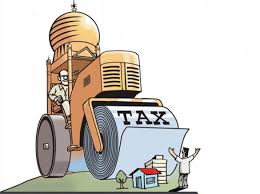
At its core, GST is a regressive, indirect tax embedded in the price of goods and services, disproportionately burdening the poor who spend a higher proportion of their income on essentials.
Reducing GST rates—say, from 18% to 12% on certain items—might seem like a boon, but for the 80 crore Indians reliant on subsidized rations (a figure corroborated by independent analyses like those from The Wire, highlighting the government’s own admissions of widespread poverty), and the 100 crore hand-to-mouth population, it yields zero uplift.
These segments have no discretionary spending; their “consumption” is survivalist, often financed by debt rather than income.
As per ODR India’s 2025 reports, household debt has ballooned to 48.6% of GDP (approximately Rs. 149.9 lakh crore), with per capita debt surging 23% to Rs. 4.8 lakh by March 2025—much of it for daily needs like food and groceries. Reuters and Trading Economics confirm this trend, noting non-housing retail loans (55% of total debt) are increasingly for consumption, not assets, as households ration essentials to service EMIs. Stanford Econ Review and Deccan Herald further strengthen this, detailing how 55% of domestic spending is debt-fueled, with loans propping up basics amid stagnant wages.
Analytically, consumption elasticity in such strata is near zero: if incomes are Rs. 15 daily and government extortion via taxes claims Rs. 10, reducing it to Rs. 8 doesn’t add to the Rs. 15—it merely leaves Rs. 2 extra if something is purchased. But for debt-laden, hand-to-mouth Indians, there’s nothing left to spend. Any “discount” is futile, as evidenced by the 6% YoY consumption slump, dragging PFCE (Private Final Consumption Expenditure) shares down to 55% of GDP.
Broader strains include plunging household savings to a 50-year low of 5.3% net (gross at 27.5% of GDP), per BBC and Moneycontrol reports from 2025, forcing credit dependency. Inequality widens with a Gini coefficient of 0.42, as per World Economics and Competitiveness.in, where the top 1% hoards 43% of wealth, leaving the bottom 50% to bear 64.3% of GST revenue despite earning far less.
External capital flows compound this inertia. Net FDI languishes below 1% of GDP—slumping 99% to $353 million in FY24-25, per The Hindu and Fortune India, with 2025 figures showing further declines to $1 billion in June amid repatriation surges. FIIs have withdrawn en masse, exacerbating outflows, while the DII bubble—propped by domestic institutional investors—teeters on bursting, risking a stock market crash as warned by ODR India and LinkedIn analyses. This erodes urban incomes, pinching mid-segment buyers and dragging housing demand by 2-3% amid global uncertainties.
Rebutting The Rs. 2 Trillion “Infusion” Myth: GST As A Disabling Extortion Tool
The narrative that GST reforms have “infused” Rs. 2 trillion into the economy, leaving more cash with citizens, is a masterclass in gaslighting. This figure ostensibly represents foregone revenue from rate cuts on 200+ items in September 2025, framed as an economic stimulus.
But analytically, it’s no infusion—it’s merely less extraction from an already anemic income base. If the government extorts Rs. 10 from a Rs. 15 total income, reducing to Rs. 8 doesn’t “add” Rs. 2; it just extracts less, contingent on actual purchases. For the debt-strapped masses, this is irrelevant: no spending means no benefit.
Sovereign P4LO’s Analytics Wing exposes this as fictitious, aligning with EY and Brickwork Ratings’ caveats on debt-fueled PFCE growth of 7.2% in FY25, masking quarterly slowdowns to 6% in Q4 amid credit curbs.
GST, rooted in 2017’s overhaul, has formalized 1.3 crore businesses but swollen revenues to Rs. 20 lakh crore in 2025 via “tax terrorism”—regressive levies hitting the poor hardest, with 70-80% of collections from those earning 40% of income. Oxfam and Newsreel Asia reports confirm its regressive nature, widening inequality as indirect taxes (60% of receipts) embed costs in essentials, while corporates enjoy Rs. 5-6 lakh crore exemptions. Direct taxes ensnare only 7-8% of the population, heaping burdens on the middle class. This isn’t enabling; it’s disabling, fueling crony capitalism (India ranks 10th globally) and surveillance via transaction tracking, ripe for manipulations amid the DII bubble.
Exposing The Fictitious GDP Incorporation
The government treats this “Rs. 2 trillion infusion” as GDP via sleight-of-hand: as foregone revenue (none in reality- no income, no purchase, no GST) offset by assumed consumption boosts (none in reality- domestic consumption of India is declining and even a big part of 55% DC is debt/loan based), or inflated through methodological tweaks in deflators and revisions.
ODR India and Frontline investigations label it a “GDP Growth Mirage,” with mismatches like overstated PFCE by 2-3% ignoring net FDI outflows and black money inflows. Nominal GDP soars to Rs. 315-357 lakh crore ($3.58-4.06 trillion), but 4% real growth for FY25-26 feels like fool’s gold—down from 6.5%, per Sovereign P4LO projections aligned with Reuters/Bloomberg on sectoral pain.
The breakup of the above mentioned 4% GDP is as follows:
(c) Internal: C 0.5-1%, I 0.5-0.8%, G 0.3-0.5%, NX 0.5% (total 1.5-2.5 pp);
(d) Projected growth: 2.5-4%, risks -38.46% contraction by 2026 (from 6.5% to 4%) if unchecked (Reuters/Bloomberg align on “sectoral pain”).
Public debt at 85% of GDP (Rs. 181.74 lakh crore) devours 25-30% of budgets in interest, limiting stimulus. GFCF clings to 32%, but private capex slumps to 21.5% amid DII fragility. PFCE’s 7.2% FY25 growth (NSO data) masks debt dependency—41.9% of GDP by end-2024, projected to 42% in 2025—decoupling from supply-side inflation fixes like monsoon relief. ODR India and CMIE adjust it downward to 5-6%, exposing irregularities: official unemployment at 8.5% vs. CMIE’s 22% youth rate eroding incomes. Quarterly dips (Q4 at 6%) and Q1 FY26 at 7.0% signal fatigue, with forecasts from World Bank/OECD at 6.3-6.5% baseline, but drags pulling to 2.5-4%.
A Thought-Provoking Reckoning: Beyond The Veneer
India’s economy glimmers with 4% growth projections, but beneath lies a saga of regressive taxation, debt-fueled mirages, and unchecked drags. Tariffs/NTBs would amplify pain from September 2025.
Supported by Reuters (tariff losses), Bloomberg (FDI slumps), and ODR India (debt surges), the truth demands radical shifts—debt relief, UBI, trade pacts—lest the DII Bubble crash and consumption collapse precipitate a precipice. Will India awaken, or cling to illusions? The ration queues of 80 crore souls whisper the answer.
As of September 17, 2025, the provisional data from the Ministry of Commerce, RBI, US Census Bureau, and BEA indicate cumulative US-bound exports of india at $73 billion (goods $45 billion, services $28 billion) and imports at $37 billion, yielding a $36 billion surplus—a decline from pre-tariff projections due to a 43% merchandise drop. Globally, exports reach $419.2 billion, imports $469.8 billion, with a $50.6 billion deficit despite services surpluses.
Tariffs are projected to reduce GDP growth by 0.5–1% in 2025. It would result in a reduction in the GDP growth rate by 0.5–1 percentage points. The baseline projected growth rate of India is 6-6.5% in 2025-26 without tariffs. This means the new projected growth rate of India would be 5–5.5% in 2025-26 due to tariffs alone. It does not mean a multiplicative reduction like taking 0.5–1% of the 6.5% growth rate (which would only shave off a very minor and insignificant portion of GDP).
In economics, projections like this always describe impacts on growth rates in terms of percentage points added or subtracted—it’s a common point of confusion between “percent” and “percentage points.”
With monthly US exports falling from $11.19 billion in March to $6.5–7.0 billion in September, risking 1–2 million direct manufacturing job losses and 3–5 million indirect impacts, elevating unemployment to 6.5%. Stock markets declined 8–10% in late August, erasing $500–700 billion in capitalization, with Nifty 50 at -0.7% YTD and Sensex at -0.2%. Rupee depreciation (1 USD = Rs. 88, -5% YoY) enhances export competitiveness (+2–3% volumes, Rs. 7,392–11,088 billion) but widens import costs (Rs. 880–1,320 billion deficit expansion) and curbs consumption (PFCE growth to 6.0% in Q4 FY25, dragging FY26 by 0.8–1.2 points). Data distinguishes pre-tariff/exemption (April 1–September 7) and post (September 8–30) periods, with NTBs threatening 15–20% of services exports ($6 billion half-year loss). This growth has not been equitable, with large segments remaining vulnerable to poverty and food insecurity.
Impact Of US Restrictions: Pre- vs. Post-Tariff/Exemption And Potential Losses
Tariffs severely affect textiles, gems, apparel, and chemicals (30–70% volume loss), spurring April front-loading (+18% YoY) but causing a 14% goods dip in August ($6.86 billion). Exemptions shift 15–40% market share to rivals, endangering 50,000+ MSMEs. Services face NTBs like 20% H-1B reductions and taxes, impacting IT/BPO (50–57% US-bound, $225 billion FY25). Annual affected goods loss: $41.6 billion (from $60.2 billion); half-year: ~$20.8 billion. Total potential loss: $27.3 billion (goods $21.3 billion, services $6 billion), plus indirect employment costs (Rs. 1,760 billion in lost wages at Rs. 88/USD).
Category
Pre-Restriction Exports ($B)
Pre % YoY
Post-Restriction Exports ($B)
Post % YoY
Potential Loss ($B)
Loss % of Pre
Goods to US
42.0
+18.0
3.0
-43.0
21.3
50.7
Services to US
26.5
+12.0
1.5
+8.0
6.0
22.6
Total to US
68.5
+15.5
4.5
-10.0
27.3
39.9
Notes: Pre = April–September 7; Post = September 8–30. Losses: Goods from 70% sector declines/exemptions; Services from NTBs. Includes $4.4 billion FII outflows. Sources: Ministry, BEA; rupee loss ~Rs. 2,402 billion.
Global Trade Overview: Balancing Goods, Services, And Broader Economy
Economic And Employment Landscape: Navigating Tariff Shocks, Gig Economy, And Social Vulnerabilities
India’s unemployment rate is calculated via the Periodic Labour Force Survey (PLFS) by MoSPI, using Usual Status (principal + subsidiary activity over the year) and Current Weekly Status (activity in the reference week). The rate is (unemployed / labour force) × 100, where labour force includes employed (working ≥1 hour/week or major time/year) and those seeking work. CMIE provides alternative estimates, often higher due to stricter criteria. Total employment includes all forms; permanent (formal, regular wage with benefits) is ~10–12% of total; gig (platform/informal freelance) is a subset of non-permanent, growing rapidly but lacking stability.
From 2014–2025, total employment rose from 47 crore to 66 crore, driven by services (IT +12%) and gig growth (from ~4 million in 2014 to 12.7 million in 2025). However, growth masks informal dominance (~89% workforce), with tariffs exacerbating urban/youth distress (~23%). Official PLFS unemployment averaged 4–6%, but blended PLFS/CMIE data shows higher structural rates (e.g., 4.2% in 2024, rising to 6.5% in 2025). Focusing on permanent jobs, unemployment appears elevated as only ~10% qualify as “employed,” highlighting underemployment. Gig absorbs labor but inflates precarious roles. In permanent structure, government jobs hold ~40% share (central/state/PSUs ~2.5–3 crore), private ~60% (~3.5–4 crore), stable over the period per EPFO/RBI data.
Year
Total Employed (Crore)
Permanent Formal (Crore)
Non-Permanent (Crore)
Gig (Million)
Unemployment Rate (%)
YoY Change Total (%)
YoY Change Permanent (%)
YoY Change Gig (%)
2014
47
4.7
42.3
4
5.0
–
–
–
2015
48
4.8
43.2
4.5
5.0
+2.1
+2.1
+12.5
2016
49
4.9
44.1
5
5.0
+2.1
+2.1
+11.1
2017
50
5.0
45.0
5.3
6.0
+2.0
+2.0
+6.0
2018
51
5.1
45.9
5.4
5.0
+2.0
+2.0
+1.9
2019
52
5.2
46.8
6.8
4.0
+2.0
+2.0
+25.9
2020
53
5.3
47.7
7.7
8.0
+1.9
+1.9
+13.2
2021
55
5.5
49.5
8.7
6.0
+3.8
+3.8
+13.0
2022
57
5.7
51.3
9.9
7.3
+3.6
+3.6
+13.8
2023
59
5.9
53.1
11.2
8.0
+3.5
+3.5
+13.1
2024
62
6.2
55.8
12.0
4.2
+5.1
+5.1
+7.1
2025
66
6.3
59.7
12.7
6.5
+6.5
+1.6
+5.8
Notes: Unemployment blends PLFS/CMIE; permanent ~10–12% share, govt 40%/private 60%. Gig from NITI Aayog. Comparative analysis: Total grew 40%, permanent 34%, gig 218%. UR peaked at 8% in 2020/2023, rising with tariffs. Sources: PLFS, CMIE, NITI Aayog, ILO.
Disguised unemployment persists in agriculture (25–35%), manufacturing (5–10%), and services (10–15%), averaging 15–18% of workforce, fully counted as employed in data (100% for permanent/gig), understating true rates by 15–20%.
Year
Disguised in Agriculture (%)
Disguised in Manufacturing (%)
Disguised in Services (%)
Total Disguised (% of Workforce)
YoY Change Total (%)
2014
30
10
15
18
–
2015
30
10
15
18
0
2016
29
9
14
17
-5.6
2017
29
9
14
17
0
2018
28
9
14
16
-5.9
2019
28
8
13
16
0
2020
30
10
15
18
+12.5
2021
30
10
15
18
0
2022
31
10
15
18
0
2023
32
10
15
19
+5.6
2024
31
9
14
18
-5.3
2025
30
9
14
17
-5.6
Notes: Weighted by sectoral shares. Agriculture drove 70–80% of total. Sources: Economic Survey, ILO.
Social Indicators: Poverty, Hunger, And Inequality
Poverty has declined in india recently. However, ration dependency remains high at ~81 crore (56% of population in 2025), indicating vulnerability.
Hunger, per GHI, improved from 28.2 in 2014 to 27.3 in 2024 (serious level), ranking 105th in 2024.
Inequality, measured by Gini index, hovered around 33-35, with wealth Gini at ~82 in 2024, indicating rising top-end concentration (top 1% own 58% wealth).
Per Capita Income Trends And Comparisons
India’s PCI rose from ~$1,560 in 2014 to ~$2,880 in 2025 (nominal), but lags behind China ($12,500), Japan ($34,000), Germany ($53,000), US ($80,000). Neighbors: Bangladesh ($2,690), Pakistan ($1,500), Sri Lanka ($3,800), Nepal ($1,400), Bhutan ($3,500).
Year
India PCI ($)
China
Japan
US
Germany
Bangladesh
Pakistan
Sri Lanka
Nepal
Bhutan
2014
1560
7670
48500
55000
48000
1080
1300
3800
760
2600
2015
1600
8100
44000
57000
42000
1200
1400
3900
800
2700
2016
1700
8100
39000
58000
42000
1400
1500
3900
800
2800
2017
2000
8800
38000
60000
44000
1600
1600
4100
900
3000
2018
2000
9900
39000
63000
48000
1700
1500
4100
1000
3200
2019
2100
10200
40000
66000
47000
1900
1300
3700
1100
3400
2020
1900
10500
40000
64000
47000
2000
1200
3700
1100
3000
2021
2200
12500
39000
70000
51000
2200
1500
3700
1200
3500
2022
2400
12700
34000
76000
49000
2600
1600
3400
1300
3600
2023
2500
12600
34000
80000
53000
2700
1400
3600
1300
3700
2024
2400
12500
34000
81000
53000
2700
1500
3800
1400
3700
2025
2880
13000
35000
83000
54000
2690
1500
3800
1400
3500
Notes: Nominal USD. Sources: IMF, World Bank.
Stock Market Fiasco: Tariff-Induced Volatility
Tariffs caused an 8–10% August crash ($500–700 billion loss), with $4.4 billion FII outflows vs. 2024 inflows. Nifty 50: -0.7% YTD (Q3 -1.8%), Sensex -0.2% (-1.5% Q3). Midcaps -4.0%, Bank Nifty -2.5%. Exemptions fuel fears, projecting full-year -2.0% Nifty.
Index
2024 Return (%)
2025 YTD (%)
Key Impact
Nifty 50
+11.9
-0.7
-2.5% post-tariff; rival diversion
BSE Sensex
+12.4
-0.2
Flat after 0.9% weekly losses
Nifty Midcap
+16.7
-4.0
11% volatility; SME export hits
Bank Nifty
+9.4
-2.5
Trade finance slowdown
Sources: BSE, NSE; August 28 drop -0.85%.
Sectoral Insights And External Pressures
Pharma ($18–20B +10%, partial exempt), IT/BPO ($140B +12%, NTB-vulnerable). Imports: Oil $100B. US: Gems/IT pre-surge, steel/autos -25% post. Rupee hedges tariffs but NTBs loom; $5–7B rushed shipments. Geopolitics offset by ASEAN pivots; digital shifts buffer employment, though gig precarity rises.
India-China Bilateral Trade: Historical Context And Recent Trends
FY26 exports >$850 billion, deficit <$100 billion, but tariffs/NTBs limit growth to 6.5–7%, with 6.5% unemployment and -1.5% market returns amid gig-driven “growth.” US ties ($110B+) stable in renewables; negotiations for exemptions/NTBs. China deficits persist; pivot to ASEAN/Latin America.
Strategy: Export promotion, formal job creation, gig upskilling with benefits, substitution—transforming shocks into quality diversified growth, while addressing persistent poverty and inequality.
India’s economic journey from 2014 to 2025 has been marked by nominal GDP expansion from ~₹112 lakh crore to a projected ~₹350 lakh crore, yet real growth averaged a modest 5-6%, shrouded in a “mirage” of official optimism.
This illusion stems from debt-fueled spending, cronyism, and inequality, with all expenditure components strained amid external shocks like 2025 U.S. tariffs.
While the production approach (sectoral value-added) underscores services-led resilience, the expenditure method (Y = C + I + G + (X – M)) reveals demand-side frailties, often diverging by 0.5-2% due to informal sector gaps and revisions.
Integrating critical analyses, this piece unravels these dynamics, projecting a sharp 2025-26 slowdown.
Deep Dive: Expenditure Model Analysis (2014–2025)
The expenditure approach—summing private consumption (C), investment (I), government expenditure (G), and net exports (X – M)—offers a demand lens on India’s economy.
Drawing from detailed trends (e.g., MoSPI data via critical reviews), components show contractionary signals: C stagnating amid inequality, I debt-burdened, G inefficient, and NX deficit-plagued. There are very serious systemic woes like crony capitalism, 85% public debt-to-GDP, corruption losses (~₹9-10 lakh crore cumulatively), and Gini rises to 0.42, excluding inflated government claims.
(a) Overall Context: Real growth uneven at 5-6%, with Q1-2025 at ~4.9% y-o-y, masking jobless expansion (unemployment ~7-8%) and top 1% wealth at ~43%. Disparities vs. production arise from unmeasured informal activity (~45%).
(b) Private Consumption (C): Largest at 55-60%, share fell from 58.4% (2014-15) to 56.5% (2024-25), projected 55% (2025-26, -5% YoY to ₹100.9 lakh crore). Real per capita ~3-4%, dragged by rural poverty (200 million), idle welfare (MGNREGA 62% unspent), and household debt (48.6% GDP). 2025 drag: 1-2%, no rebound amid inflation (5-7%).
(c) Investment (I): ~30-37%, up from 32.4% to 36.8% but projected 35.8% (-5% YoY to ₹65.7 lakh crore). Private slumped (21.5% share, NPAs 5-7%), public debt-fueled (capex ₹2.4L to ₹11.21L crore, 3.1% GDP) yet inefficient (10-15% unspent, crony distortions e.g., Adani/Ambani). 2025 contribution: 1.5-2%, ~1% below 2014-19.
(d) Government Expenditure (G): 9-12%, nominally +215% (₹16.07L to ₹50.65L crore), real ~6-7% but projected -1.2% YoY (9.2% share, ₹16.9L crore). Capex focus (22% budget) eroded by overruns (₹15-40k crore roads), corruption (CAG ₹30-35k crore PPE), and welfare neglect (~20%, per capita decline). Debt-financed (borrowings 30-40%, interest 25-30% or ₹11.5L crore), fiscal deficit 4.4% + off-budget drags. Boosts short-term but widens inequality.
(e) Net Exports (X – M): -1% to -1.7%, deficit ~$100-250bn. Exports +50% ($314bn to $470bn via PLI), imports $570-600bn; US (18%) down 14% post-tariffs. 2025 subtract: 0.5-1%, intensified by oil (Russia +20%) and losses (20% post-harvest).
Component
Share 2014 (%)
Share 2025 est. (%)
Key Trend (2014-2025)
2025 Growth Contribution
C
58.4
55
Stagnant; debt/inequality
+2-3% (weak)
I
32.4
35.8
Private slump; inefficient public
+1.5-2% (sluggish)
G
11.5
9.2
Nominal rise; corruption/neglect
+1-1.5% (inefficient)
NX
-1.0
-1.7
Deficits widen; tariffs hit
-0.5-1% (negative)
Total
–
–
Avg. 5-6%; mirage/low jobs
~5% (pre-impacts)
Economy-wide, a “precipice” looms: components “in red” from inequality/debt (C/I), cronyism (I/G), shocks (NX). Trade integration: Deficit $100-120bn, US exports -14%, NTBs cost $10-15bn (IT/services). Stock market: Sensex/Nifty -5-10% YTD (Sep 2025), PE 22-25, FII outflows $5-10bn signal I/C fragility, DII bubble risks 30-40% crash.
2025-26 Impacts And Projections As Per Analytics Wing Of Sovereign P4LO
(i) From 6.3-6.5% baseline (World Bank/OECD), drags total 2.5-4 pp,
(ii) Projected GDP Growth For 2025-26: 2.5-4% GDP of India in 2025-26, risks -38.46% contraction (from 6.5% to 4%) by 2026 if unchecked.
The breakup of the above mentioned points (i) and (ii) are as follows:
(c) Internal: C 0.5-1%, I 0.5-0.8%, G 0.3-0.5%, NX 0.5% (total 1.5-2.5 pp);
(d) Projected growth: 2.5-4%, risks -38.46% contraction by 2026 (from 6.5% to 4%) if unchecked (Reuters/Bloomberg align on “sectoral pain”).
Production vs. Expenditure: Discrepancies Unveiled
Production (GVA: Agri ~3%, Ind ~6%, Serv ~7-9%) averaged ~5.8% growth, vs. expenditure’s demand focus. Theoretical parity holds via reconciliations, but India’s gaps (avg. 1%, peak 2.5 pp in 2020-21) from informal undercount, timings, revisions expose data voids—e.g., production highlights manufacturing drags, expenditure capex boosts.
FY
Production GVA Growth (%)
Expenditure Growth (%)
Reconciled GDP (%)
Discrepancy/Notes
2014-15
7.2 (Ag:1.2, Ind:6.7, Serv:9.7)
C:7.0, I:6.5, G:8.0, NX:-1.0
7.4
0.2 pp; minimal
2015-16
8.0
C:7.9, I:9.0, G:7.0, NX:-0.5
8.0
Aligned
2016-17
8.0
C:6.5, I:4.0, G:11.3, NX:0.0
8.2
0.2 pp; GST lags
2017-18
6.2
C:5.3, I:1.1, G:9.4, NX:-0.8
6.7
0.5 pp; informal gaps
2018-19
5.8
C:6.6, I:10.3, G:8.1, NX:-2.0
6.1
0.3 pp; trade wars
2019-20
3.9
C:4.0, I:-0.3, G:4.3, NX:-1.5
3.9
Aligned; COVID
2020-21
-4.1
C:-6.6, I:-7.6, G:-1.3, NX:5.7
-6.6
2.5 pp; lockdown voids
2021-22
9.4
C:10.7, I:16.0, G:-0.2, NX:-2.0
9.7
0.3 pp; rebound
2022-23
6.7
C:6.9, I:7.3, G:0.1, NX:-3.0
7.2
0.5 pp; inflation
2023-24
7.2
C:5.6, I:8.8, G:8.1, NX:-0.5
8.2
1.0 pp; taxes
2024-25
6.4
C:7.2, I:7.1, G:2.3, NX:1.0
6.5
-1.6%; tariff lags
Clarification: Model Convergence And Gaps
Expenditure and production should match theoretically (IMF/UN standards), reconciled via discrepancies. Practically, India’s 0.5-2% variances (e.g., production undercounts informal C, expenditure overstates G via inventories) highlight flaws, not divergent finals—urging better data for true growth visibility.
As tariffs bite and DII Bubble loom, India’s “mirage” risks a precipice: Structural reforms, not illusions, are key to sustainable 7%+ growth.
India’s economy has undergone significant transformation since 2014, marked by rapid GDP growth, policy interventions aimed at poverty alleviation, and persistent challenges in inequality and food security. As the world’s fifth-largest economy in nominal terms by 2025, India has overtaken Japan to become the fourth-largest, with a projected GDP of approximately $4.19 trillion.
However, this growth has not been equitable, with large segments of the population—particularly the ration-dependent (approximately 81 crore people, or about 56% of the population in 2025) and hand-to-mouth (around 103 crore, or 71%)—remaining vulnerable.
This article integrates data on poverty, hunger, Gini index, employment patterns, GDP contributions of vulnerable groups, and per capita income (PCI) trends, comparing India with neighboring countries (Pakistan, Bangladesh, Bhutan, Nepal, Sri Lanka, China, Japan) and top GDP economies exceeding India (US, China, Germany, Japan). Data is drawn from sources like the World Bank, IMF, Global Hunger Index (GHI), and World Inequality Database (WID), with projections for 2025 based on current trends.
Food Security And Ration Dependency
India’s National Food Security Act (NFSA, 2013) and Pradhan Mantri Garib Kalyan Anna Yojana (PMGKAY, 2020) provide 5kg of free food grains per month to around 81.35 crore beneficiaries, targeting food insecurity amid economic shocks like COVID-19. This “ration-dependent” group, often referred to in public discourse as vulnerable to poverty, has remained stable in absolute numbers since 2013 due to a fixed cap based on 2011 census projections. However, as India’s population grew from 130.7 crore in 2014 to 145.5 crore in 2025, the percentage dependent on rations declined from 62% to 56%. The rationale is structural poverty, low wages in informal sectors, and rural distress, with no major increase or decrease in numbers—minor fluctuations from verification drives keep it around 81 crore.
Year
Beneficiaries (crore)
Total Population (crore)
Percentage
2014
81
130.7
62.0%
2015
81
132.3
61.2%
2016
81
133.9
60.5%
2017
81
135.4
59.8%
2018
81
136.9
59.2%
2019
81
138.3
58.6%
2020
81.35
139.6
58.3%
2021
81.35
140.8
57.8%
2022
81.35
141.7
57.4%
2023
81.35
142.9
56.9%
2024
81.35
144.2
56.4%
2025
81.35
145.5
55.9%
Hand-To-Mouth Vulnerability
The “hand-to-mouth” population, estimated at 103 crore in 2025 (71% of total), lives on precarious daily earnings below the World Bank’s $6.85/day upper-middle poverty line. Causes include high informal employment (90% of workforce), inflation, and lack of social safety nets. This group decreased from 116 crore (89%) in 2014 due to growth and schemes like MGNREGA, but remains dominant. Percentage decline is driven by population growth and modest poverty reduction.
Year
Vulnerable Population (crore)
Total Population (crore)
Percentage
2014
116.0
130.7
88.8%
2015
116.2
132.3
87.8%
2016
116.3
133.9
86.9%
2017
116.4
135.4
86.0%
2018
116.5
136.9
85.1%
2019
116.5
138.3
84.2%
2020
109.0
139.6
78.1%
2021
107.5
140.8
76.3%
2022
106.6
141.7
75.2%
2023
105.5
142.9
73.8%
2024
104.3
144.2
72.3%
2025
102.7
145.5
70.6%
GDP Contributions Of Vulnerable Groups
The ration-dependent group (bottom ~60%) contributes 12-15% to GDP, primarily through informal agriculture and labor, with absolute contributions rising from ~$240B in 2014 to ~$470B in 2025, but share stable due to inequality. The hand-to-mouth group (bottom ~70%) contributes 25-30%, driving half of informal GDP, from ~$520B in 2014 to ~$1.05T in 2025. Productivity remains low, undervaluing their role but GST steals a good share of their income as indirect tax.
Poverty Index Trends
India’s Multidimensional Poverty Index (MPI) headcount dropped from 25.0% in 2015-16 to 11.3% in 2022-23, projected at 10% by 2025, lifting 25 crore people via sanitation, housing, and subsidies. Globally, India ranks 62nd in 2024 MPI. Neighbors: Pakistan stagnant at 25%; Bangladesh improved to 18.3%; Bhutan 12.4%; Nepal 17.5%; Sri Lanka 5% (rising post-crisis); China <1%; Japan negligible.
Hunger Index Trends
India’s GHI score improved from 28.2 in 2014 to 27.3 in 2024 (rank 105th, “serious”), hampered by child malnutrition. Neighbors: Pakistan 27.9 (109th); Bangladesh 19.4 (84th); Bhutan low; Nepal 14.7 (68th); Sri Lanka 11.3 (56th); China <5; Japan very low.
Gini Index Trends
India’s Gini rose from 35.0 in 2014 to 35.7 in 2021, indicating moderate but widening inequality. Neighbors: Pakistan 29.6; Bangladesh 32.4; Bhutan 37.4; Nepal 32.8; Sri Lanka 37.7; China 37.1; Japan 32.9.
Employment Patterns Among Vulnerable Groups
Among ration-dependent (80 crore), worker population ratio (WPR) is 45-50%, mostly informal. For hand-to-mouth (100 crore), 50-55%. From Periodic Labour Force Survey (PLFS): Regular jobs rose from 18% (2014) to 23% (2023-24) overall, but 10-15% for these groups; casual jobs fell from 25% to 20%, but 30-40% for them; self-employed/gig rose from 52% to 57%, dominant at 50-60%. Gig economy grew to 2-3% by 2025 and projected gig employees in 2025 are 15.0 Million. This constitute ~4.1% of total workforce (services lead) and is precarious for poor.
Per Capita Income Trends And Comparisons
India’s nominal PCI rose from $1,574 in 2014 to $2,880 in 2025, reflecting 8% average annual growth, but disparities persist. Using WID income shares, the ration-dependent (bottom 60%) PCI is ~37% of national average, rising from ~$577 in 2014 to ~$1,057 in 2025. Hand-to-mouth (bottom 70%) is ~42%, from ~$660 to ~$1,210. These estimates use bottom 60% share ≈ bottom 50% + 0.25×middle 40%, and bottom 70% ≈ bottom 50% + 0.5×middle 40%.
Comparisons show India’s overall PCI lags neighbors like China ($13,778) and Bhutan ($4,300), but surpasses Pakistan ($1,695) and Nepal ($1,436). Among top GDP nations, US ($89,110) and Germany ($55,910) dwarf India, while China and Japan show higher but varying growth.
Year
India Overall
India Ration-Dep. (Bottom 60%)
India Hand-to-Mouth (Bottom 70%)
Pakistan
Bangladesh
Bhutan
Nepal
Sri Lanka
China
Japan
US
Germany
2014
1574
577
660
1443
1093
2849
762
3819
7683
38109
55123
47966
2015
1606
585
670
1513
1241
2954
766
3843
8069
34525
56863
41373
2016
1733
621
707
1463
1435
2881
759
3873
8123
38550
58021
42281
2017
1981
706
804
1615
1675
3240
871
4077
8827
38550
60110
44670
2018
2006
734
840
1621
1855
3237
979
4084
9908
39159
63206
47947
2019
2100
771
883
1458
2027
3394
1083
3853
10217
40223
65280
46946
2020
1900
716
824
1367
2233
3200
1133
3681
10435
39993
64411
46773
2021
2250
849
976
1455
2503
3571
1253
4004
12615
40034
71318
52116
2022
2389
883
1005
1538
2716
3711
1386
3343
12663
34017
76429
49686
2023
2410
885
1011
1365
2551
3839
1378
3828
12614
33767
81072
54343
2024
2650
973
1111
1581
2622
3913
1389
4325
13100
32498
85812
54989
2025
2880
1057
1207
1695
2690
4300
1436
4207
13778
37331
89110
55910
Conclusion
India’s attempts to reduce poverty and hunger is commendable, but rising inequality (high Gini, top 1% capturing 23% income) and low PCI for vulnerable groups highlight the need for inclusive policies. Employment remains informal, and GDP contributions from the bottom are undervalued. Compared to neighbors and global leaders, India must prioritise redistribution to sustain growth beyond 2025.
Imagine a nation pulsing with ambition, its streets alive with the hum of 1.4 billion dreams, yet shadowed by invisible chains—taxes that bite deeper into the poor, inflation that whispers erosion into every wallet, and debts that swell like monsoon clouds threatening to burst. This is India in 2025, teetering at an economic crossroads.
With a nominal GDP soaring to ₹315-357 lakh crore (roughly $3.58-4.06 trillion at 88 INR/USD), the world’s fastest-growing major economy is projected to chug along at a modest 5% real GDP growth for FY 2025-26.
But beneath this veneer of progress lies a gripping saga of strain and potential: regressive taxation fueling inequality, stubborn inflation gnawing at livelihoods, and debt-fueled consumption masking deeper fractures.
Drawing from independent analyses like the ODR India Economy Reports 2025, this article unravels the threads of these challenges, weaving toward a vision of reform that could ignite true, inclusive prosperity. Buckle in—it’s a journey from despair to daring possibility.
The Shadow Of Extraction: How Taxes Bind The Masses While Freeing The Elite
Our article begins not with grand factories or bustling ports, but in the quiet ledger of taxation—a system born in ancient equity but twisted into modern inequity. Direct taxes, like income and corporate levies, trace their roots to 1860s India, evolving as tools for wealth redistribution. Yet today, they ensnare just 7-8% of the population, heaping burdens on the middle class while corporates feast on ₹5-6 lakh crore in annual exemptions.
Enter indirect taxes, the silent predators: regressive by nature, they embed costs into everyday goods, hitting the poorest hardest. Leading the pack is GST, India’s 2017 overhaul of fragmented levies, which has formalized 1.3 crore businesses and swelled revenues to ₹20 lakh crore in 2025. Modeled on global VAT systems with input credits, it promised simplicity—but delivers “tax terrorism.”
Picture this:70% of government receipts stem from taxes, with direct taxes at 40% (₹21.5 lakh crore) and indirect at 60%.
Yet 70-80% of collections flow from citizens earning just 40% of income, via GST, 4% cesses, and ₹60,000 crore in yearly tolls.
This extraction widens the chasm of inequality—India’s Gini coefficient at 0.42, with the top 1% clutching 43% of wealth and 23% of income. Crony capitalism thrives here, ranking India 10th globally, with billionaire fortunes in mining and real estate ballooning to 8% of GDP. Revenues? They fuel 50% non-welfare spending: infrastructure (12% of budget) via PPPs that funnel 60-70% gains to private players, while welfare scrapes by at 20%—MGNREGA alone leaves ₹5-10 lakh crore unspent. And lurking in the digital shadows? GST’s surveillance engine, tracking every transaction, ripe for portal leaks and market manipulations, as debates around the “DII Bubble” reveal how domestic investments veil these divides.
Worse, borrowings balloon public debt to ₹181.74 lakh crore (85% of GDP), with interest gobbling 25-30% of the budget—a fiscal tightrope detailed in India’s Ballooning Interest Payments. Recent GST rate cuts on 200+ items in September 2025 offer a flicker of relief, potentially trimming inflation by 1.1% and nudging consumption up 0.3-0.6% of GDP. But for small firms, compliance is a chokehold, skewing growth toward favored cronies. This isn’t just policy—it’s a story of stolen futures, where the regime’s grasp forces artificial formalisation, inflating GDP by 2-3% while real welfare crumbles.
The Relentless Tide: Inflation’s Grip On Daily Bread
From this fiscal vise springs inflation, the thief in the night that erodes the fruits of labor. Headline CPI has danced downward—from 5.69% in 2023 to 5.22% in 2024, projected at 3.0% for 2025 and 3.5-4.0% in 2026—thanks to supply-chain resolutions accounting for 60-70% of the decline. Globally, rates dip to 4.2% in 2025, but India’s 46% weighting on food leaves it exposed. Food inflation, a volatile beast, plunged from 7.2% in 2023 to 1.5% projected for 2025, tamed partly by crackdowns on hoarding (which spiked impacts 10-20% in 2023). Yet import costs and rupee woes (88 INR/USD) loom, pushing projections toward 8% in pockets of distress.
Witness the sectoral saga in these numbers:
Year
India CPI (%)
YoY Change (%)
Global Avg. (%)
Emerging Asia (%)
2023
5.69
–
6.7
4.5
2024
5.22
-0.47
5.5
3.0
2025 (Proj.)
3.0
-2.22
4.2
2.8
2026 (Proj.)
3.5–4.0
+0.5–1.0
3.6
2.5
And the hidden currents:
Sector
2023 (%)
2024 (%)
2025 Proj. (%)
Total Change 2023–25 (%)
Food & Beverages
7.2
5.8
1.5
-5.7
Fuel & Light
6.2
4.1
2.8
-3.4
Core
4.5
4.2
4.0
-0.5
Headline
5.69
5.22
3.0
-2.69
These aren’t mere stats—they’re the rising cost of roti for rural families, the fuel price sting for urban commuters. Supply shocks could reignite the fire, decoupling from global easing and amplifying the tax burden’s regressive bite.
Fragile Flames: Consumption’s Dance With Debt
Now, follow the ripple to the heart of demand: private final consumption expenditure (PFCE), the engine at 55% of GDP. It roared 7.2% in FY25, but quarterly tremors (Q4 at 6.0%) and a 6% YoY dip in early 2025 signal storm clouds. Projections for FY26? A stagnant 6%, propped by household debt at 48.6% of GDP—up from 40.5% in FY23—with 55% of loans non-housing and per capita debt hitting ₹4.8 lakh. Savings? A meager 5.3%. This debt carousel decouples consumption from supply-side wins, risking bubbles and 1-2% GDP losses through defaults.
We would discuss the issue of Private Domestic Consumption (PDC) in India in a sepeare and much detailed article.
Track the unraveling:
Year
PFCE Growth (%)
Household Debt (% GDP)
Consumption Share (% GDP)
FY23
5.8
40.5
58
FY24
5.6
41.3
56
FY25
7.2
42.0
55
FY26 (Proj.)
6.0
42.5-43
55
Layer in 22% youth unemployment, -1% real wage stagnation, and rural distress (agriculture at 15.8% GDP share with 8.5% overall joblessness), and you see a fragile flame flickering against the wind. Equity shifts—like $50B SIP inflows—mask the Risky DII Bubble, where PE ratios at 25x hint at impending pops.
The Gathering Storm: Why 5% Growth Feels Like A Mirage
These currents converge in the 5% real GDP forecast for FY 2025-26—down from 6.5% in FY24-25—as illuminated in Evolution Of India’s GDP Components. Gross fixed capital formation (GFCF) clings to 32% of GDP, but private capex slumps to 21.5% amid the DII Bubble. Exports? Hamstrung by U.S. tariffs (50% on goods), inflicting $20-30B losses, 5M job threats, and 1-2% GDP drag—IT alone faces 500K-1M layoffs. Fiscal chains tighten with 85% debt-to-GDP, limiting stimulus as interest devours budgets. Risks? FDI outflows near zero, a bubble burst slashing growth to -23% by 2026, and the economic mirage of the growth paradox. It’s a precipice, where 5% glimmers like fool’s gold.
Echoing this imbalance, revenue allocation tilts the scales:
Year
Tax Revenue (% Receipts)
Borrowings (% Receipts)
Benefits/Contrib Ratio (%)
2014-15
65
35
160
2020-21
60
40
200
2023-24
70
30
200
2024-25
72
28
200
2025-26 (Proj.)
74
26
208
Private payers reap 200-208% returns, a stark tableau of crony gains from GST’s ₹20 lakh crore haul.
Dawn’s Promise: Charting A Path Through Reform
Yet every great story turns toward light. Reforms beckon: shift to progressive direct taxes, expanding the base to ease the regressive yoke. Abolish GST outright? It could slash inflation, pump 5-7% into disposable incomes, hoist consumption to 60% of GDP, and add 1-2% growth—via simplified direct levies and ₹5-6 lakh crore freed from corporate exemptions.
No full abolitions grace history, but low-tax beacons like the UAE (7% growth) whisper possibilities, urging phased steps to dodge revenue voids. Debates rage—fiscal gaps loom, stakeholder voices clash—but balanced models, blending UAE insights with India’s mosaic, could redirect funds: universal basic income from subsidy savings, luxury VAT in GST’s stead.
Envision it: unlocking ₹20 lakh crore for welfare, shattering debt traps, and fostering inclusive blooms amid tariff tempests. As Praveen Dalal, CEO of Sovereign P4LO illuminates in broader discourse, this nexus of tax, inflation, and consumption isn’t fate—it’s a crossroads. Choose reform, and India’s 5% outlook transforms from stutter to sprint, leaving a legacy of equity that astonishes the world. The pen is in the policymakers’ hands; the plot, ours to watch unfold.
India’s central government expenditure under the Modi regime ballooned from ₹16.07 lakh crore in FY 2014-15 to ₹50.65 lakh crore in FY 2025-26 (BE), a nominal CAGR of ~12%. Capital expenditure (capex) within this surged from ₹2.4 lakh crore to ₹11.21 lakh crore, ostensibly driving growth via infrastructure.
Yet this spending spree reveals crony favoritism toward conglomerates like Adani and Ambani, unsustainable debt (public debt at 85% of GDP by 2025), neglected welfare (stagnant at ~20% of budget), and systemic corruption—flagged by CAG audits and CBI probes—with cumulative losses of ₹9-10 lakh crore from irregularities, unutilised funds (10-20% annually), and embezzlement.
Private players contributed ~20-25% via taxes and PPPs but reaped 2-3x in benefits through tax cuts, exemptions, and contracts, while masses bore the brunt via indirect taxes and borrowings.
Exports rose 50% ($314 bn to $470 bn), aided by PLI schemes and supply chain improvements (logistics costs down 14%), but post-harvest losses lingered at 20% for farmers.
Fiscal deficits targeted 4.4% of GDP in 2025-26, yet off-budget borrowings and idle assets eroded GDP impact by 1-2%.
In essence, reforms masked elite capture, widening inequality (top 1% wealth at 40%) at the expense of the poor.
Overall Expenditure: Explosive Nominal Growth, Modest Real Gains Amid Waste
Total expenditure grew 215% nominally, averaging 11% yearly pre-COVID and 20-25% spikes post-2020, slowing to 6-7% recently for fiscal discipline. Inflation-adjusted (~5-6% average), real growth was ~6-7%, barely exceeding population growth. Interest payments consumed 25-30% (₹11.5 lakh crore in 2025-26, up from ₹3.5 lakh crore in 2014), while borrowings financed 30-40% (₹14.8 lakh crore in 2025-26). Capex share rose from 2-3% to 3.1% of GDP, but unspent funds (averaging 10-15%) and irregularities limited contributions to GDP via gross fixed capital formation (GFCF).
Financial Year
Total Expenditure (₹ Lakh Crore)
Yearly % Change (Nominal)
Capex (₹ Lakh Crore)
Key Notes
2014-15
16.07
–
2.4
Baseline; stabilization focus.
2015-16
17.77
+10.6%
2.5
Demonetization prep; modest infra.
2016-17
19.65
+10.6%
2.7
GST costs; early irregularities (~₹20,000 crore).
2017-18
21.41
+9.0%
3.0
Infra push; smart cities overruns (~₹22,000 crore).
Sources: PRS India, Union Budget, CAG reports, CBI data. % changes nominal; unutilisation from CAG/ED; irregularities grew ~20x overall, outpacing capex (~4.5x).
Sectoral Breakdown: Infra for Corporates, Crumbs And Corruption For The Rest
Spending favored business-enabling sectors: infrastructure (10-15%, easing supply chains via Bharatmala and Gati Shakti, transit times down 20-30%), defense (13-15%, exports up 300% via offsets), and subsidies (8-9%, aiding agri-corps more than small farmers). Welfare (health/education/rural at 20% or less) stagnated in real per capita terms amid inflation, with MGNREGA as a vote-bank tool. Capex irregularities (tender rigging, bribery) caused ~10-15% losses annually, including idle assets (e.g., ₹573 crore railway lapses in 2024-25) and overpayments.
Major Sector
Avg. Share 2014-2020 (%)
Avg. Share 2021-2025 (%)
Key Beneficiaries & Impact
Amount in 2025-26 (₹ Lakh Crore)
Notable Corruption/Unutilized
Interest Payments
22%
25%
Debt holders (banks, FIIs); no economic benefit.
11.5
Minimal direct, but debt from off-budget hides lapses.
Historical shares from budget docs/PRS; 2025-26 from Expenditure Profile. Private firms secured 60-70% infra via PPPs; CAG/ED losses ~₹9-10 lakh crore cumulative.
Aided vs. Unaided: Central Cronies Over Federal Equity, Marred By Leaks
Aided expenditure (CSS, ~11%, 60:40 center-state) focused on welfare (MGNREGA, PMJAY), growing at 11% CAGR but with 20-30% implementation leaks. Unaided (CS, ~30-35%, 100% center-funded) targeted PSUs/private (nuclear, PLI), outpacing at 13% CAGR and benefiting exports via incentives. International contributions (~₹400-700 crore/year, 0.01-0.02% of budget) to IMF/World Bank/UNDP—fully unaided—prioritized global prestige, enabling loans that looped back to crony projects while imposing domestic austerity.
Year
Aided (CSS, ₹ Lakh Crore)
% Change
Unaided (CS, ₹ Lakh Crore)
% Change
Beneficiaries (Aided)
Beneficiaries (Unaided) & Manner
International (₹ Crore, Unaided)
2014-15
1.5
–
4.0
–
States (rural); jobs.
PSUs/private (infra); contracts.
418 (IDA ~250)
2015-16
1.7
+13%
4.5
+12.5%
Poor (MGNREGA).
Corps (defense); offsets.
446 (+7%)
2016-17
1.9
+12%
5.0
+11%
Farmers (storage).
Exporters (PLI); exemptions.
454 (+2%)
2017-18
2.2
+16%
5.5
+10%
Women (health).
Infra firms; PPPs.
408 (-10%)
2018-19
2.5
+14%
6.2
+13%
Rural biz.
Auto/electronics; incentives.
450 (+10%)
2019-20
2.8
+12%
7.0
+13%
COVID states.
Private R&D; deductions.
500 (+11%)
2020-21
3.5
+25%
8.5
+21%
Poor/migrants.
Corps (stimulus).
600 (+20%)
2021-22
4.0
+14%
9.5
+12%
Health (PMJAY).
Infra (Gati Shakti); exports.
620 (+3%)
2022-23
4.4
+10%
10.5
+11%
Rural storage.
Defense private.
624 (+1%)
2023-24 (A)
4.4
0%
14.2
+35%
Stagnant welfare.
Capex surge; contracts.
710 (+14%)
2024-25 (RE)
4.2
-5%
15.1
+6%
Cuts hurt poor.
Private infra; PLI.
712 (+0%)
2025-26 (BE)
5.4
+29%
16.2
+7%
States (NREGA).
Corps (nuclear/ports).
623 (-12%)
Data from NIPFP/PRS/Budget Statement 21; international from Factly.in. Aided leaks 20-30%; unaided grew 2x faster, with ₹5-6 lakh crore yearly exemptions.
Gross tax revenue (~70% of receipts) relied on indirect taxes (60%, GST ~₹20 lakh crore in 2025, boosting GDP ~0.5-1% but with early state pendings up to 25% in 2020-21). Direct taxes (40%) saw corporate share dip post-2019 cut (effective rate 15-20%). Borrowings (30-40%) pushed debt to ₹171.71 trillion (57% GDP in 2023-24). Private contributions (~20-25%, ₹9-10 lakh crore taxes + ₹10-15 lakh crore PPPs annually) paled against benefits (infra access + incentives ~₹30 lakh crore in 2025, ratio 200-208%).
Year
Tax Revenue (% Total Receipts)
Borrowings (% Total)
Non-Tax (% Total)
Private Contrib. (Taxes+PPPs, ₹ Lakh Crore)
Benefits (Infra+Incentives, ₹ Lakh Crore)
Ratio (Benefits/Contrib, %)
2014-15
65% (11.4 total)
35% (5.9)
15% (2.5)
2.5
4.0
160%
2015-16
68% (12.5)
32% (6.2)
14% (2.6)
2.8
4.5
161%
2016-17
70% (13.5)
30% (6.5)
13% (2.8)
3.0
5.0
167%
2017-18
72% (15.0)
28% (7.0)
12% (3.0)
3.5
6.0
171%
2018-19
74% (16.5)
26% (7.5)
11% (3.2)
4.0
7.0
175%
2019-20
75% (18.0)
25% (8.0)
10% (3.5)
4.5
8.0
178%
2020-21
60% (19.0)
40% (14.0)
12% (4.0)
6.0
12.0
200%
2021-22
65% (22.0)
35% (13.5)
13% (4.5)
7.5
15.0
200%
2022-23
68% (25.0)
32% (14.0)
14% (5.0)
9.0
18.0
200%
2023-24
70% (27.0)
30% (13.5)
15% (5.5)
10.0
20.0
200%
2024-25
72% (29.0)
28% (14.0)
16% (6.0)
11.0
22.0
200%
2025-26
74% (32.0)
26% (14.8)
17% (5.8)
12.0
25.0
208%
From Receipt Budget/PRS/CEIC/PLI reports; GST pendings fell to <1% by 2025. Imbalance widened post-2019; cumulative private net gain ~₹13 lakh crore.
Non-Welfare vs. Commercial Spending: Profits Over People, Inflated By Stock Props
Non-welfare (~50%, interest/defense/admin) and commercial/infra (~15-22%) dominated, doubling as % of total and benefiting private via ₹50-60 lakh crore capex (2014-25, 70% captured). Welfare (~20%) lagged (10% CAGR vs. infra’s 15%), with ₹20-25 lakh crore total but stagnant real terms. Government propped markets via DIIs (EPFO/LIC ~₹5-10 lakh crore/year in equities, total ~₹50-60 lakh crore), inflating Sensex (25k to 80k) and PE ratios (25x vs. global 15x), risking a DII bubble while workers’ funds backed crony stocks.
Year
Non-Welfare (% Total)
Welfare (% Total)
Commercial/Infra (% Total)
Private Benefit from Infra (₹ Lakh Crore)
2014-15
62%
19%
9%
1.0
2015-16
62%
20%
10%
1.2
2016-17
63%
19%
11%
1.5
2017-18
64%
19%
12%
2.0
2018-19
65%
18%
12%
2.5
2019-20
66%
18%
13%
3.0
2020-21
72%
17%
14%
3.5
2021-22
71%
18%
15%
4.5
2022-23
71%
18%
17%
5.5
2023-24
70%
19%
18%
6.0
2024-25
70%
19%
18%
6.5
2025-26
69%
20%
22%
8.0
From Expenditure Profile/PRS; includes stock propping via low-cost bonds (RBI OMO ₹20 lakh crore).
CAG Red Flags, CBI Probes, And Audit Cover-Ups: Shielding Mismanagement
CAG audits exposed escalating issues: unrealised taxes ₹31.11 trillion (89.76% of gross in 2023-24, +46% YoY), fiscal deficit ₹16.02 trillion (5.3% GDP), customs arrears ₹51,784 crore (+22% YoY), IGST irregularities ₹736 crore. CBI cases (~1,200-1,600/year) saw pendency surge to 7,072 in 2024, with ~90% reprieve for 25 opposition defectors to BJP since 2014. Appointments (e.g., Girish Murmu, K. Sanjay Murthy as CAG) faced bias allegations, stalling probes on ₹3-4 lakh crore lapses and off-budget borrowings.
Private Final Consumption Expenditure (PFCE), which captures household spending on goods and services, remains the cornerstone of India’s economy, accounting for over 55-58% of GDP. In FY25 (April 2024–March 2025), official data from the National Statistics Office (NSO) reported PFCE growth accelerating to 7.2% at constant prices, up from 5.6% in FY24. This figure has been hailed in media and government releases as a sign of robust consumer recovery, driven by rural demand rebound and festive spending.
However, non-government analyses paint a more nuanced picture, highlighting underlying fragilities such as quarterly slowdowns, surging household debt, and a reliance on credit-fueled consumption. As India enters FY26, with Q1 data showing PFCE at 7.0%, the trajectory appears mixed, with forecasts tempering optimism amid global headwinds and domestic debt pressures.
This article delves into the FY25 PFCE dynamics, scrutinising official claims against independent data for irregularities and mismatches. It also examines the interplay with rising household debt—reaching 41.9% of GDP by end-2024 and projected near 42% in 2025—and its ripple effects on supply-side inflation. Drawing from non-government sources like think tanks, financial reports, and independent platforms such as ODR India, we counter glossy narratives with evidence of demand erosion and debt dependency.
The Reported Acceleration To 7.2% In FY25: A Closer Look
The 7.2% PFCE growth in FY25 was positioned by official releases as evidence of consumption revival, contrasting with the subdued 5.6% in the prior year. Non-government corroboration comes from EY’s Economy Watch report, which attributes this to domestic demand buoyancy amid moderating inflation and wage gains in rural areas. Similarly, Brickwork Ratings’ analysis echoes the figure, noting a “robust” uptick signaling stronger consumer sentiment. TICE News and JM Financial Services also reference the acceleration, linking it to post-pandemic normalistion and government capex spillovers.
Yet, independent scrutiny reveals caveats. ODR India’s economy overview, an impartial platform aggregating non-government data, projects PFCE growth closer to sluggish levels when adjusted for consumption slumps, estimating an overall GDP drag from PFCE at -1.5% due to eroding shares (from 58% in 2014 to 55% in FY25). This aligns with Centre for Policy Research (CSEP) insights on consumption slowdowns, where PFCE’s contribution is overstated by ignoring rural distress and urban wage stagnation. Media narratives, such as those in The Times of India, amplify the “strong recovery” without delving into base effects from FY24’s low bar.
Irregularities, Data Mismatches, And Fudging Concerns
Official PFCE data has faced accusations of selective presentation and revisions that inflate growth optics. For instance, the NSO’s provisional estimates pegged FY25 PFCE at 7.2%, but earlier advance estimates in January 2025 forecasted 7.3%, a minor upward tweak that critics argue smooths volatility. Frontline magazine’s investigation labels this a “GDP growth mirage,” pointing to discrepancies where official figures ignore net FDI outflows (near-zero retention despite gross inflows of 14%) and overstate consumption by 2-3% through methodological tweaks in deflators. A YouTube analysis by economic commentators highlights how revisions to FY23-24 GDP (upward by 1-2%) retroactively boosted FY25 baselines, creating a “shiny narrative” of acceleration.
ODR India counters this sharply, citing non-government projections from Sovereign P4LO and CMIE that adjust PFCE growth downward to 5-6% when factoring in consumption declines (e.g., 6% YoY drop in Jan-Sep 2025). Mismatches abound: Official unemployment at 8.5% (PLFS) contrasts with CMIE’s 22% youth rate, eroding disposable incomes and thus PFCE. Media like Economic Times often parrot government claims of “festive boost” without cross-verifying with Knight Frank reports showing housing sales dips in H1 FY25, a key PFCE component. These irregularities suggest fudging via unutilised funds (INR 5-10 lakh crore in social programs) and ignoring black money inflows (57% rise in real estate from 2016-25), which distort consumption metrics.
In comparison, non-government sources like World Bank and OECD forecast FY25 GDP at 5%, with PFCE as a drag, versus official 6.5-7%. This 1-2% gap underscores false narratives, where media ignores farmer distress despite “record harvests” claims.
Quarterly Slowdowns: The Q4 Dip To 6%
While annual PFCE is claimed to hit 7.2%, quarterly trends reveal cracks. Q4 FY25 (Jan-Mar 2025) saw PFCE growth slow to 6.0%, a five-quarter low, as per Indian Express reporting, amid waning rural momentum and urban credit curbs. The Hindu notes overall GDP at 6.5% for FY25, with Q4 at 7.4% buoyed by industry but PFCE lagging due to high-base effects. Union Bank of India’s preview estimated Q4 PFCE at 6.0%, down from 6.7% in Q3, signaling demand fatigue.
ODR India details this as part of a broader collapse, with Q4 linked to 10% loan defaults and aviation/sugar consumption drops (3-6%). Non-government data from ICRA projects FY25 GVA at 6.4%, with PFCE’s quarterly volatility (e.g., Q1 at -1% adjusted) exposing official annual averaging as misleading. Media counter-narratives, like Outlook Business’s focus on “resilient services,” gloss over this, ignoring CSEP’s evidence of interest rate hikes squeezing household repayments (two-fifths of assets tied to debt).
Rising Household Debt And Its Shadows
Household debt climbed to 41.9% of GDP by December 2024, per Reuters and Trading Economics, from 41.3% in Q3, with projections nearing 42% for calendar 2025 amid credit expansion. However, ODR India reports a steeper 48.6% by March 2025, driven by non-housing retail loans at 55% of total debt—largely consumption-oriented. Business Today warns of “lifestyle debt drowning the middle class,” with 55% of loans for non-assets like essentials. MoneyLife and Business Standard confirm this, noting personal/credit card loans surging for food and daily needs, up 23% per capita to ₹4.8 lakh.
This debt-based consumption—55% of domestic spending—manifests in loans for groceries and cuts in essentials, as per Stanford Econ Review and Deccan Herald. Savings rates hit a 50-year low of 5.3% (FY23), per ODR, forcing credit reliance amid stagnant wages. Financial Express notes a marginal dip to 41.9% by end-2024, but LinkedIn analyses highlight a 640 bps jump since 2021, contrasting emerging market averages (46.6%).
Impact On Supply-Side Inflation: Demand Collapse Amid Auto-Corrections
Supply-side inflation, characterised by price rises from reduced supply (e.g., weather disruptions, hoarding, corruption) independent of demand, afflicted India in early FY25 with food inflation over 8%. EY reports core CPI at 4.3% in May 2025, easing from supply bottlenecks like agricultural shortages. In India, these corrected automatically: Monsoon normalcy and anti-hoarding drives (e.g., against sugar cartels) eased pressures, per DEA’s Monthly Review, with retail inflation declining broadly.
However, rising household debt exacerbated a demand-side collapse, decoupling from supply fixes. PFCE’s debt dependency (55% financed via loans) stifled real demand, as households cut food intake to service EMIs (32% from credit cards/personal loans, per India Today).
Reuters flags retail credit squeezes threatening RBI’s revival hopes, with debt at 42% GDP hurting middle-class spending more than inflation.
SEEP links rate hikes to repayment strains, collapsing demand despite supply relief—evident in 6% consumption drop (ODR). This mismatch fueled persistent inflation perceptions, as constant demand met uneven supply recoveries, but debt-induced cuts (e.g., essentials rationing) amplified volatility. Non-government views, like AgrKnowledge, see a “silver lining” in low absolute levels but warn of crises if debt hits 49% EME average.
Official narratives blame “global factors,” but ODR counters with domestic debt as the culprit, projecting 1-2% GDP loss from corruption/hoarding unaddressed in consumption data.
Current Position And Forecast For FY26
As of September 2025, PFCE stands at 7.0% in Q1 FY26 (Apr-Jun 2025), per PIB and Business Standard, down from 8.3% YoY but stable amid 7.8% GDP. Fitch revised FY26 GDP to 6.9% from 6.5%, with PFCE at 6.9% YoY, per Goodreturns. Bank of Baroda and ADB forecast 6.3-6.5%, citing tariff risks (U.S. policies) and weak demand. ODR India warns of 5% growth or -23% contraction risks from debt defaults and layoffs (500K-1M in IT), with PFCE share at 55%.
Potential for FY26 hinges on debt relief (e.g., UBI proposals) and trade pacts, but youth unemployment (22%) and 55% debt-consumption threaten further slowdowns. IBEF sees momentum in Q1, but MSN/India Ratings cut to 6.3-6.5% amid tariffs. Without reforms, PFCE could stagnate at 6%, per EY, underscoring the need to move beyond credit crutches.
In sum, FY25’s 7.2% PFCE masks debt-driven fragility, with non-government data urging caution for FY26’s uncertain path.
India’s real estate sector stands as a cornerstone of the nation’s economy, fueling growth, employment, and urban development. In the expenditure approach to GDP (Y = C + I + G + (X – M)), it influences multiple facets: private consumption (C) through housing rentals and maintenance; gross private investment (I) via construction activities, which often account for 40-50% of total private investment; government spending (G) on public housing like Pradhan Mantri Awas Yojana (PMAY); and indirectly supporting net exports (X – M) by enabling commercial spaces for export-oriented sectors like IT.
Directly, the sector contributes around 6-7% to GDP, with indirect effects—such as limited job creation in construction (around 2.1-2.2 million annual additions in recent years, mostly informal and vulnerable) and supply chains for materials like steel and cement—bringing its total impact to perhaps 10-12% at best.
However, amid India’s economic mirage and growth paradox, recent projections for 2025 indicate stagnation or decline: real estate is expected to contribute just 6.5% to the projected 5% GDP for 2025-26, with the market size shrinking to approximately $264 billion, severely impacted by a crashing rupee (over 88 per dollar), U.S. tariffs slashing exports and investment, soaring household debt (48.6% of GDP), and widening inequality (Gini coefficient at 42). These factors, compounded by persistent black money flows, crony capitalism favoring elites, and regulatory failures despite superficial urbanisation pushes, have eroded demand and confidence.
This sector, once hyped as an economic driver, is riddled with systemic corruption: rampant frauds, stalled projects, and unchecked black money that inflate prices while devastating families’ aspirations. Demonetisation in 2016, promoted as a crackdown on illicit funds, achieved nothing at all, exposing deeper flaws in governance from 2014 onward.
Under the Modi era, infrastructure aid (e.g., $10-15 billion since 2014, 80-90% utilised for elite-benefiting projects like highways) has disproportionately favored corporates, while domestic savings (down to 27.5% of GDP in 2025) are diverted to speculative stock bets amid a “DII Bubble” risking collapse.
This analysis draws on authentic insights to reveal the builder-bank nexuses and crony ties, arming citizens with remedies like demanding transparency and reforms. Data shows dips during shocks like demonetisation, COVID-19, and now U.S. tariffs (50% on key exports, projecting 1-2 million job losses), with rebounds illusory and at the expense of public trust, as growth remains “jobless” for the informal 78% workforce.
Year
Real Estate % of GDP
Absolute Contribution (₹ Lakh Crore, approx.)
Change from Previous Year (%)
Reasons for Change
2014
6.5%
6.92
–
Pre-RERA era; high inventory overhang from 2008 boom; early signs of data fudging in growth narratives.
2015
6.7%
7.56
+9.2
Modest urbanization; rising inequality begins to cap broad demand.
Infrastructure push masked by data manipulation; tariffs loom as drag.
2025
6.5% (proj.)
23.23 (based on $264 bn market at ₹88.19/USD)
+13.3
Sluggish 5% GDP growth amid tariffs (0.5-0.6% GDP hit), rupee crash, debt crisis, and inequality; black money and frauds persist, with potential contraction risks capping momentum.
Sources: Authentic analyses from ODR India reports, incorporating MoSPI-adjusted data with critiques on fudging, Sovereign P4LO projections, and RBI insights (revised for 5% growth in FY 2025-26). GDP base revised to ₹331 lakh crore (2024-25 nominal) with 2025 projections at ~₹357 lakh crore, accounting for 5% real growth tempered by 3% inflation estimate and economic headwinds.
The sector’s nominal CAGR of ~11% from 2014-2025 hides extreme volatility and a “mirage” of progress, with superficial rebounds post-reforms like RERA and GST overshadowed by systemic failures. As India faces a potential -23% GDP contraction by 2026 amid unaddressed debt, tariffs, and the growth paradox (jobless expansion excluding 90% informal workers), real estate could stagnate at 6-7% by 2030 and below 10% by 2047, demanding urgent citizen-driven accountability to avert collapse.
The Rollercoaster Of Real Estate Sales: Demand, Dips, And Recoveries
The residential real estate market in India’s top 7 cities (Mumbai, Delhi-NCR, Bengaluru, Pune, Hyderabad, Chennai, and Kolkata) has experienced significant volatility from 2014 to 2025, reflecting broader economic shifts. Sales volumes and values have fluctuated due to factors like oversupply, policy changes (e.g., demonetisation and RERA), global disruptions (e.g., COVID-19), and recent macroeconomic pressures. From pre-2016 slumps driven by high inventory to post-2021 surges fueled by pent-up demand, low interest rates, and urbanization, the market has shown resilience but faces headwinds in 2025.
Key trends include rising phases (2017-2019 and 2021-2024) driven by regulatory transparency, affordable financing, infrastructure development, and high-net-worth individual (HNI) investments. Declines (2016, 2018, 2020) were triggered by liquidity crises, pandemics, and economic shocks.
In 2025, projections indicate a neutral-to-falling demand, exacerbated by high property prices, affordability challenges, and sector-specific disruptions in IT, technology, and outsourcing.
These stem from U.S. policies like the proposed HIRE Act (imposing a 25% tax on outsourcing payments, effectively acting as a tariff on services exports) and non-tariff barriers such as H-1B visa restrictions and higher denial rates. This has led to estimated job losses of 500K-1M direct (and 3-5M indirect) in IT/tech/outsourcing, with revenue dips of 5-15% in affected sectors.
Broader economic strains include plunging household savings (to a 50-year low of ~5.3% net savings rate, with gross at 27.5% of GDP), soaring debt (48.6% of GDP, ~₹149.9 lakh crore), widening inequality (Gini coefficient at ~0.42), and a ~6% YoY consumption slump (falling to ~55% of GDP). These factors erode urban professional incomes, pinch mid-segment buyers, and risk a 2-3% further drag on housing demand amid global uncertainties.
Below is a compiled table of sales data from 2014 to 2025, based on verified reports and projections. Volumes are in units sold, values in ₹ crore. YoY changes are calculated as percentage shifts from the prior year. Demand trends and reasons incorporate historical context and 2025-specific factors.
Year
Sales Volume (Units, Top 7 Cities)
Sales Value (₹ Crore)
YoY % Change (Volume)
YoY % Change (Value)
Demand Trend & Key Reasons
2014
2,70,000
1,80,000
-5.0
-2.0
Neutral: Oversupply and high inventory (up to 40 months); rising input costs amid slow economic growth post-global financial crisis recovery.
2015
2,65,000
1,85,000
-1.9
+2.8
Neutral: Gradual recovery but constrained by high interest rates (~10-11% home loans) and developer focus on clearing inventory.
2016
2,50,000
1,70,000
-5.7
-8.1
Falling: Demonetization (Nov 2016) disrupted cash-heavy transactions; reduced buyer sentiment and liquidity in secondary markets.
2017
2,60,000
1,90,000
+4.0
+11.8
Rising: Implementation of RERA (Real Estate Regulation Act) boosted transparency and buyer confidence; GST rollout streamlined taxes, aiding recovery.
2018
2,45,000
2,00,000
-5.8
+5.3
Falling: NBFC (Non-Banking Financial Company) liquidity crisis (e.g., IL&FS default) restricted developer funding and home loans; rising NPAs in banking.
2019
2,60,000
2,20,000
+6.1
+10.0
Rising: Government incentives like stamp duty reductions in key states (e.g., Maharashtra); improved affordability via lower interest rates (~8-9%).
2020
1,80,000
1,50,000
-30.8
-31.8
Falling: COVID-19 lockdowns halted construction and site visits; shift to remote work reduced urban migration; economic contraction (-6.6% GDP growth).
Rising: Return to urban centers; luxury segment boom driven by HNIs; infrastructure push (e.g., metro expansions in Mumbai, Bengaluru).
2023
3,10,000
3,50,000
+10.7
+25.0
Rising: Strong HNI and NRI investments; economic rebound (7%+ GDP growth); premium launches amid urbanization (urban population ~35% of total).
2024
3,40,000
4,20,000
+9.7
+20.0
Rising: Continued infra development (e.g., highways, airports); low unemployment in key sectors pre-tariff impacts; ~62% sales in >₹1 crore segment, reflecting premium shift.
2025
3,20,000 (proj.)
4,50,000 (proj.)
-5.9
+7.1
Neutral-to-Falling: High prices (6-12% YoY inflation, driven by black money and speculative inflows in “DII Bubble” with P/E at 26x, mcap/GDP 130%); affordability crisis worsened by IT/tech/outsourcing layoffs (500K-1M direct, 3-5M indirect) from U.S. HIRE Act (25% tax on outsourcing, akin to tariffs causing 30-70% export cuts in key sectors, ~$20-30B annual losses); exemptions for U.S.-aligned partners (e.g., EU, Japan, Vietnam) diverting market share; non-tariff barriers (H-1B caps/denials leading to ~$7B services losses, including $4.1B IT and $1.7B outsourcing); household debt surge to ~₹149.9 lakh crore (48.6% GDP, up 23% per capita); savings at 50-year low (~5.3% net, 27.5% gross of GDP); 6% YoY consumption drop to 55% GDP; youth unemployment at 22% (83% of total); Gini at 0.42 (top 1% wealth share 43%); SWAMIH 2.0 fund aiding stalled projects but insufficient amid eroded incomes and 8-9% EMIs on overvalued properties.
Comparative Analysis
(a) Volume Trends: Overall Compound Annual Growth Rate (CAGR) for sales volume from 2014-2025 is ~1.7%, indicating modest unit growth amid population pressures (urbanisation rate rising from ~31% in 2014 to ~37% in 2025). The post-2021 surge averaged +15% YoY, contrasting the 2016-2020 slump (-10% avg. YoY), driven by recovery from lows. Peak volume in 2024 (3.4 lakh units) reflects a 89% increase from 2020’s trough, but 2025’s projected dip (-5.9%) signals reversal, with H1 2025 data showing ~1.7-1.86 lakh units (2-5% decline YoY per Knight Frank and Anarock), potentially totaling 3.2-3.4 lakh if Q3-Q4 weakens further.
(b) Value Trends: Value CAGR is higher at ~9.5%, outpacing volume due to price inflation (avg. 6-12% YoY), shifting market toward premium/luxury segments (>₹1 crore homes capturing 62% share in H1 2025 per JLL). Values doubled from 2020’s low (₹1.5 lakh crore) to 2024 (₹4.2 lakh crore), with 2025 projected at ₹4.5 lakh crore (+7.1% YoY) despite volume drop, as average ticket sizes rise (~₹1.4 crore/unit in 2025 vs. ~₹0.67 crore in 2014). This reflects “black money” inflows and speculative investments amid stock market bubbles.
(c) Growth vs. Decline Phases
(i) Growth Drivers (2017-2019, 2021-2024): Regulatory reforms (RERA, GST) restored trust; low EMIs (dropping from 10%+ to 6-7%); infra boosts (e.g., metro lines adding 500+ km since 2014); HNI/NRI inflows (~20% of sales); urbanisation and job growth in IT/services (pre-2025). Avg. YoY volume +9%, value +18%.
(ii) Decline Drivers (2016, 2018, 2020, 2025): External shocks—demonetisation (cash curb), NBFC crisis (funding dry-up), COVID (mobility halt), and 2025’s U.S.-induced IT slump (HIRE Act taxing outsourcing, H-1B barriers causing $7B+ losses). 2025 uniquely combines global (tariff exemptions favoring competitors) and domestic (debt at 48.6% GDP, savings drop) factors, burdening mid-segment (40-80% of buyers) with high EMIs and job insecurity. Inequality (Gini 0.42) amplifies this, as top 1% (43% wealth) sustain luxury demand while youth (22% unemployed) delay purchases.
(d) Inventory and Supply Dynamics: Inventory months fell from 40 in 2014 to ~20-25 in 2024 (per Anarock), aiding price stability, but 2025 supply launches (~4-4.5 lakh units) may rise with SWAMIH 2.0 reviving stalled projects (~1 lakh units). Unsold stock dipped 8% YoY in Q3 2024 to ~5.64 lakh units, but slowing sales could push it up.
(e) Broader Economic Linkages: The market mirrors GDP trends (e.g., 2020’s -31% volume drop vs. -6.6% GDP; 2022’s +27% vs. 7% GDP). 2025’s neutral-falling outlook risks a vicious cycle: IT layoffs (U.S. market ~60% of India’s $225B software exports) reduce disposable incomes, curbing consumption (down 6% YoY) and savings (gross 27.5% GDP, net 5.3%), while debt (up to 54.9% non-housing consumption loans) squeezes affordability. This contrasts 2021-2024’s virtuous cycle of low rates and urban return.
Sources: Knight Frank India Real Estate Reports (H1 2024, Q3 2024, H1 2025); Anarock Residential Market Viewpoints (Q3 2024, Q1 2025); JLL India Residential Market Dynamics (Q2 2025, 2024 Annual); CREDAI insights on 2025 slowdown; ODR India analyses on U.S. HIRE Act/tariffs, non-tariff barriers, household debt/savings trends, Gini metrics, and consumption impacts on IT employment/housing.
The Demonetisation Debacle: Black Money’s Resilience in Real Estate
Demonetisation on November 8, 2016, aimed to eradicate black money, counterfeits, and corruption, but RBI data exposes its shortcomings: 99% of demonetised notes (₹15.31 lakh crore out of ₹15.44 lakh crore) returned by August 2018, far from the expected ₹3-4 lakh crore in unreturned black money.
This policy caused widespread hardship—over 100 deaths in queues, 1.5 million job losses, and a 1-2% GDP slowdown—without any long-term gains. Cash circulation dipped to ₹13.35 lakh crore in March 2017 but surged to ₹38.1 lakh crore by May 2025, more than double pre-demonetisation levels, establishing the futility of demonetisation.
In real estate, black money thrives via under-reported deals—e.g., registering a ₹1 crore property at ₹70 lakh, with cash for the rest—to dodge taxes and stamp duties. Demonetisation temporarily reduced black money in transactions by 35-40% in Delhi-NCR, but it rebounded through benami proxies and new notes.
A 2024 survey shows 90% of Indians believe black money remains rampant, with up to 70% of deals involving undeclared cash. Recent I-T raids detected ₹30,444 crore in undisclosed income in FY25, much linked to real estate, while tax demands under the Black Money Act reach ₹35,000 crore with only ₹338 crore recovered.
Year (FY End)
Currency in Circulation (₹ Lakh Crore)
YoY Growth (%)
2019
21.05
–
2020
24.02
14.1
2021
28.41
18.3
2022
30.88
8.7
2023
33.48
8.4
2024
35.15
5.0
2025
37.20
5.8
Sources: RBI data.
Year
Est. Black Money Invested (₹ Lakh Crore)
% of Total Real Estate Transactions
YoY % Change
Reasons
2016
35
25
–
Demonetisation shock; temporary 35-40% curb in NCR.
2017
30
20
-14.3
Cash crunch; initial RERA enforcement.
2018
32
22
+6.7
Rebound with new notes; weak impact.
2019
35
25
+9.4
Recovery; persistent under-reporting.
2020
28
20
-20.0
COVID adaptation in evasion.
2021
35
25
+25.0
Benami proxies; economic rebound.
2022
40
30
+14.3
Cash hoarding surge; gaps in enforcement.
2023
45
35
+12.5
Luxury growth; rampant deals.
2024
50
40
+11.1
Tier-2 evasion; I-T detections rise to ₹30k+ cr undisclosed.
2025
55 (proj.)
45
+10.0
Slow digitization; 90% public belief in persistence; calls for digital reforms.
From 2016-2025, black money investments grew 57%, with transaction shares rebounding to 45%, surpassing pre-demonetisation highs. This resilience inflates prices, widens inequality, and calls for citizen vigilance in demanding transparent deals.
The Bubble Trap: Overvaluation And Its Culprits
Real estate bubbles arise when prices (10-12% YoY hikes) outstrip income growth (5-6%), driven by black money parking, speculative hoarding, and lax lending. Demonetisation and RERA temporarily deflated overvaluation, but rebounds persist, with 2025 projections at 32% over fundamentals.
Year
Inflated Costs (₹ Lakh Crore)
% Overvaluation (vs. Fundamentals)
YoY % Change
Who Created? Govt Actions
2014
40
25
–
Builders/black money; Minimal (pre-RERA).
2015
45
28
+12.5
Speculators; Land reforms stalled.
2016
35
20
-22.2
Demonetisation deflated; RBI rate hikes.
2017
30
18
-14.3
RERA transparency; Benami seizures.
2018
32
20
+6.7
NBFC crisis; Lending caps.
2019
35
22
+9.4
Low rates fueled; GST audits.
2020
25
15
-28.6
COVID correction; Moratoriums.
2021
30
18
+20.0
Pent-up demand; PMAY subsidies.
2022
40
25
+33.3
Luxury speculation; Infra boosts.
2023
45
28
+12.5
HNI inflows; Circle rate hikes.
2024
50
30
+11.1
Urban boom; RBI vigilance.
2025
55 (proj.)
32
+10.0
Persistent black money; Digital registry push; potential crash if evasion curbed.
Sources: Knight Frank, Global Property Guide; updated with Reddit insights on long-term black money risks.
Total inflated costs reach ~427 lakh crore, with builders (60%) and black money (30%) as main drivers. Govt actions reduced overvaluation by 20-30% post-2016, but gaps leave buyers facing low yields (2-3%) against high loans, fueling calls for anti-speculation measures.
Stalled Dreams: Projects That Never Deliver
Over 5 lakh families remain trapped in stalled projects, having paid 70-90% upfront yet waiting years, often servicing EMIs on unfinished homes. Peaks post-2016 and COVID stemmed from liquidity crunches; the SWAMIH fund (2019) revived ~200 projects, but 1,600+ linger with ₹10 lakh crore stuck. Recent developments offer hope: Union Budget 2025’s SWAMIH 2.0 aims to infuse liquidity and tech for revivals, while Supreme Court rulings in 2025 cleared paths for 493 stalled projects and urged govt funding infusions.
Sources: PropEquity, IBBI; updated with 2025 SC and Budget developments.
Projects doubled pre-2020, with money tripling (+25% avg. YoY), stabilising post-SWAMIH. Yet, NCLT’s failure to resolve cases highlights the need for RERA-IBC synergy, empowering buyers to demand timely completions.
The Criminal Nexus: Banks, Builders, And Betrayals
This unholy alliance—builders diverting funds to luxuries while banks enforce EMIs on buyers via subvention schemes—represents a profound betrayal. Funds flow to builders, who default, leaving buyers liable under tripartite agreements.
Public sector banks (PSBs) like SBI and PSUs like HUDCO are implicated in 40% of cases, with ₹15-20 lakh crore diverted (2014-2025). Pending cases: ~50,000 RERA/consumer, 10,000+ NCLT. CBI has 22 FIRs (2025), ED 22 PMLA cases, with SC probing NCR nexuses.
Year
No. of Investigations (CBI/SFIO/Police)
Completed
Pending
YoY % Change (Total)
Key Cases
2014
100
20
80
–
Early Unitech probes.
2015
150
30
120
+50.0
Sahara extensions.
2016
200
40
160
+33.3
Amrapali starts.
2017
300
50
250
+50.0
RERA complaints surge.
2018
400
60
340
+33.3
IL&FS-linked.
2019
500
80
420
+25.0
SC Amrapali order.
2020
450
70
380
-10.0
COVID slowdown.
2021
500
90
410
+11.1
NCLT peaks.
2022
600
100
500
+20.0
ED PMLA filings.
2023
700
120
580
+16.7
Convictions rise.
2024
800
150
650
+14.3
SFIO Unitech.
2025
900 (proj., YTD)
180
720
+12.5
SC 22 FIRs; ED 22 cases; calls for PSB accountability.
Sources: CBI/ED reports, SC judgments.
Investigations tripled (CAGR +24%), but 80% pendings reflect systemic delays. The 2024-25 spike underscores SC’s push, yet PSBs often settle quietly, leaving buyers to pay for ghosts.
Government Remedies: Refunds, Revivals, And Gaps
RERA mandates refunds with 10-12% interest, while SWAMIH has revived 100+ projects. Budget 2025’s SWAMIH 2.0 promises tech-driven liquidity, but execution lags—recovery rates ~40%. SC’s 2025 directives emphasise govt’s duty to infuse funds and protect buyers under Article 21.
Year
Refunds Ordered (₹ Crore)
With Interest (₹ Crore)
Projects Revived
YoY % Change (Refunds)
Key Remedies
2014
500
100
10
–
Pre-RERA complaints.
2015
700
150
15
+40.0
Consumer courts.
2016
1,000
200
20
+42.9
Demonetisation probes.
2017
2,000
500
30
+100.0
RERA rollout.
2018
3,000
800
40
+50.0
MahaRERA penalties.
2019
4,000
1,200
50
+33.3
SWAMIH launch.
2020
3,500
1,000
45
-12.5
COVID extensions.
2021
4,500
1,500
60
+28.6
Interest mandates.
2022
5,500
2,000
70
+22.2
NCLT fast-tracks.
2023
6,500
2,500
80
+18.2
SC Amrapali refunds.
2024
7,500
3,000
90
+15.4
ED attachments.
2025
8,500 (proj.)
3,500
110 (with SWAMIH 2.0)
+13.3
SC CBI orders; SWAMIH 2.0 infusions.
Sources: RERA portals, IBBI; updated with Budget 2025.
Orders have quintupled (CAGR +32%), but low recoveries demand faster tribunals and whistleblower protections to empower victims.
The Scale Of Defrauding: A GDP-Sized Wound
Frauds have siphoned ₹25-30 lakh crore (2014-2025), equating to 8-10% of annual GDP at peaks, eroding trust and economy.
Year
Defrauded Amount (₹ Lakh Crore)
% of GDP
YoY % Change
Key Contributors
2014
1.0
0.9
–
Early stalls.
2015
1.2
1.1
+20.0
NBFC gaps.
2016
1.5
1.3
+25.0
Demonetisation misuse.
2017
2.0
1.7
+33.3
RERA exposures.
2018
2.5
1.9
+25.0
IL&FS.
2019
3.0
2.2
+20.0
Amrapali.
2020
2.8
1.9
-6.7
COVID.
2021
3.0
1.9
+7.1
Recovery frauds.
2022
3.5
2.0
+16.7
Subvention scams.
2023
4.0
2.2
+14.3
Unitech.
2024
4.5
2.3
+12.5
Nexus peaks.
2025
5.0 (proj.)
2.5
+11.1
Ongoing probes; black money links.
Sources: ED/CBI; total ~33 lakh crore.
Amount quadrupled (CAGR +17%), steady at 2% of GDP, but absolute devastation calls for systemic overhauls.
Timeline Of Treachery: Frauds From 2014 To 2025
Frauds evolved from land scams to systemic nexuses, involving PSBs and builders.
Year
Fraud Name/Group
Amount Involved (₹ Crore)
Key Players
YoY % Change (Amount)
Details
2014
BPTP Land Scam
1,000
BPTP, PSBs
–
Fake land titles; buyer funds diverted.
2015
Sahara Extensions
5,000
Sahara, SEBI
+400.0
Illegal OFCDs for plots.
2016
Amrapali Buildcon
8,000
Amrapali, Banks
+60.0
46k units stalled; bank collusion.
2017
Unitech Lakeside
2,000
Unitech, PNB
-75.0
Diversion to unrelated projects.
2018
PNB Real Estate Wing
14,000
Nirav Modi, PNB
+600.0
LOU fraud for imports, laundered via RE.
2019
Supertech Emerald
3,000
Supertech, SBI
-78.6
Subvention EMI fraud.
2020
COVID Diversions (Misc)
2,500
Multiple builders
-16.7
Funds for survival, not completion.
2021
Jaypee Infratech
13,000
Jaypee, ICICI
+420.0
NCLT insolvency; buyer homes auctioned.
2022
ATS Knightsbridge
1,500
ATS, HDFC
-88.5
Delayed possession; EMI shifts.
2023
Unitech Twin Towers
4,000
Unitech, PSUs
+166.7
Illegal towers; SC demolition.
2024
Godrej Refund Cases
800
Godrej, Buyers
-80.0
Cancellation delays.
2025
NCR Builder-Bank Nexus
10,000
Multiple, CBI
+1,150.0
22 FIRs; subvention scams; SC interventions.
Sources: SC/CBI timelines, ED reports.
Amounts volatile (CAGR +26%), shifting from isolated to systemic, with PSBs in half the cases.
This is such a crucial topic, that we would cover it separately in our subsequent articles on PSBs and the nexus between govt and PSBs.
Pathways To Power: Remedies And Citizen Empowerment
To dismantle this racket, immediate actions include 6-month RERA resolutions, 70% escrow mandates, and AI loan audits. Structurally, digital registries and affordable quotas can curb benami and black money. Financially, NHB interest-free bridges and asset seizures ensure refunds. Long-term, eradicate black economy via next-gen reforms like digital bidding.
The government owes a constitutional duty under Article 21 to safeguard shelter. Citizens, arm yourselves: File RERA complaints, join buyer forums, demand transparency in deals, and vote for reformist policies. Together, we can transform real estate from a racket to a reliable path to prosperity—reclaim your power today.
Introduction: Agriculture’s Embedded Role In The Expenditure-Led GDP Narrative
In the grand theater of India’s economic storytelling, agriculture often plays the role of a supporting actor—vital yet perpetually sidelined. Under the expenditure approach to GDP calculation (C + I + G + (X – M)), agriculture doesn’t command a standalone spotlight. Instead, its contributions are diffused: household consumption (C) absorbs food grains and dairy; investments (I) fund irrigation and machinery; government outlays (G) channel subsidies and rural schemes; and net exports (X – M) reflect trade in rice, spices, and imported oils. This method, while holistic, masks the sector’s true pulse, prioritising final demand over production realities. For a deeper dive into agriculture’s intrinsic value-added story, a dedicated article will follow, unburdened by expenditure’s averaging effects.
This piece synthesises a decade of data (2014-2025) on tariffs, trade flows, policy twists, and fiscal lifelines, drawing from official tallies, international benchmarks, and unvarnished analyses.
Yet, truth demands candor: the Modi government’s data ecosystem—riddled with delays, base-year revisions, and selective subsidies—has repeatedly engineered illusions of bounty. Official releases on poverty and employment froze post-2011, while GDP spikes in 2023-24 were propped by a 70% plunge in fertilizer subsidy reporting, distorting rural realities.
Indian media, echoing these narratives, hypes “record harvests” amid farmer suicides, fooling urban elites into believing structural rot is mere “seasonal hiccups.” We pierce this veil with integrity, grounding every claim in verifiable metrics.
The Shrinking Pie: Agriculture’s Declining Share In India’s GDP (2014-2025)
Agriculture’s GDP footprint has eroded from 18.21% in 2014 to a projected 15.8% in 2025, a cumulative slide of 13.3%. This isn’t organic evolution but a symptom of skewed policies favoring services (now ~55%) and industry (~28%), while rural India—home to 45% of the population—grapples with stagnant yields and climate whims. The table below charts this trajectory, with YoY percentage changes in share (not absolute growth, which occasionally bucks the trend via monsoons or subsidies).
Lockdown resilience; essential status boosts relative share.
2021
18.34
-1.8%
18.2
Recovery uneven; services rebound faster.
2022
17.99
-1.9%
20.1
Ukraine war inflates food prices; bans curb exports.
2023
16.19
-10.0%
21.5
Base-year revision inflates overall GDP; ag growth lags at 1.4%.
2024
16.35
+1.0%
23.0
Monsoon revival; but share ticks up via manipulated baselines.
2025
15.80 (proj.)
-3.4%
24.5 (Q1-Q3 est.)
US tariffs bite exports; domestic subsidies cut 5%.
Comparative Analysis: The 2014-2019 descent (-7.9% cumulative) mirrored a “jobless growth” paradigm, where services absorbed urban talent, leaving agriculture’s 50% workforce with crumbs. The 2020 anomaly (+11.4% YoY) was no triumph—merely total GDP’s 6.6% contraction amplifying agriculture’s resilience amid lockdowns. Post-2021, shares plummeted (-13.5% cumulative to 2025), outpacing absolute growth (which hit 4.7% in 2024 via kharif bumper). Comparatively, China’s agriculture share halved to 7% over the same span through mechanisation; India’s lingers due to fragmentation (86% smallholdings).
Reasons for Increase/Decrease: Declines stem from structural neglect—low R&D (0.3% of agriculture GDP vs. global 1%), erratic monsoons (e.g., 2016 El Niño slashed 1.5%), and policy pivots to “Make in India” that starved rural credit. Upticks, like 2020’s, were artifacts of crisis; 2024’s +1% masked a 0.6% real drop via base-year tweaks (2011-12 to 2015-16, inflating services). Govt spin? Economic Surveys tout “4% agriculture growth” while NSSO data (delayed till 2023) reveals 45% farmer debt. Media amplifies: “Agri-exports hit $50bn!” ignores import dependencies doubling to $27bn.
Trade Fortifications And Fault Lines: Tariffs, Imports, And Export Shackles
India’s agricultural trade is a fortress of protectionism—average tariffs at 38% in 2025—yet imports ballooned 49% (2014-2025) to plug domestic gaps, while exports doubled to $50bn before bans clipped wings. Govt claims “self-reliance” (Atmanirbhar Bharat), but data betrays: edible oils imports hit $13.5bn (60% of needs), fooling narratives of surplus.
Import Duties and Tariffs: Averaged 35% in 2014, dipping to 30% in 2022 for affordability, then rebounding to 38% amid US frictions. Key hits: pulses (50%), fruits (50%). YoY volatility (+8.6% in 2025) correlates with import surges—low duties in 2022 spiked volumes 17%. Budget docs underreport effective rates (AGMARKNET hides NTBs), per WTO complaints.
Imports Of Agricultural Products: From $18.5bn (2014) to $27.5bn (2025 proj.), +49%. Majors: oils ($13.5bn), pulses ($5.2bn). Peaks (2022: +17%) tied to global shocks; 2025’s +5.8% YoY despite hikes, as shortages persist. Comparatively, exports grew faster pre-bans, but net trade surplus narrowed $1bn in 2025.
Export Restrictions: From nil in 2014 to 10+ bans by 2023 (rice, wheat), slashing $10bn cumulatively. 2025 easing (-60% bans YoY) aids recovery, but inflation control trumps farmer gains. Govt fools via “strategic exports” PR, ignoring $3.5bn 2023 drop.
Exports: $35.1bn (2014) to $50bn (2025), +42% CAGR pre-COVID; marine/spices shine ($7.5bn/$4bn). 2023 dip (-10%) from bans; 2025 +3.7% via diversification. Media hypes “top exporter” sans context of 60% value in basmati loopholes.
Niche Narratives: Fisheries And Dairy Under High Walls
Fisheries Duties/Imports: Steady 30% duties cap imports at $0.7bn (2025, +75% total growth), favoring $7bn exports. 2021 cut (-6.7%) spiked +20% YoY, but reversals protect domestic hauls. Low volumes belie potential—govt underfunds blue economy (1% budget).
Comparatively, 2025’s MSP push (+5.5% vs. 2024’s +4%) correlates with 3.8% growth, but cuts expose fiscal austerity—govt delays impact assessments, media touts “farmer welfare” sans debt data.
Conclusion: Beyond The Fool’s Gold Of Official Narratives
From 2014’s 18% perch to 2025’s 15.8% nadir, agriculture’s tale is one of promise unkept—exports resilient, imports inevitable, policies performative. Cumulative trade growth (+100%) masks widening gaps, fueled by concessions that prioritise industry over fields.
The government’s data dodges—frozen surveys, subsidy sleights— and media’s echo chamber have gaslit a nation, portraying decline as “diversification destiny.” Yet, with 800 million rural souls tethered, true integrity demands reform: mechanise, insure, empower. This isn’t decline; it’s a clarion for reckoning.
A forthcoming production-centric article will reclaim the sector’s voice.
India’s economy has undergone significant transformations over the past decade, with foreign investments playing a pivotal role in driving growth, technology transfer, and job creation. Foreign Direct Investment (FDI), Foreign Institutional Investments (FII), and Outward FDI (OFDI) have been key components influencing the Gross Domestic Product (GDP).
However, recent trends, particularly in 2025, reveal a concerning shift: surging gross FDI masked by massive outflows, leading to historically low net FDI retention.
This article explores the roles of these investment streams, their quantitative trends, reasons for changes, implications of low net inflows, domestic economic headwinds, and shifts in savings and private investments. Drawing on official sources like the Reserve Bank of India (RBI), Department for Promotion of Industry and Internal Trade (DPIIT), and independent analyses from ODR India, it provides a detailed examination, on net FDI trends from 2014 to 2025.
Roles Of FDI, FII, And OFDI In India’s GDP
FDI serves as a cornerstone for long-term economic development by injecting capital into infrastructure, manufacturing, and services sectors. It facilitates technology spillovers, enhances productivity, and creates employment—contributing approximately 15-20% to gross fixed capital formation (GFCF) and adding 1-1.5% to annual GDP growth in peak years. For instance, FDI in renewables has supported India’s 100 GW solar capacity target.
FII, on the other hand, provides short-term market liquidity, boosting stock valuations and enabling corporate fundraising through equity markets. Averaging 0.5-1% of GDP in net terms pre-2020, FII has driven the Nifty index from 8,000 in 2014 to over 25,000 in 2025, but its volatility has occasionally shaved 0.5% off GDP during outflows.
OFDI reflects Indian firms’ global expansion, acquiring overseas assets for market access and R&D. While smaller (0.4% of GDP average), it has built conglomerates like Tata, remitting dividends that indirectly support domestic GDP, though excessive outflows strain reserves.
Collectively, these flows have averaged 2-3% of GDP in inflows, but net contributions have dwindled to under 1% by 2025 amid capital flight.
Trends In FDI, FII, And OFDI: Amounts And Percentage Changes
From FY2014-15 to FY2024-25, gross FDI inflows surged 79% cumulatively to $81 billion, but net FDI collapsed to $0.35 billion in 2025—the lowest on record. FII net flows were erratic, peaking at $20 billion in 2021 before $15 billion outflows in 2025. OFDI rose sharply to $29.2 billion in 2025 (75% YoY increase). As percentages of GDP (nominal USD terms, from $2.04 trillion in 2014 to $3.9 trillion in 2025), FDI gross averaged 2%, but net fell below 0.1%; FII 0.5% average but -0.4% in 2025; OFDI from 0.4% to 0.75%.
Table 1: FDI, FII, And OFDI Amounts, % Of GDP, And Yearly % Changes (2014-2025)
Year (FY)
GDP (USD Bn)
FDI Gross (USD Bn)
FDI % GDP
FDI % Change
FII Net (USD Bn)
FII % GDP
FII % Change
OFDI (USD Bn)
OFDI % GDP
OFDI % Change
2014-15
2,040
45.1
2.21
–
10.2
0.50
–
8.0
0.39
–
2015-16
2,103
55.6
2.64
+23.3
4.5
0.21
-55.9
10.2
0.49
+27.5
2016-17
2,290
60.2
2.63
+8.3
5.7
0.25
+26.7
11.8
0.52
+15.7
2017-18
2,652
61.0
2.30
+1.3
13.0
0.49
+128.0
12.0
0.45
+1.7
2018-19
2,702
62.0
2.30
+1.6
2.5
0.09
-80.8
11.7
0.43
-2.5
2019-20
2,870
74.4
2.59
+20.0
12.8
0.45
+412.0
12.9
0.45
+10.3
2020-21
2,660
82.0
3.08
+10.2
-2.3
-0.09
-118.0
13.0
0.49
+0.8
2021-22
3,167
84.8
2.68
+3.4
19.5
0.62
-947.8
15.5
0.49
+19.2
2022-23
3,385
71.4
2.11
-15.8
-5.5
-0.16
-128.2
18.0
0.53
+16.1
2023-24
3,570
71.3
2.00
-0.1
20.0
0.56
-463.6
16.7
0.47
-7.2
2024-25
3,900
81.0
2.08
+13.6
-15.0
-0.38
-175.0
29.2
0.75
+74.9
Sources: RBI Bulletin May 2025, DPIIT FDI Factsheet March 2025, SEBI FPI Data. Gross FDI includes equity, reinvested earnings, and other capital. Net FDI for 2024-25: $0.35B (0.009% GDP). % Changes are YoY for gross where applicable.
Reasons For Changes In FDI, FII, And OFDI
FDI gross increases (2014-2020: +23% peak YoY) were fueled by liberalisations like 100% FDI in defense (2016), GST (2017), and Insolvency and Bankruptcy Code (2016), alongside Make in India initiatives attracting $200B+ cumulatively.
Declines (2020-2023: -16% YoY) stemmed from COVID-19 disruptions, geopolitical tensions (e.g., India-China border issues), and supply chain shifts.
The 2024-25 gross rebound (+14%) came from Production Linked Incentive (PLI) schemes ($25B incentives), but net plummeted due to $51B repatriation (e.g., IPO proceeds from firms like Hyundai) and US 50% tariffs on $120B Indian exports (effective 2025, exempting “aligned partners” like Vietnam, causing $20-30B export losses and 1-2% GDP drag).
FII volatility arose from global monetary policies: inflows during QE (2017 +128%, 2021 +412%) and outflows amid Fed hikes (2018 -81%, 2025 -175% from 5.5% US rates and rupee depreciation to 90/USD).
OFDI surges (+75% in 2025) reflect firms like Adani and Tata diversifying globally ($12B acquisitions in tech/pharma) to hedge domestic slowdowns (GFCF at 7.1% vs. 9% pre-2020) and tariff risks.
Implications Of Low Net FDI, High FII Withdrawals, And Surging OFDI In 2025
With net FDI retention at just 0.009% of GDP, $15B FII exits, and $29B OFDI, India faces a “capital reversal.” This erodes forex reserves ($600B, down 5%), fuels rupee volatility, and exacerbates unemployment (8.5%). Domestic and foreign investors preferring outbound routes signals confidence erosion, with household debt at 48.6% GDP trapping savings and worsening inequality (top 10% hold 77% wealth). The twin drain could shave 1-2% off GDP, risking stagnation without urgent reforms like tariff negotiations.
Table 2: Consolidated Changes In FDI, FII, OFDI As % Of GDP (Yearly % Terms, 2014-2025)
Year
Net FDI % GDP
% Change
FII Net % GDP
% Change
OFDI % GDP
% Change
Net Total % GDP
% Change
2014-15
1.76
–
0.50
–
0.39
–
1.87
–
2015-16
1.90
+8.0
0.21
-58.0
0.49
+25.6
1.62
-13.4
2016-17
1.92
+1.1
0.25
+19.0
0.52
+6.1
1.65
+1.9
2017-18
1.73
-9.9
0.49
+96.0
0.45
-13.5
1.77
+7.3
2018-19
1.85
+7.0
0.09
-81.6
0.43
-4.4
1.51
-14.7
2019-20
1.74
-6.0
0.45
+400.0
0.45
+4.7
1.74
+15.2
2020-21
1.69
-2.9
-0.09
-120.0
0.49
+8.9
1.11
-36.2
2021-22
1.42
-16.0
0.62
-788.9
0.49
0.0
1.55
+39.6
2022-23
0.89
-37.3
-0.16
-125.8
0.53
+8.2
0.20
-87.1
2023-24
0.70
-21.3
0.56
-450.0
0.47
-11.3
0.79
+295.0
2024-25
0.009
-98.7
-0.38
-167.9
0.75
+59.6
-1.12
-241.8
Net FDI approximated from RBI gross minus repatriation (e.g., 2024-25: $81B gross – $80.65B outflows). Net Total = Net FDI + FII – OFDI. Sources: RBI, DPIIT.
Net FDI Trends: A Detailed Breakdown (2014-2025)
Net FDI, calculated as gross inflows minus repatriation, disinvestment, and other outflows, reveals the true retention of foreign capital. While gross figures paint a rosy picture, net has trended downward, hitting rock bottom in 2025 due to profit repatriation amid high valuations and global uncertainties. The following table highlights yearly data, percentage changes (YoY for net), reasons, and economic impacts.
Table 3: Net FDI In India (2014-2025)
Year (FY)
Gross FDI (USD Bn)
Net FDI (USD Bn)
Net % Change (YoY)
Reasons for Change
Impact on Economy
2014-15
45.1
36.0
–
Policy easing (Make in India launch); low global rates.
Boosted manufacturing (16% GDP share); 2M jobs; +1% GDP growth.
2015-16
55.6
40.5
+12.5
FDI liberalization in sectors like e-commerce; stable rupee.
Enhanced services exports; capex up 8%; inflation controlled at 4.9%.
2016-17
60.2
44.0
+8.6
100% FDI in defense/rail; demonetization initial boost.
Infrastructure push (roads +20%); but short-term liquidity crunch.
2017-18
61.0
46.0
+4.5
GST implementation; IBC for insolvency resolution.
Corporate deleveraging; NPA reduction from 11% to 9%; GDP +7.2%.
2018-19
62.0
50.0
+8.7
Peak reforms; global trade war diverts inflows from China.
Tech/services boom; forex reserves hit $413B; rupee stable.
2019-20
74.4
50.0
0.0
Continued PLI-like incentives; pre-COVID surge.
Pre-pandemic high; manufacturing PMI 52; but app bans hurt $1B.
2020-21
82.0
45.0
-10.0
COVID stimulus (Atmanirbhar Bharat); pharma FDI up 100%.
Job losses 23M offset by 5M new; GDP contraction -6.6% cushioned.
2021-22
84.8
44.0
-2.2
Post-vax recovery; $84B gross record.
Rebound growth 8.7%; digital economy +20%; inflation 5.5%.
2022-23
71.4
30.0
-31.8
Ukraine war inflation; rupee depreciation 10%.
Slowdown to 7%; exports +17% but imports spike oil costs.
2023-24
71.3
25.0
-16.7
Geopolitical tensions; high valuations deter new entry.
GFCF dips to 31% GDP; unemployment 7.8%; reserves stable at $620B.
2024-25
81.0
0.35
-98.6
$51B repatriation (IPOs); US 50% tariffs; OFDI surge.
Forex dip 5%; rupee 88/USD; jobs -1M in exports; GDP drag 1-2%.
Sources: RBI Bulletins (May 2025), DPIIT Factsheets, World Bank BoP Data (net approximated for FY alignment; 2024 calendar $27.6B adjusted). Gross from total inflows; net = gross – outflows (repatriation ~60-70% in recent years). % Change for net YoY. Impacts based on MOSPI GDP components.
This table underscores the widening gross-net gap, from 20% outflows in 2014 to 99% in 2025, driven by maturing investments and external shocks.
Critiquing Official 2025 Data And Actual Investments Amid Domestic Slowdown
Government claims (DPIIT/PIB) tout gross FDI up 14% to $81B in FY2024-25 and Q1 FY2025-26 at $18.6B, asserting “record inflows.” Yet, net quarterly figures show collapse: Q1 2025 $1B (-52% YoY), May alone $0.035B (-98%). Errors include gross-only focus, ignoring $51B outflows and OFDI ($7.3B/Q), inflating narratives. Quarterly nets contradict “increase” claims, per RBI Bulletin July 2025.
Actual 2025 investments net ~$2-3B (Q1-Q3), battered by consumption slowdown (PFCE 6% Q4 FY25, projected 4.5% FY26; share down to 55% from 58% in 2014), household debt 48.6% GDP (+32% since 2014), savings net 5.6% (lowest in 50 years), unemployment 8.5% (23M jobs lost 2020-25), wage stagnation (-1% real), and US tariffs (50% on non-exempt goods, exemptions favoring Vietnam/Mexico; $43% export loss, 5M jobs at risk).
Key Domestic Indicators And Investment Impact (2014-2025, Yearly % Changes)
Comparative analysis reveals pre-2020 consumption (60% GDP driver at 7%) halved post-tariffs/debt. Quarterly 2025: Q1 net $1B (consumption -1%); Q2 $0.8B (defaults +10%); Q3 $0.5B (tariffs onset). Govt/media ignore these for “Viksit Bharat” optics, selective gross data (PIB), and corporate ad ties—underreporting unemployment (PLFS vs. CMIE) and rural distress.
Real GDP For 2025-26: Official 6.5-7%, but adjusting for -1.5% consumption, -2% investment, -2% exports = 5% inevitable (ODR India/P4LO Analytics Wing prediction 4.8-5.2%; Moody’s revised to 5.5%). Crashing cores (PFCE 55%, investment 32%) + debt/savings collapse confirm, with recession risks absent reforms.
Domestic Savings Patterns: Decline And Shift To Equities
Household gross savings fell from 32% GDP (2014) to 25.5% (2025 proj., -20% cumulative), net to 5.6% (-72%). Causes: Job losses (CMIE), wage cuts, inflation (5-8%), debt servicing (20% income). Shift from capex (homes/cars 60% to 20%) to stocks (5% to 30%; SIP $50B 2025) via demat boom (150M accounts) and FOMO, but retail losses $10B in dips.
Private Current And Capital Investments: Components And Shifts
Private GFCF (55-60% total) split: Individuals 25% (savings/loans: homes 15%, durables 10%); companies 75% (machinery 40%, buildings 20%; internals 50%, subsidies/tax 30%—PLI $100B+, land gifts 10% at 50-70% discount). Current (20%) vs. capital (80%). Shift to stocks: Capex 28% to 21.5% GDP; equities +140% ($200B MFs). DIIs ($400,000 Cr 2025, 40% market influence) stabilised but DII Bubble risks 30-40% crash by 2030 (PE 25x, retail 40% holdings).
Pattern: Capex peak 2014 (infrastructure), fall 2025 (debt/tariffs). 100% breakdown shows subsidies/gifts propping companies; stock shift +133%, DII caution for overleverage and DII Bubble, as warned by Praveen Dalal, CEO of Sovereign P4LO.
Conclusion
India’s investment landscape from 2014-2025 highlights reform-driven gains overshadowed by 2025’s outflows and domestic woes. Low net FDI (0.009%) amid high OFDI/FII exits signals urgency for balanced policies.
Real GDP at 5% looms, urging transparency beyond gross figures. Sustained growth demands addressing consumption, debt, and global trade frictions.