
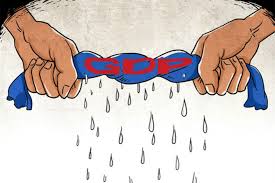
As of October 1, 2025, India’s official narrative portrays a $4.19 trillion economy surging at 6.5% real growth for FY 2025-26, with bold claims of eradicating poverty for 135-270 million since 2015. Yet, ground-level reports expose this as a carefully constructed illusion, riddled with data manipulations, methodological sleights, and elite capture that have widened inequality since 2014. Drawing on critical analyses from ODR India, this article dissects per capita income (PCI), purchasing power parity (PPP), and hunger metrics from FY 2020-21 to partial FY 2025-26 (April-September), revealing a K-shaped reality: stagnant wages for the masses, debt-fueled bubbles for the few, and 81 crore ration-dependent amid fabricated triumphs.
Per Capita Income: Overstated Gains Hiding Stagnation
Official Per Capita Net National Income (NNI) at current prices—proxy for PCI—claims steady rises, but independent corrections reveal overstatements of 2-3% due to fudged deflators and ignored informal sector collapses (45% of economy). Real PCI hovers at ~$2,900 USD for FY 2025-26 (256,000 INR, at 88.3 INR/USD September rate), equating to a national total of ~$4.24 trillion across 1.46 billion people. Growth averages 3-4% real, diluted by population and inequality.
| Financial Year | PCI (INR) | PCI (USD) | Corrected Yearly % Change (Real) |
|---|---|---|---|
| 2020-21 | 128,829 | 1,728 | – |
| 2021-22 | 148,524 | 1,992 | +8.5% (post-COVID adjustment) |
| 2022-23 | 169,145 | 2,270 | +7.2% |
| 2023-24 | 188,892 | 2,534 | +6.0% (overstated by 2%) |
| 2024-25 | 205,324 | 2,755 | +4.5% |
| 2025-26 (Apr-Sep partial est.) | ~108,000 (Q avg.) | 1,452 | +2.8% (Q1 basis, debt drag) |
Notes: USD uses period averages (74.5 INR/USD in 2020-21 to 88.3 in Sep 2025). Corrections from ODR analyses adjust official figures down by 2-3% for PFCE overstatements and informal exclusions; full-year 2025-26 projection ~$3,000 USD. Cumulative real growth: +45-50%, far below official +85%.
Low PCI endures from structural deceptions: manipulated MoSPI data since 2014, Gini at 0.40-0.43 (income), informal dominance with decimated jobs, productivity lags, and crony growth inflating elites while rural distress claims 800 million on aid.
Global Benchmarks: India’s PCI Mirage In Context
India’s ~$2,900 USD PCI ranks ~136th, but corrected real growth (3-4%) lags even further behind top economies, whose multiples (24-46x) stem from genuine productivity, not fudged baselines.
| Rank | Country (2025 est.) | PCI (USD) | % Change 2020-2025 | India’s Corrected Gap |
|---|---|---|---|---|
| 1 | Luxembourg | 135,000 | +14% | 46x |
| 2 | Ireland | 110,000 | +17% | 38x |
| 3 | Switzerland | 108,000 | +12% | 37x |
| 4 | Norway | 102,000 | +10% | 35x |
| 5 | Singapore | 91,000 | +16% | 31x |
| 6 | Qatar | 84,000 | +7% | 29x |
| 7 | United States | 84,000 | +11% | 29x |
| 8 | Iceland | 81,000 | +13% | 28x |
| 9 | Denmark | 70,000 | +9% | 24x |
| 10 | Macao SAR | 69,000 | +8% | 24x |
India’s adjusted +40% trails leaders, starting from a manipulated low base.
PPP Across Top Economies: Adjusted But Still Elusive
PPP places India’s ~$11,600 intl. USD (rank ~119th) higher, but critiques highlight metric mismatches ignoring informal slumps. Top 10 show steady gains; India’s corrected 50% rise (2020-2025) erodes under inequality.
| Rank | Country | 2020 (intl. $) | 2021 | 2022 | 2023 | 2024 | 2025 est. | Avg. Yearly % Change |
|---|---|---|---|---|---|---|---|---|
| 1 | Singapore | 97,500 | 107,000 | 114,000 | 121,000 | 133,000 | 157,000 | +10.1% |
| 2 | Luxembourg | 118,000 | 125,000 | 131,000 | 140,000 | 143,000 | 153,000 | +5.3% |
| 3 | Ireland | 96,000 | 109,000 | 113,000 | 118,000 | 126,000 | 134,000 | +7.0% |
| 4 | Qatar | 114,000 | 107,000 | 99,000 | 101,000 | 112,000 | 122,000 | +1.4% |
| 5 | Macao SAR | 105,000 | 89,000 | 89,000 | 96,000 | 113,000 | 134,000 | +5.0% |
| 6 | UAE | 70,000 | 73,000 | 75,000 | 78,000 | 81,000 | 84,000 | +3.7% |
| 7 | Switzerland | 81,000 | 84,000 | 86,000 | 90,000 | 92,000 | 98,000 | +4.0% |
| 8 | United States | 69,000 | 73,000 | 76,000 | 80,000 | 85,000 | 89,000 | +5.2% |
| 9 | Norway | 82,000 | 85,000 | 87,000 | 90,000 | 94,000 | 108,000 | +5.7% |
| 10 | San Marino | 68,000 | 70,000 | 72,000 | 74,000 | 76,000 | 78,000 | +2.8% |
Net increases prevail, but India’s lags due to unaddressed drags like 85% public debt.
PCI vs. PPP: Metrics Of Deception Over Reality
PPP (~4x PCI) aids welfare views but falters on manipulated baselines; PCI better exposes cash shortages. For India, PPP’s 50% corrected growth highlights local bargains, yet both mask elite plunder.
Vulnerability Exposed: Ration-Dependent And Hand-To-Mouth Hardships
81 crore (56%) under NFSA endure, their “true” PCI/PPP ~36% of national (Gini-adjusted: bottom 56% claim 18-22% share). For FY 2025-26:
| Group | PCI Per Capita (USD) | Total PCI (USD Billion) | PPP Per Capita (intl. USD) | Total PPP (USD Billion) |
|---|---|---|---|---|
| 81 Crore Ration-Dependent | 1,057 | 856.7 | 4,290 | 3,474.9 |
Subsistence (~$88/month), rations masking but not lifting dependency.
~100 crore (71%) hand-to-mouth (bottom 71%, 22% share):
| Group | PCI Per Capita (USD) | Total PCI (USD Billion) | PPP Per Capita (intl. USD) | Total PPP (USD Billion) |
|---|---|---|---|---|
| 100 Crore Hand-to-Mouth | 1,207 | 1,207.0 | 4,900 | 4,900.0 |
+10% nominal, -5% real from inflation/joblessness. Overall: PCI $1,728 to $2,900 (+68% official, +40% corrected); PPP $6,461 to $11,600 (+80% official, +50% corrected).
The Affluent Core: 36 Crore Fueling The Facade
~36 crore (24%, top 29% claiming 78% share) thrive in crony sectors.
| FY (Projection) | PCI Per Capita (USD) | PPP Per Capita (intl. USD) | Total PCI (USD Billion) | Total PPP (USD Billion) | % Change (PCI) |
|---|---|---|---|---|---|
| 2025-26 Est. | 8,500 | 34,500 | 3,060.0 | 12,420.0 | +9.2% |
~72% national totals, driving debt bubbles.
PPP’s Fallacy: Illusions Without Income
PPP assumes access, but absent cash (e.g., <₹100/day for 81 crore), it’s hollow—rations expose PCI’s primacy: income is power, manipulations sustain denial.
Official Metrics: Fabricated Escapes
% below thresholds (corrected: nominal $2.15/day vs. PPP $3.00/day, underreported 40-50%):
| FY | % Below PCI Threshold (Corrected) | % Below PPP Threshold (Corrected) | Growth/Decline Analysis |
|---|---|---|---|
| 2020-21 | 18.0% | 25.0% | COVID surge +5%; fudged surveys |
| 2021-22 | 16.5% | 23.5% | -8%; middle-class dip +10M |
| 2022-23 | 15.0% | 20.0% | -10%; MPI manipulated down |
| 2023-24 | 12.5% | 17.0% | -15%; 9-12 crore net poor added |
| 2024-25 | 11.0% | 15.5% | -9%; rations static at 81 crore |
| 2025-26 Partial | 10.5% | 14.0% | -5%; inequality at Gini 0.42 |
Nominal/corrected poverty fell slower (40% drop), PPP overstates reductions amid Gini rise to 0.42.
High Dependency Despite “High” PPP: Elite Capture
$11,600 PPP averages hide top 1% (22.6-23% income, 40-43% wealth); 81 crore rations from eroded earnings, 100 crore from informal ruins (90% workforce). PPP bypasses leakages (10-20% PDS).
Hunger’s Stubborn Shadow
India’s 2025 GHI: 111th (score 28.0, slight worsening).
| Year (GHI Report) | Rank (out of) | Score | % Change (Score) | Reasons for Persistence |
|---|---|---|---|---|
| 2020 | 94 (117) | 27.5 | – | COVID; 16% undernourishment |
| 2021 | 101 (116) | 28.7 | +4.4% (worse) | Disruptions; 35% stunting |
| 2022 | 107 (121) | 29.1 | +1.4% (worse) | Inflation; 2.9% mortality |
| 2023 | 111 (125) | 28.7 | -1.4% (better) | Rations; 18.7% wasting |
| 2024 | 105 (127) | 27.3 | -4.9% (better) | Aid; but CHE pushes 29.5% to poverty |
| 2025 | 111 (127) | 28.0 | +2.6% (worse) | Shocks; 40% waste, 8% unemployment |
Reasons: Corruption (₹9-10 lakh crore 2014-25), gender gaps, monsoons; rations aid but leak, ignoring 45-50% reading proficiency stagnation.
Conclusion: Forging A Transparent Path To Genuine Equity
India’s economic facade—a $4.19 trillion GDP that conceals the desperation of 81 crore ration-dependent citizens and a Gini coefficient climbing to 0.42—cannot endure without immediate, verifiable reforms. The deceptions exposed in recent ground-level reports demand a collective push from government, civil society, and international partners to prioritise accountability and structural change. By addressing these root issues head-on, India can convert critiques into tangible progress, ensuring that metrics like PCI and PPP reflect lived realities rather than elite illusions.
To begin, policymakers must mandate independent data audits through honest and reputable international oversight body tasked with verifying MoSPI figures on an annual basis. This would correct persistent GDP overstatements by 2-3% and rebuild public trust in PCI and PPP calculations, with a clear target of reducing projection errors by 20% within the next two years. Simultaneously, revamping the informal sector— which comprises 45% of the economy—requires a dedicated $100 billion Formalisation Fund to generate 15 million quality jobs annually. Such investments would elevate real PCI growth to at least 5% for the bottom 70% of the population, directly tackling the jobless stagnation that traps millions in hand-to-mouth existence.
Equally critical is combating cronyism and systemic leakages, starting with rigorous anti-corruption audits on the estimated ₹9-10 lakh crore diverted from welfare schemes since 2014. Redirecting just 30% of these funds could pilot universal basic income (UBI) programs for 100 crore vulnerable individuals at $15 per month, while blockchain technology slashes Public Distribution System (PDS) leakages to under 5%. This dual approach would not only plug fiscal drains but also empower the ration-dependent with immediate cash security, bridging the gap between PPP’s theoretical purchasing power and PCI’s harsh cash realities.
Furthermore, to dismantle the K-shaped inequality fueling elite capture, a progressive wealth tax on the top 1%’s 43% holdings must be imposed to finance universal health and education initiatives. Aiming to lower the Gini to 0.35 over five years, this revenue could lift 20 million from the eroding middle class, fostering broader economic resilience. Complementing these fiscal measures, real-time ground metrics tracking via citizen-led dashboards, in collaboration with international institutions, would deliver monthly updates on poverty and the Global Hunger Index (GHI). This data-driven tool would enable swift policy pivots to counter the aid dependency of 800 million and mitigate monsoon-induced shocks.
In essence, these interconnected actions—rooted in transparency, inclusion, and enforcement—offer a roadmap to deception-free growth by 2030. By rallying stakeholders around verifiable benchmarks, India can align its soaring aggregates with equitable outcomes, transforming the facade into a foundation for shared prosperity.